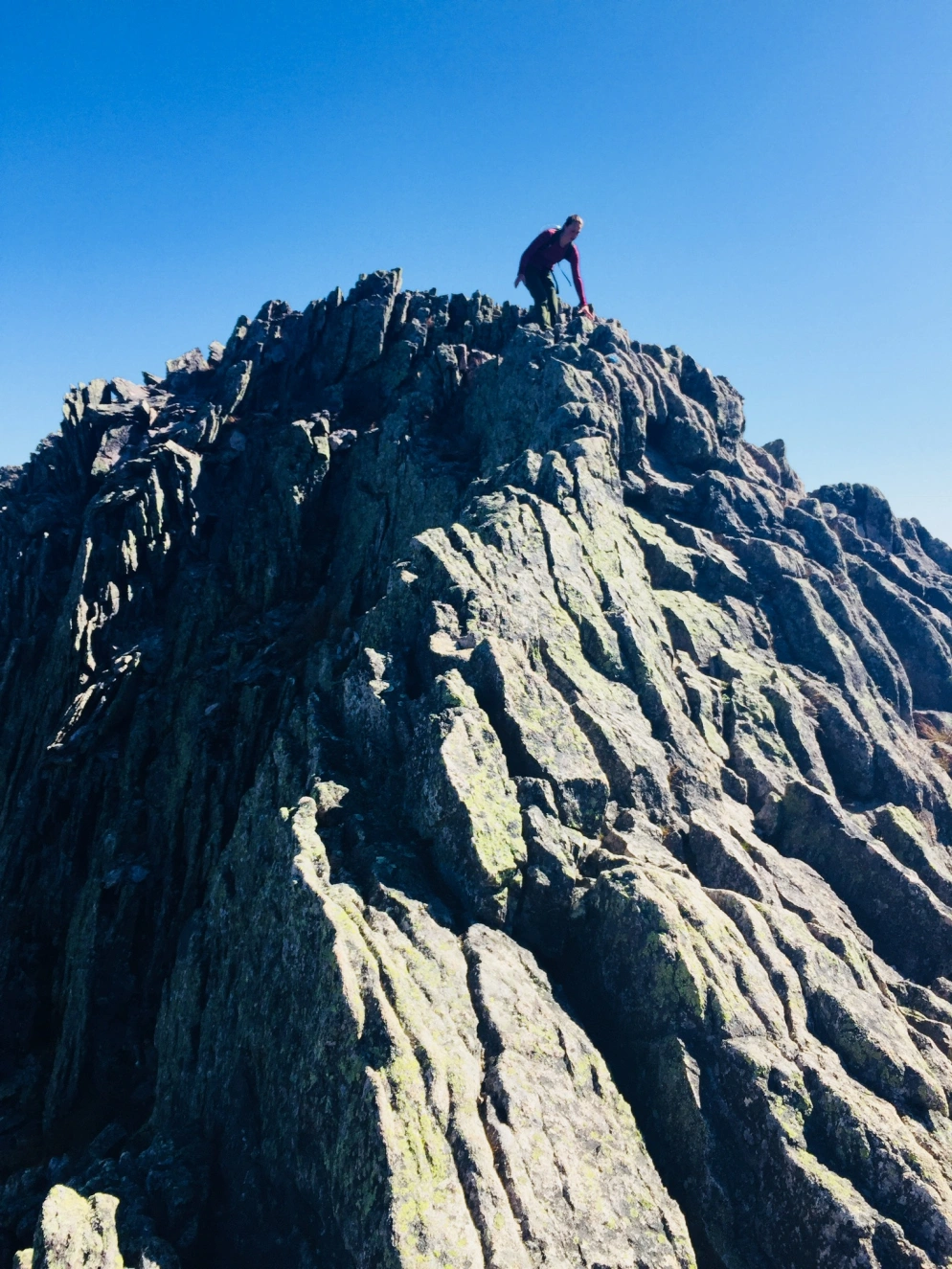
Mount Kineo (near Rockwood, ME)

View of Mt. Kineo from the dock in Rockwood, Maine
View across Moosehead Lake of Mount Kineo from the dock in Rockwood, Maine

The woods and waters of Maine’s Moosehead Lake region feature a dizzying array of outdoor activities. For those with limited time (say, a weekend) in this area, sorting through the hiking, biking, boating, fishing, and ATV options can be overwhelming. A journey to the summit of Mount Kineo (1,800 ft), with its 700-plus foot rhyolite cliffs, presents a multi-faceted day trip, combining many of the factors that make Moosehead so special.

This trek starts with a 10 minute boat ride to Kineo from the dock in Rockwood (about a half hour drive from downtown Greenville). In peak summer season, the ferry, run by the Mount Kineo Golf Course, leaves from Rockwood every hour on the hour from 8 am to 6 pm ($13 cash for adults, don’t miss the last shuttle back from Kineo, leaving at 6:45 pm).
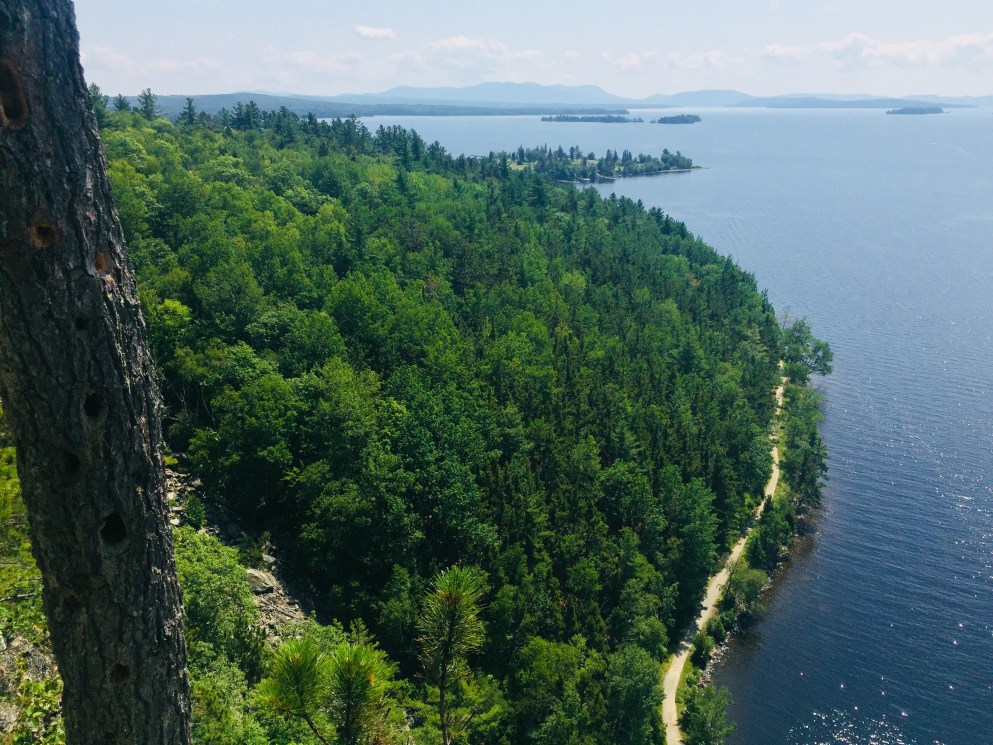
View of the Carriage Trail, Mt. Kineo, from above
View of the Carriage Trail, Mount Kineo, from above

The friendly, knowledgeable shuttle captain can give you enough information to complete your hike, but to preview the trail map, check out the Moosehead Lake Chamber of Commerce Moosehead Pinnacle Pursuit. Once ashore at Kineo, the Carriage Road Trail will start to your left. For restrooms, food, water, and free trail maps, go right (watching for golfers teeing off) to the golf clubhouse.

Overlook from the Indian Trail, Mt. Kineo, Moosehead Lake
Overlook from the Indian Trail, Mount Kineo, Moosehead Lake

On this day, I was with two friends, and at the shuttle captain’s suggestion, we hiked up the Indian Trail, then took the Bridle Trail on the descent. This created an approximately 3.2 mile loop hike, which took us a little over two hours, with many breaks to savor the scenery. The Indian Trail is steep, direct, and strenuous, but rewards the hiker with rapidly expanding views of Moosehead Lake and its surroundings.

The Indian Trail then intersects with the more gradual Bridle Trail, which continues to the summit and the fire tower.

View from summit fire tower, Mount Kineo
View from summit fire tower, Mt. Kineo
View from summit fire tower, Mount Kineo

The climb up (and down) the fire tower can be challenging for those with vertigo or any fear of heights, but the commanding views on a clear day are incredible. On this day, a sunny Friday in July, there were several other groups of hikers, including a vacationing pair who, after a brief conversation, surprisingly turned out to be readers of this blog. Dogs are allowed (on leash) on the ferry and the trails.

After slowly descending the fire tower steps, a winding downhill walk on the Bridle Trail leads back to the Carriage Trail and the ferry dock. For those looking for a longer day, the easy, flat Carriage Trail extends to the North Trail, which climbs up to the fire tower from the east, encircling the island. According to the shuttle captain, hikers should allow about four and a half hours to complete this longer loop.

Where to go afterwards? Obviously a swim in Moosehead to cool off. Food? Depending on timing, you can grab a beer and/or sandwich at the Mount Kineo golf clubhouse before going back to Rockwood. In Rockwood, the Rockwood Bar and Grill, from which Mount Kineo is visible, has great food and beer, and is a local favorite (the “RBG” stickers you see on cars and ATV’s refer to Rockwood Bar and Grill, not the Supreme Court Justice).

In Greenville, the aptly named Stress Free Moose Pub and Cafe has a friendly waitstaff, a rotating menu of craft beer and pub food, outdoor seating, and frequent live music.

The trek by boat and foot from Rockwood to the fire tower atop Mount Kineo is a special journey, paying off with 360 views of Moosehead Lake and the surrounding Maine woods.

Mount Abraham (Mt. Abram Township, ME)

View down the Fire Warden's Trail, Mount Abram in Kingfield, Maine
View down the Fire Warden’s Trail, Mount Abraham in Kingfield, ME

Sometimes hikes are listed as “Strenuous” simply because of their length or isolation.  Often, it is because of rapid elevation gain, water crossings or the chance of inclement weather at altitude.  Mount Abraham (4,049 ft) in Mt. Abram Twp., one of Maine’s fourteen 4,000 footers, combines all these factors, but still remains an attainable challenge of a day hike, approximately 8.2 miles round-trip out from trailhead to summit and back.  This was about four hours total time on the recent July Saturday I hiked it (I moved quickly because of weather – allow up to six hours or so, based upon your own hiking level), and I used the Maine Mountain Guide and Maine Trailfinder to research the hike.

Fire Warden's Trail, Mount Abram, Kingfield, ME
Fire Warden’s Trail, Mount Abraham, Kingfield, Maine

The mountain itself is in the Mt. Abraham Public Reserved Lands Unit, and contains the second-largest (to Katahdin) alpine zone in Maine.  As of July 2019, the roads were passable all the way to the trailhead, which is at the T-intersection at approximately latitude 44.96817, longitude -70.26049.

From Kingfield, head north from “downtown,” and take a left on West Kingfield Road from Route 27.  Continue straight about six miles (road turns to dirt, and becomes Rapid Stream Road enroute), and take a left at the fork.  After crossing two bridges, take the right fork for about a mile.  At the T-intersection, the trail will be slightly to your right (trailhead sign is set slightly back in the woods), and parking will be by a sign to your left.

Mountain stream, Mount Abram, Kingfield, ME
Mountain stream, Mount Abraham, Kingfield, Maine

The path, marked with blue blazes, showed signs of recent trail work (thanks, trail crew), and had been re-routed out of lower-lying areas.  Recent moose tracks and droppings were frequent, but I did not see the elusive animal on this day.

The Fire Warden’s Trail is pleasantly rugged, a steady, grinding uphill climb across a number of mountain streams, requiring a quick dance across wet, mossy rocks in some spots.  The deciduous forest was thick and humid, an almost jungle-like green tunnel, dense with mosquitoes.  The forest thinned out gradually with elevation, and evergreens substituted in for leafy greenery during the ascent, with a campsite and privy available at about 2.6 miles.

Flowers in the alpine zone, Mount Abram, Kingfield, ME
Flowers in the alpine zone, Mount Abraham, Kingfield, Maine

The breezes and open air of the alpine zone were a brief reprieve from the muggy forest before the steep, rocky climb to the top.  On the summer day I hiked past the cairns lining the ascent, I was racing afternoon thunderstorms, and could see dark clouds rapidly moving, so did not waste time in the mostly unprotected half-mile between the treeline and the summit.

Narrow path in the alpine area of Mount Abram.
Narrow path in the alpine area of Mount Abraham.

I did, however, enjoy the smaller evergreens crowding the narrow trail, the flowering alpine plants across the ridge, and the views of the surrounding mountains and the Carrabassett Valley. The fire tower and shelter at the summit were knocked over and caved in, and a line of cairns marked the connector trail to the Appalachian Trail.

Summit cairn, Mount Abram, Kingfield, ME
Summit cairn, Mount Abraham, Kingfield, Maine

After a quick snack and an obligatory change of socks at the windswept summit, I headed downhill, for a much easier descent back to the trailhead.  The trail was lightly traveled- I saw nobody else on the way up, and only six to eight hikers headed up while I was on my way down (pleasantly light for a sunny Saturday in July).

Where to eat in Kingfield?  In addition to beating the storms, my early-morning start allowed me to lunch at the incomparable Rolling Fatties.  I opted for the delicious Falafel Fatty Bowl, packed with fresh greens and crispy falafel, enjoying it with a Maine Beer Company Woods and Waters IPA at an outdoor table in the sunlight.

Mount Abraham is a pleasantly demanding hike, close to the attractions of the Carrabassett Valley, and paying off with commanding views from Maine’s tenth-highest Mountain.

(Disclaimer: This post contains affiliate links, and as an Amazon Associate Hiking in Maine blog earns from qualifying purchases.)

Libby Hill Forest Trails (Gray, ME)

Libby Hill Trails Trailhead in Gray, ME
Libby Hill Trails Trailhead in Gray, Maine

The Libby Hill Forest in Gray, Maine, maintained by the Friends of Libby Hill, contains nine miles of multi-use trails, spanning properties owned by the Town of Gray, Mathew Morrill Trust, SAD 15, and the Gray Community Endowment (GCE).  The parking area is not far off the Maine Turnpike and Route 26, located at 50 Libby Hill Road in Gray, and the trailhead is behind Gray-New Gloucester Middle School (see trail maps here).  These trails are open year-round, and are designated differently based on width, terrain, and season for hikers, bikers, cross-country skiers, and snowshoe travel.

Moose Odyssey Trail, Libby Hill Forest, Gray, Maine

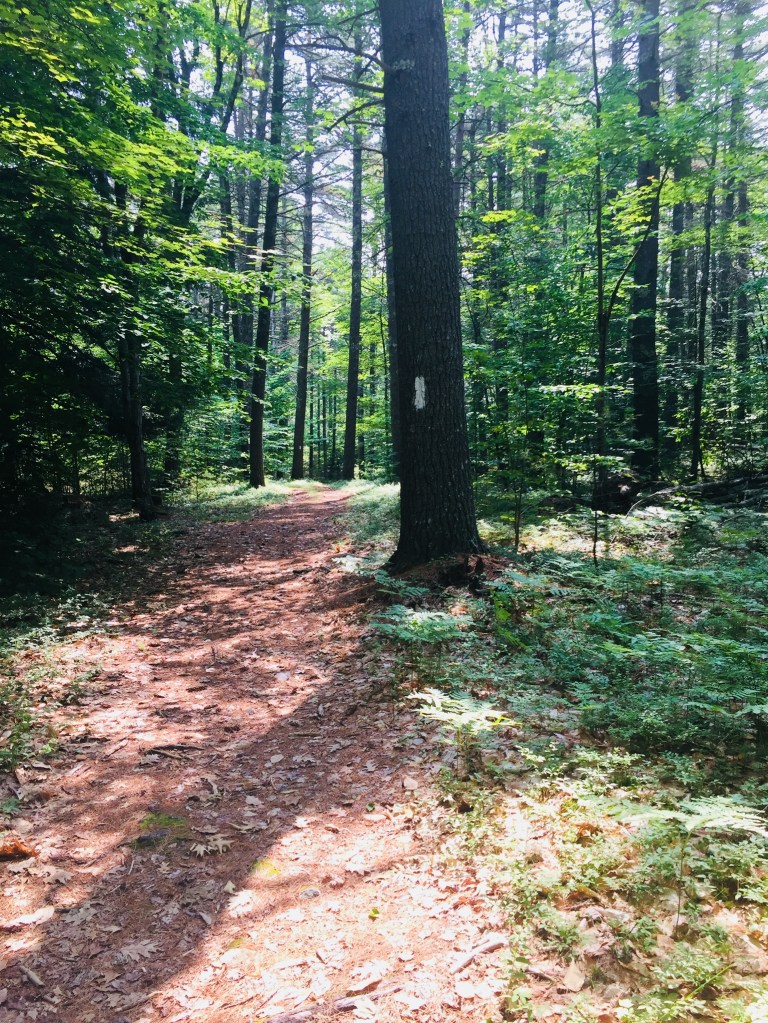
On the July day we visited, we took the 3.1 mile Moose Odyssey Trail (white blazes), which loops through the center of the trail complex.  This broad, winding path is carpeted by grass and pine needles, and wide enough in most places for two people to walk abreast, making it more of a social trail.  The margins of the gently rolling trail are covered with wild blueberry and sweet fern.

Moose Odyssey Trail, Libby Hill Forest, Gray, Maine

The Libby Hill website contains a variety of maps on its Trail Maps page, including a digital smart phone map, Longest Day 5K race course map, individual trail descriptions and history, orienteering tour, Libby Farmstead tour, and a Tree ID Sign map, perfect for a 17-point scavenger hunt from American Beech (#3, #7) to Yellow Birch (#8).  The forest abounds with birds, and we saw an Eastern Towhee close to the trail.

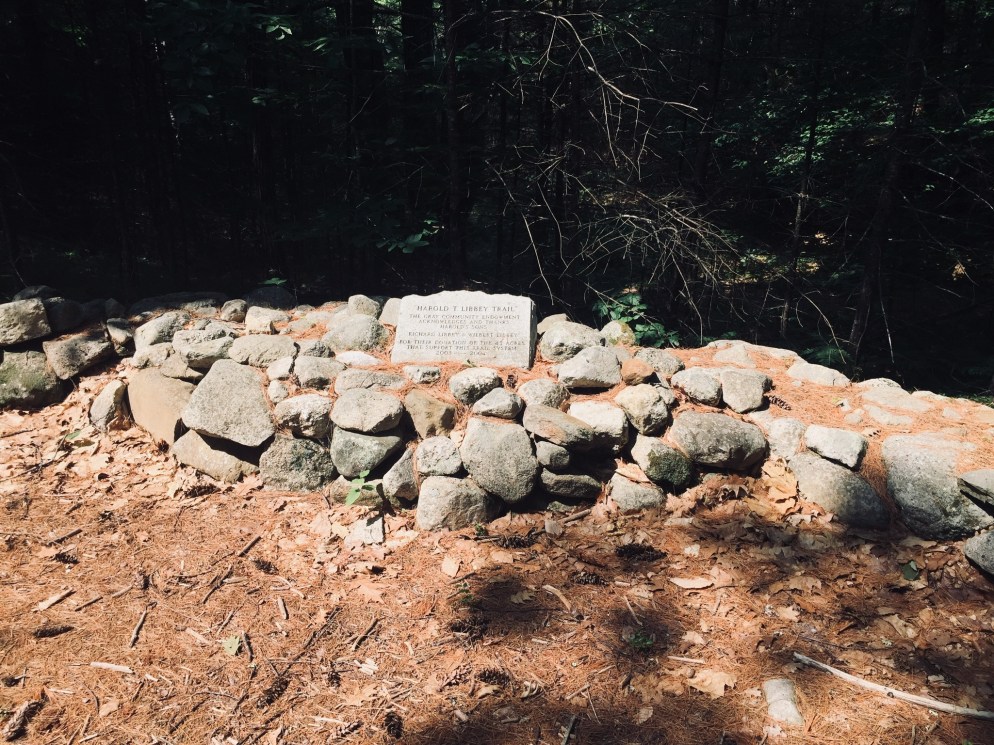
Harold Libbey Memorial, Libby Hill Forest, Gray, Maine

Once you are on the trail network, navigation is self-correcting, with laminated maps at each intersection.  To the south, the Harold Libbey and Outback trails, accessible from the Moose Odyssey Trail near the Harold Libbey Memorial, continue over wetlands, and contain areas to look for wildlife, including beaver activity (according to the Libby Hill website, Harold’s father changed the spelling from Libby to Libbey to avoid being confused with two others with the same initials and last name).  A note of caution – ticks can abound in the grassy areas, so be sure to take the appropriate precautions, and check yourself after the hike.

For pre- and post-hike snacks, there is a Hannaford at the end of Libby Hill Road, which according to the Libby Hill website, is the former site of William Libby’s Revolutionary War-era farm.  For more outdoor activities, Libby Hill Forest is also in close proximity to the Maine Wildlife Park and Gillespie Farm (Pick Your Own).

Round Top Mountain (Rome, ME)

0149c614d5f2d08bc0a5887b1bb7b1ffedf1723068
View from the Kennebec Highlands Trail, Round Top Mountain, Rome, Maine

Round Top Mountain (1,133 ft) in Rome overlooks Belgrade Lakes and the Kennebec Highlands Public Reserved Lands. The route I chose on a sunny June day was an easy to moderate 4.7 mile counterclockwise loop using the Round Top Trail to the Kennebec Highlands Trail, the Round Top Spur, and then back down the Round Top Trail. I used the great guidebooks Maine Mountain Guide and Maine Hikes Off the Beaten Path for trail maps and hike descriptions. Visit the 7 Lakes Alliance website for a downloadable pdf map. This trailhead also allows access through the A Trail to McGaffey Mountain.

014eef3c5a05673b1822c74c628bc4ae82a45db41c
Trailhead and Round Top Trail in Rome, Maine

From the trailhead parking lot, this is a pleasant rolling path over a bristling cushion of oak and beech leaves and pine needles to the junction with the Kennebec Highlands Trail. On the early summer day I was there, the air was filled with aggressive mosquitoes, but a combination of Deet and constant movement neutralized their effect.

015c8ad862458ad510b6146f627b98a23d77963830
Morning light on the Round Top Trail, Rome, Maine
01026d319bcc85e3ca122be89080f5eaf7c639c395
Wildflowers on Round Top Mountain in Rome, Maine

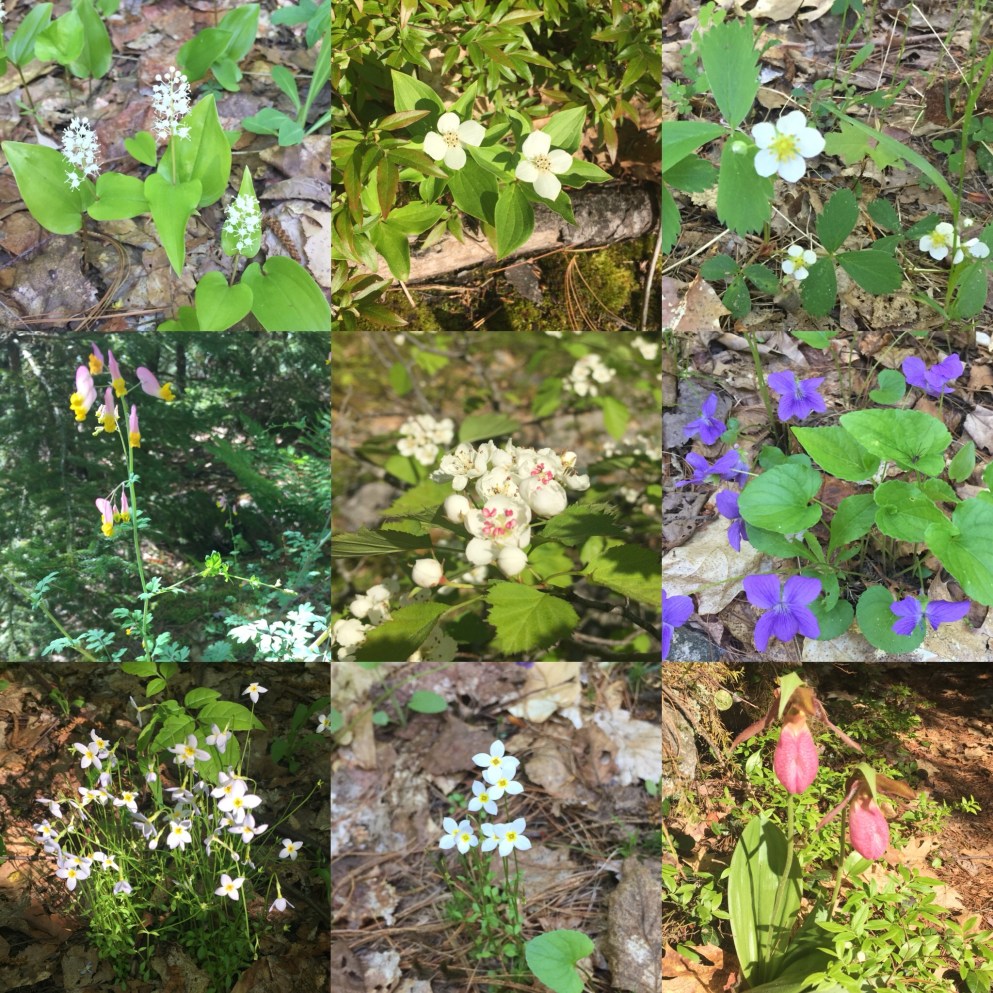
Thanks to recent rains, the open areas to the margins of the Round Top Trail and of the wider woods road of the Kennebec Highlands were full of a variety of Maine wildflowers, with lady slippers dotting the sides of the more wooded areas.

0197cdfb5e329691896a4f02553c5a4dbbf3bde316
Rolling terrain on the Round Top Trail, Rome, Maine

From the left turn off the Kennebec Highlands Path, the ascent to the spur trail to the summit is a climb around switchbacks past blueberries and boulders, with views over the surrounding land.

010e26c909678ff72451211cec698195db7b8fd3f4
View from summit spur trail, Round Top Mountain, Rome, Maine

The (counterclockwise loop) descent down the Round Top Trail is more gradual than that of the Kennebec Highlands Trail, with fewer overlooks. The wooded path winds through the mixed forest, with large boulders lining the hillside like the spine of a dinosaur. The total loop took me about an hour and fifty minutes at a steady but leisurely pace.

This well-maintained trail network creates a unique family-friendly climb in an area of central Maine that is rich in lakes, but lacks the higher elevations of the highlands to the west. This does, however, create many options for a post-hike swim to cool off. For insight regarding things to do and places to stay in the Belgrade Lakes area, check out this great Downeast magazine article.

(Disclaimer: This post contains affiliate links, and as an Amazon Associate Hiking in Maine blog earns from qualifying purchases.)

Sawyer Mountain (Limerick, ME)

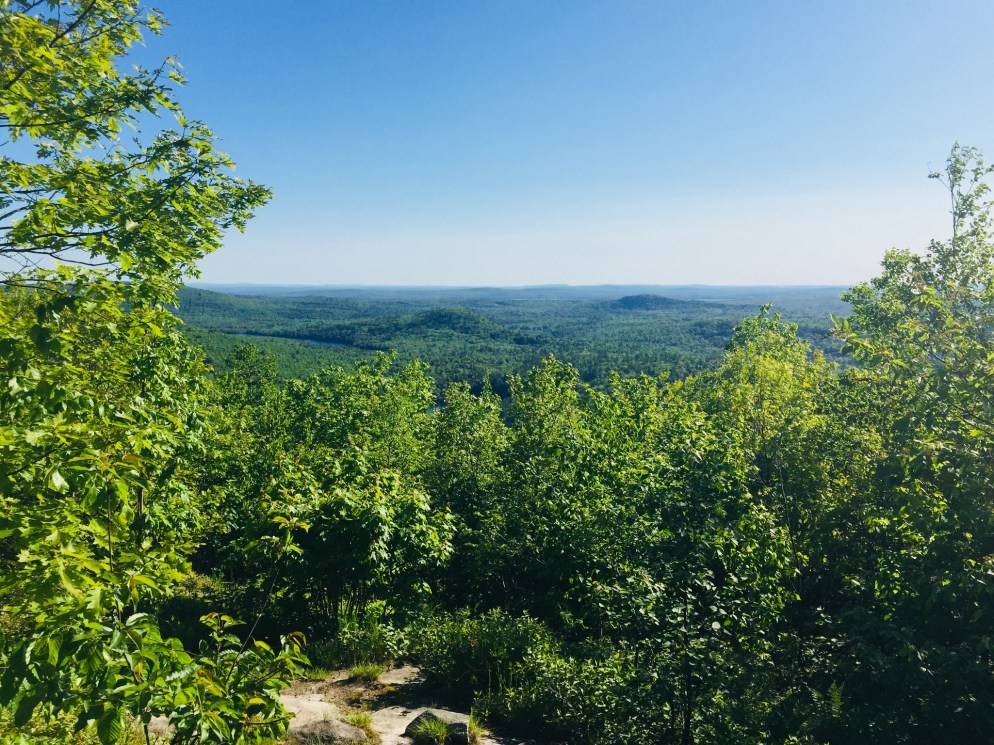
Town of Limington Scenic Overlook, Sawyer Mountain, Maine

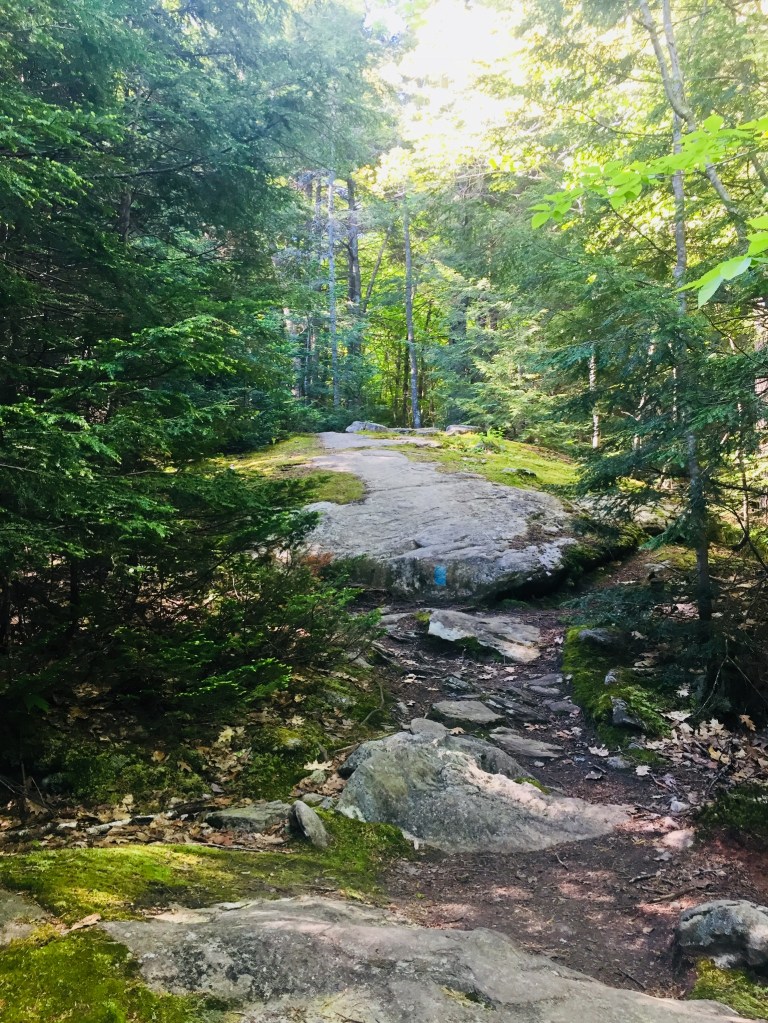
Sawyer Mountain (1,213 feet) is part of the Sawyer Mountain Highlands, 1400 acres of which is owned by the Francis Small Heritage Trust (see map here), which describes the Highlands as the single largest block of undeveloped land in York and Cumberland Counties.  This summit can be reached from trailheads in Limerick or Limington.  On the spring day we hiked it, we chose the Sawyer Mountain Trail from the Route 117 trailhead in Limington.  The trail is well-marked, with signs and red turtle blazes, and maps were available at a kiosk at the trailhead.

Sawyer Mountain Summit, Maine

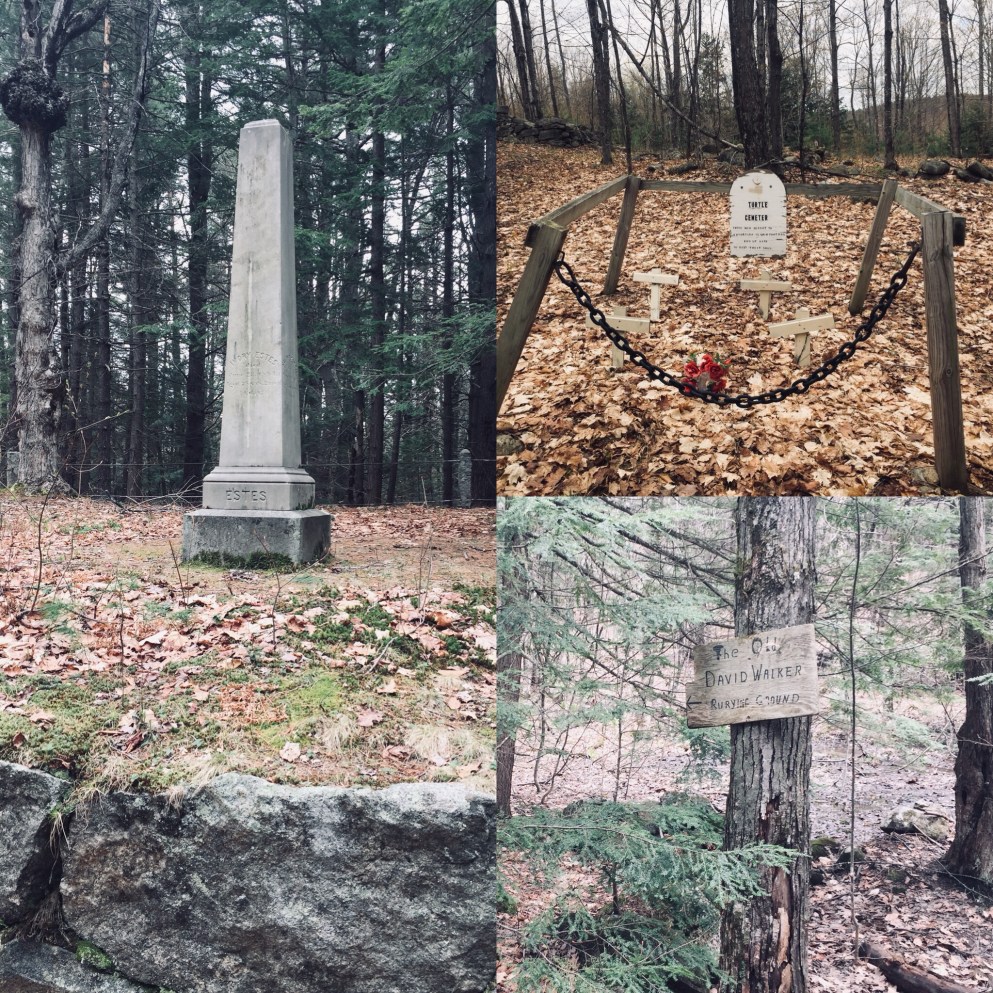
The Sawyer Mountain Road sections were rocky and covered in mud and running water, particular on the long uphill stretch preceding the last .3 mile push to the summit.  Black flies increased in number as we moved, but were never more than a minor nuisance.  Points of interest including the bright green spring vegetation surrounding streams and several cemeteries and burying grounds along the trail.

Cemeteries and burying grounds along the Sawyer Mountain Road Trail

The summit offers views facing south, and another town of Limington scenic viewpoint is not far away along the trail, offering a more open view of southern York County.  The lollipop-shaped route (about 3.6 miles, an hour and forty-five minutes at an easy pace) we took was easier on the return, as the trail descending along the New Skidway Road was less muddy than Sawyer Mountain Road.  As previously mentioned, the summit can also be accessed from the west trailhead via a shorter route on the Smith Trail.

Mt. Cutler (Hiram, ME)

The Whites from Ridge Walk
The Whites from Ridge Walk.

Mt. Cutler (1,232 ft.), part of a newly established Mt. Cutler Park and Conservation Area, is a relatively short hike in Hiram, Maine, with impressive views along the way, and multiple options for shorter and longer walks along five miles of trails (here is a detailed  map and guide).  Additionally, in the new 11th edition of the Maine Mountain Guide, Mt. Cutler gets its own map.

View of Saco River Valley from Mt. Cutler, Hiram, Maine

The direct route is the Barnes Trail, marked with red blazes, which ascends from a parking area by the former railroad depot off Mountain View Road, up through overgrown Merrill Park, where a (shallow) abandoned gold mine can be accessed from a side trail to the left.   The trail quickly ascends up rocky ledges to points overlooking Hiram and the Saco River below.

Looking down towards Hiram from Mt. Cutler
Looking down towards Hiram from the front ledges of Mt. Cutler

The ridge walk contains great views and blueberries in the summer.  The Barnes Trail does not extend to the actual summit of Mt. Cutler, which is on private land (there is currently no marked trail to the summit, but respectful bushwhacking to it is apparently ok), and instead turns hard left at the notch below the summit, where it meets the Saco Ridge Trail, completing the loop down to the parking area.

In addition to the parking area by the Barnes Trail, a second parking area is planned to be constructed by July 2019, with capacity for twenty vehicles, at the trailhead for the North Trail (blue-paint blazes) on Hiram Hill Road.  This trail connects with the Moraine Trail, which climbs a glacial moraine, consisting of rock and other debris pushed into a ridge by a glacier (for those familiar with the Maine Ice Age Trail Downeast, check out this post on sites for western Maine’s Ice Age Trail).  North Trail also connects with the White Flag Trail, which joins the Barnes Trail near the front ledges.

(Disclaimer: This post contains affiliate links, and as an Amazon Associate Hiking in Maine blog earns from qualifying purchases.)

Mount Agamenticus – First, Second, and Third Hill Loop (York, ME)

Mount Agamenticus summit
View of the Atlantic from the summit of First Hill, Mount Agamenticus

Mount Agamenticus, overlooking the southern Maine coast, apparently derives its name from an Algonquin coastal place name also used in Gloucester and Charlestown, Massachusetts.  It’s not a giant, only 691 feet tall, but is part of the Mount Agamenticus Conservation Region, which covers over 10,000 acres, including over 40 miles of trails, with a trail map here.  Its location in York makes it readily accessible from the Maine Turnpike and Route One.  I had never climbed Mount Agamenticus, and figured that a looping walk over rolling hills would be a perfect spring tune-up hike.

View towards Mount Washington from First Hill, Mount Agamenticus

These trails allow for a variety of hikes by length and ability.  On this spring day, I traversed the First, Second, and Third Hills, using the Ring, Fisher, Big A, Sweet Fern, Chestnut Oak, Ridge, Wheel, Third Hill, and Great Marsh Trails, along with Old Mountain Road, Porcupine, Rocky Road, and, again, Ring Trails to complete a loop of around 7 miles.  Much shorter loops are available (the complete Ring Trail loop is only 1.9 miles), and the Ring (west) and Witch Hazel Trails contain a “Story Walk” that might keep younger hikers moving from storyboard to storyboard, up the hill.

Observation Deck, First Hill, Mount Agamenticus

It’s not a long hike from the Mountain Road trailhead to the top of First Hill via the Ring (west) and Fisher Trails – I covered it in fifteen to twenty minutes at a moderate pace.  For those with mobility issues, there are also parking lots closer to the top.  The open summit has observation decks to orient you to the sights in all directions, from the Atlantic to Mount Washington, and a Learning Lodge is open weekends from 11 am to 3 pm from Memorial Day to Columbus Day.

Picnic Tables, First Hill, Mount Agamenticus

There are picnic tables with views of the ocean, and restroom facilities.  Songbirds abound, and I spotted an American Goldfinch near the old ski lift structures.  Descending toward Second Hill, the trail still held some ice in shaded places, the only sign of winter’s clutches.  The low points around Second and Third Hills were dotted with vernal pools, which were already riotous with the sounds of peepers.

Tree on Second Hill, Mount Agamenticus

While First Hill is well-trafficked, with trail runners and dog walkers, the only other human being I saw on Second and Third Hills was a mountain biker.  The trails here are not as well-marked as those on First Hill, and I had to double back several times to find the trail, particularly on the Ridge Trail, and Third Hill Trail.  In addition, the summits are wooded, with less spectacular views than that of First Hill.  But the hiking is not strenuous, and the scenery contains peaceful brooks and ample wildlife viewing opportunities.  I saw turkeys, deer, and innumerable songbirds, as well as sizable ant mounds on the way down Third Hill.

Mount Agamenticus is an easily accessible, family-friendly trail network which allows the user to build his/her own itinerary based on activity, ability, and time, and provides boundless opportunities for observing fauna and flora.

Seal on observation deck, First Hill, Mount Agamenticus

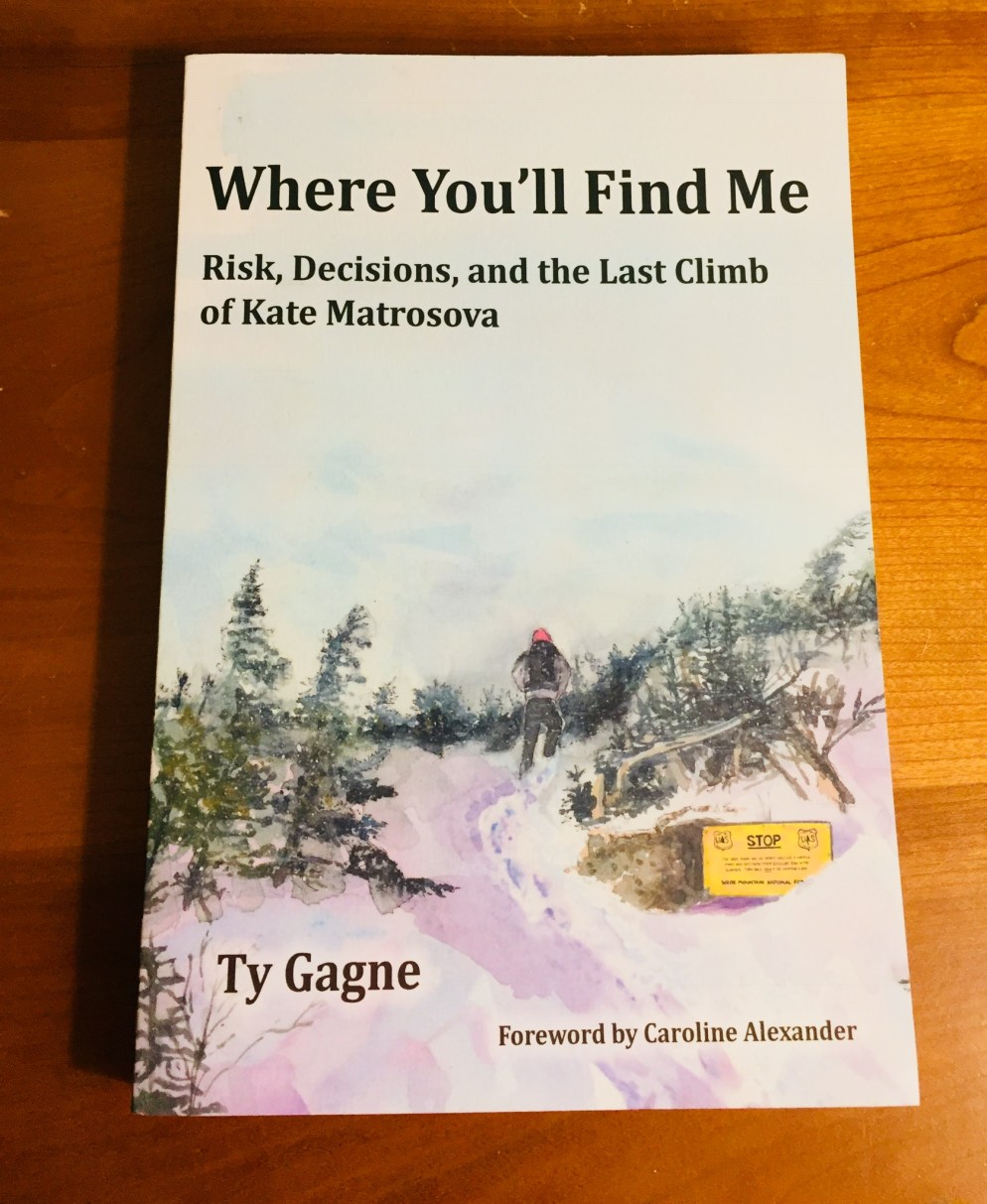
Where You’ll Find Me: Risk, Decisions, and the Last Climb of Kate Matrosova by Ty Gagne

Where You'll Find Me: Risk, Decisions, and the Last Climb of Kate MatrosovaManaging risk in the outdoors, particularly that of winter in the White Mountains, requires learning hard lessons.  Focusing on one tragedy can have its pitfalls, but Where You’ll Find Me: Risk, Decisions, and the Last Climb of Kate Matrosova by Ty Gagne (TMC Books, 2017) is respectful of that tragedy, avoids sensationalism, and expands in scope to use the narrative as a guideline for the analysis of risk.
Gagne’s book follows the ill-fated attempt of the Northern Presidential traverse by thirty-two year-old Kate Matrosova in February 2015, and the ensuing rescue and ultimately, recovery operation.  Gagne presents a scrupulously researched narrative and timeline of events, which is interspersed with maps, drawings, and analysis.  The level of detail is astounding, and simultaneously gives the reader a bird’s-eye view of the unfolding drama along with granular details about the people on the ground.

We see Matrosova’s movements in comparison to other hiking groups in the White Mountains on the same day, and what the would-be rescuers were thinking, feeling, even eating.  To his credit, Gagne keeps the reader hoping for a different outcome for Matrosova throughout the book, even though the ending is already known.  All this detail leads to the central question of the book: if someone this fit and prepared lost her life, what measures can be taken to ensure one’s own safety?  Gagne addresses Matrosova’s planned route:

In establishing bailout points and packing cell and satellite phones, a GPS device, a map, and a personal locator beacon, Matrosova is acknowledging the existence of risk on the traverse.  She has established a risk management plan.  But given her inexperience in the White Mountains, is her plan comprehensive enough to address the multitude of exposures that exist there, especially in winter?

After explaining the steps to an effective risk management plan, Gagne goes on:

A key to all this is timing.  Even with a well-developed risk management strategy and the ability to implement it effectively, Matrosova will have to decide if and when to trigger alterations to her original plan.  In the end, it will be the timing of her decisions that will make all the difference.

Gagne describes this timing, including the rapidly worsening weather, and subsequent warnings issued by the Mount Washington Observatory after Matrosova had already embarked on her hike.  As Matrosova slowly falls behind her self-imposed timeline, her challenges become more and more complex, and Gagne explores the biases that may have factored into her decision-making.  Whatever the reason, these decisions found her exhausted, frostbitten, and facing “an impenetrable wall of wind,” on Mt. Adams, “80-plus-mph headwinds,” that caused her to turn back, at a point that was too late to save her own life.

In the background of this heartbreaking human drama, Gagne illustrates the science of survival, with details regarding the functioning of the locator beacon, the progression of hypothermia, the record-setting extreme weather, and tactics and techniques of Search And Rescue (SAR) personnel.

Gagne fittingly ends the book with an account of his own February 2016 anniversary hike to where Matrosova’s body was eventually found, guided by her GPS track, and by one of her would-be rescuers.  The conditions are different, far milder, and Gagne and his companion are together, well-prepared and equipped, but the ghost of loss still lingers on the periphery: “As I turn my back to the col and make my way down, I say my goodbyes to Kate.”

(Disclaimer: This post contains affiliate links, and as an Amazon Associate Hiking in Maine blog earns from qualifying purchases.)

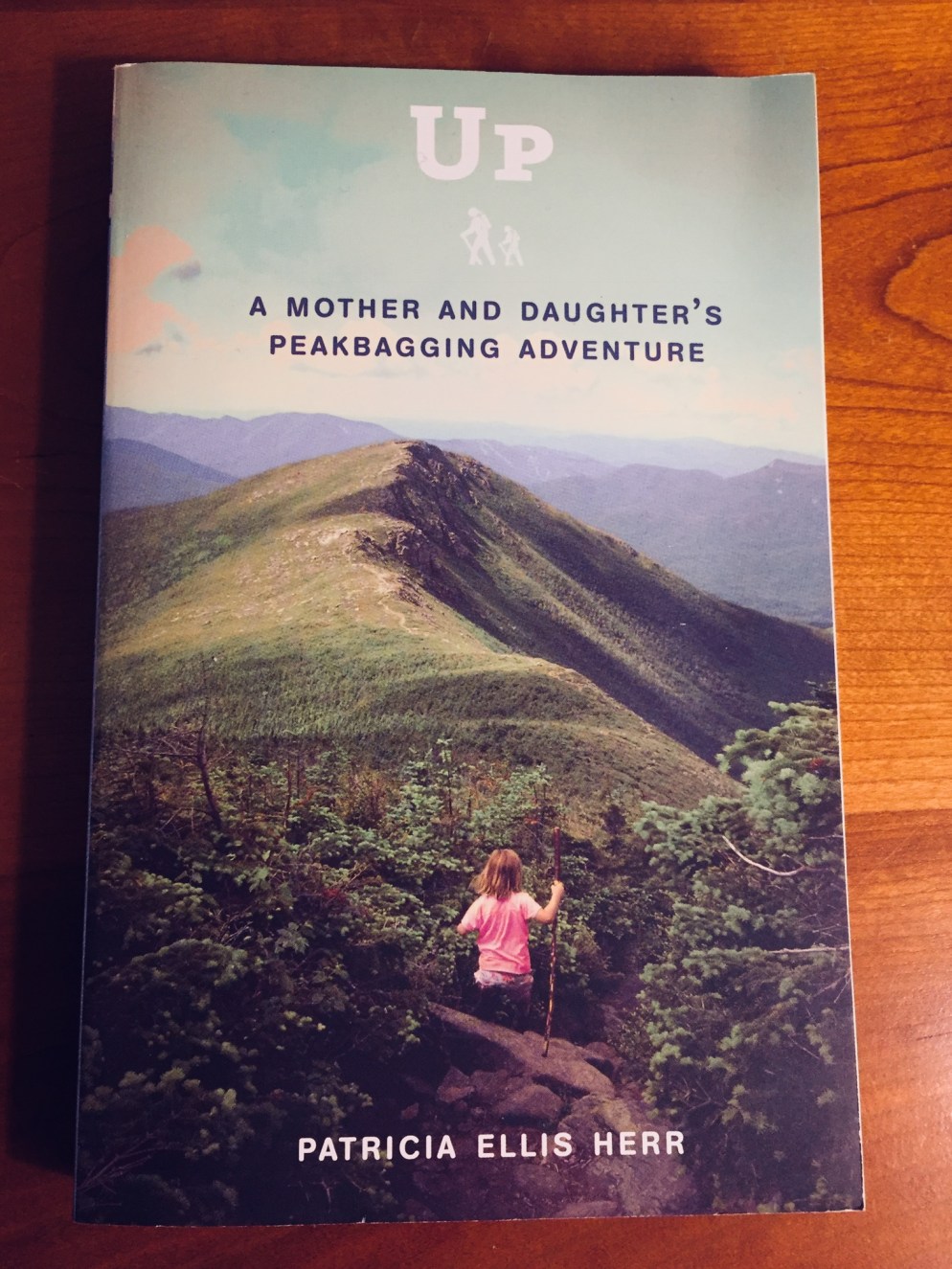
Up: A Mother and Daughter’s Peakbagging Adventure, by Patricia Ellis Herr

Up: A Mother and Daughter's Peakbagging Adventure by Patricia Ellis Herr

Connecting kids with nature is a simple matter of allowing that inevitable relationship to happen.  The difficult part is deciding what boundaries to set, letting go, and helping children deal with the unexpected challenges they may encounter.  How to do that?  One path is described in Up – A Mother and Daughter’s Peakbagging Adventure, by Patricia Ellis Herr (Broadway Paperbacks, 2012) , the story of Patricia Ellis Herr and her daughters Alex and Sage, and the quest of her older daughter Alex, then five, to summit all forty-eight of New Hampshire’s peaks over four thousand feet before Alex turned seven.

Herr begins the book with an anecdote about a failed attempt to summit Mt. Tom, thwarted by a lightning storm.  This story sets the tone for the book: the weather forced Herr to make tough calls, and to explain her rationale for those decisions and the results to her daughters, including the realization that things can happen for which it can be impossible to prepare.  Also, there was chocolate at the end.

The idea to bag all of New Hampshire’s four thousand footers was born following another hike, this one of Mount Tecumseh in April 2008, when Herr and her daughters eventually turned back, unprepared for the deep snow at higher elevations.  Herr then researched the appropriate hiking gear and preparation, and they returned to summit Tecumseh that June, unknowingly beginning Alex’s quest.

During the peakbagging journey, they encounter unexpected obstacles, including the fear of “stranger danger,” the preconceived notions of other hikers regarding women and young children, and an aggressive spruce grouse.  Herr turns these challenges into teachable moments, and Alex quickly gains confidence, and even makes some converts.

Alex is clearly a unique child, and uses a fountain of energy to power up and down the mountains in the beginning.  Herr brings Alex back to earth, however, with a lesson from Alex and Sage’s father, Hugh, who relates the story to the girls of how he lost his legs on Mount Washington in the winter of 1982.  A rescuer was killed by an avalanche while looking for Hugh and his climbing partner, a mental burden still carried by Hugh.  The story has the desired effect, and Alex learns to be more careful, and respect the danger inherent in the White Mountains.  This comes in handy during the ensuing months, as Herr and Alex hike through the winter and spring seasons, and learn, “Real hikers know when to continue and when to turn back.”

By the time the family, by this time accompanied by well-wishers, summits peak number forty-eight, Mount Moosilauke, in August 2009, they have accomplished much more than the physical challenge.  Herr and her daughters have had conversations along the way wrestling with existential questions, mortality, motherhood, gender roles, and societal expectations:

What matters now is that they know, from experience, that they can accomplish something big, something huge.  What matters is that, for the rest of their lives, both my daughters understand that to reach a goal, they must put one foot in front of the other and persevere.  They know that they must expect and prepare for challenges.  They know to ignore the naysayers and, instead, to have faith in themselves and their abilities to learn what they need to know.  Above all else, they know that little does not mean weak, that girls are indeed strong, and that practically anything is possible.

This winning book, punctuated by mountaintop photos and small, sweet moments, shares a family’s triumph, and illuminates the lessons inherent in nature, waiting there to be elucidated by a mindful parent.

(Disclaimer: This post contains affiliate links, and as an Amazon Associate Hiking in Maine blog earns from qualifying purchases.)

10 Best Hiking and Outdoor Podcasts of 2018

10 Best Hiking and Outdoor Podcasts of 2018
Katahdin – Knife Edge 2018

When we aren’t hiking, we often consume content related to the outdoors.  Podcasts are a great way to maximize transition to the outdoors and spark discussion during long drives to trailheads.

Outdoor content can be uneven – we tried some hiking podcasts that were basically unlistenable, for reasons ranging from long-winded alcohol or cannabis-infused monologues to insufferable condescension regarding non-thru-hikers.  Also, the experiment of podcasting while hiking never seems to work, and devolves quickly into nonsense conveyed over heavy breathing.

But the best podcasts can capture unique moments, seen through the interesting lens of people new to the outdoors, or drawn from experienced adventurers through long-form interviews.  They can also illuminate topics in science or history in a relatable way, including land and wildlife management, lightning, wildfires, and climate change.  Listeners can also experience life-or-death situations in the safety of their homes and cars and gyms, taking lessons and inspiration with them when they venture out into the outdoors.

These are the ten best (and several honorable mention) hiking and outdoors podcasts we listened to in 2018.  These are unscientifically and unfairly arranged by our own unique interest and enjoyment, with a brief description of each podcast, and the best audience and suggested gateway episode for each one.

A warning – playing podcasts or music on external speakers while hiking is basically a capital offense.  Playing podcasts or music through headphones/earbuds while hiking is somewhere in the spectrum of inadvisable to mortally dangerous.  Just from a common sense standpoint, why would you want to have your hearing and attention somewhere else if you want to maximize the benefits of being immersed in the outdoors (or, more basically, fail to hear the bear you just startled)?  All that being said, hike your own hike.


10 Best Hiking and Outdoor Podcasts of 2018

1. Outside Podcast

Outside Magazine has long been the leader in outdoor storytelling, and they launched this podcast in March 2016 with Science of Survival (killer bees or hypothermia, anyone?), expanding it to include The Outside Interview and Dispatches.  Each episode is a stand-alone experience, and the podcast explores every conceivable aspect of being outside.

Best for: Everyone – wide variety of outdoor topics in a tight, well-produced format.

Episode to Try: A Very Old Man for a Wolf (April 24, 2018)


10 Best Hiking and Outdoor Podcasts of 2018

2. Wild Ideas Worth Living

Host Shelby Stanger enthusiastically interviews leaders in outdoor fields, with a focus on “how they’ve taken their own wild ideas and made them a reality.”  Listen to this podcast for insights on breaking the mold and living wild from skiers, surfers, astronauts, authors, climbers, runners, and entrepreneurs.

Best for: Dreamers.

Episode to Try: Scott Jurek – How to revitalize your purpose, tackle the longest trails, set records, and write best-selling books


10 Best Hiking and Outdoor Podcasts of 2018

3. Outside/In

Host Sam Evans-Brown “combines solid reporting and long-form narrative storytelling to bring the outdoors to you wherever you are.”  This show sneakily weaves in science to explain and explore the outdoors.

Best for: The intellectually curious.

Episode to Try: The Sky is Burning


10 Best Hiking and Outdoor Podcasts of 2018

4. The Firn Line

This show might be worth it solely for the intro and background music, created by host Evan Phillips, an outstanding musician.  Phillips’ goal is “to have meaningful conversations with extraordinary people; the folks who choose to live full-value lifestyles, in the most wild and rugged mountains on the planet.”  Phillips interviews notable climbers in this Alaska-focused podcast.

Best for: Lovers of Alaska (and music).

Episode to Try: Alaska Vibes: Conrad Anker


10 Best Hiking and Outdoor Podcasts of 2018

5. Dirtbag Diaries

This might be the most wide-ranging podcast on the list.  It’s a collaborative effort, best described by the creators as an expansion of “the campfire tale,” and each listener is guaranteed to find an outdoor story that will resonate deeply and personally.

Best for: Lovers of outdoor travel stories.

Episode to Try: Better Than Good Enough


10 Best Hiking and Outdoor Podcasts of 2018

6. She Explores

This podcast hosted by Gale Straub is focused on female exploration, and has a variety of interviews and stories covering the topic, as a gateway to longer discussions.

Best for: Adventurous women.

Episode to Try: Episode 80: The Musical Mountaineers


10 Best Hiking and Outdoor Podcasts of 2018

7. Out There

Out There, hosted by Willow Belden, “explores big questions through intimate stories in the outdoors.”

Best for: Reflective explorers of the inner landscape.

Episode to Try: How do I make my children fall in love with nature?


10 Best Hiking and Outdoor Podcasts of 2018

8. Backpacker Radio

Backpacker Radio, co-hosted by Zach Davis and Juliana Chauncey, covers thru-hiking and long distance backpacking, complete with trail correspondents, interviews, and recommendations.

Best for: Thru-hikers and aspiring thru-hikers.

Episode to Try: #22 | “Guthook” on Building the Most Popular Thru-Hiking App


10 Best Hiking and Outdoor Podcasts of 2018

9. The First 40 Miles

Hosts Heather Legler and Josh Legler focus on backpacking, with advice and content regarding food, gear, long-distance trails, and other hiking topics.

Best for: Couples and parents.

Episode to Try: 181: Raising the Next Generation of Hikers and Backpackers


10 Best Hiking and Outdoor Podcasts of 2018

10. Trust the Trail Podcast

Hosts Scott & Ariane use their experiences to convey lessons (and laughs) about the outdoors.  No topic is too broad or too small, and there are great insights in these episodes on hiking and backpacking.

Best for: Outdoor adventurers.

Episode to Try: Episode 72: Weighing in on Trail Magic


Honorable Mention:

10 Best Hiking and Outdoor Podcasts of 2018

Tough Girl Podcast

Anyone seeking inspiration should check out this podcast, hosted by Sarah Williams, with stories of women overcoming great challenges.

Episode to Try: Susan Conrad – Kayaking ‘the Inside Passage’


10 Best Hiking and Outdoor Podcasts of 2018

The Adventure Sports Podcast

Unbelievably prolific podcast, with in-depth interviews twice a week with a wide variety of outdoor enthusiasts worldwide.

Episode to Try: Ep. 444: Winter Adventures in New England – Jay Atkinson


10 Best Hiking and Outdoor Podcasts of 2018Hike Like A Woman

This podcast by Rebecca Walsh provides inspirational trail stories for and by outdoor women.

Episode to Try: The #1 Thing We Can Do To Raise Brave Children


10 Best Hiking and Outdoor Podcasts of 2018

Hike or Die

Hosts Tom Griffin and Craig Brinin talk about hikes and adventures in Australia and beyond, with realistic advice and insights, all in Australian accents.

Episode to Try: Episode 004: Hiking with girls (April 25, 2018)


Disagree?  Have suggestions?  Leave a comment or Contact us.