In August 2018, we hiked Peaked Mountain (1,160 ft), also known as Chick Hill, in the Clifton-Amherst area off Route 9. For years, we had observed the massive cliffs of Peaked and Little Peaked Mountains looming over the Airline, and hiking to the top was a great experience. We took our instructions from the AMC Maine Mountain Guide, as well as a November 2017 Portland Press Herald article by Carey Kish on Airline Road hikes. We did this 2.2 mile up-and-back hike during a sweltering heat wave, with temperatures in the nineties, and it took us about an hour, total.
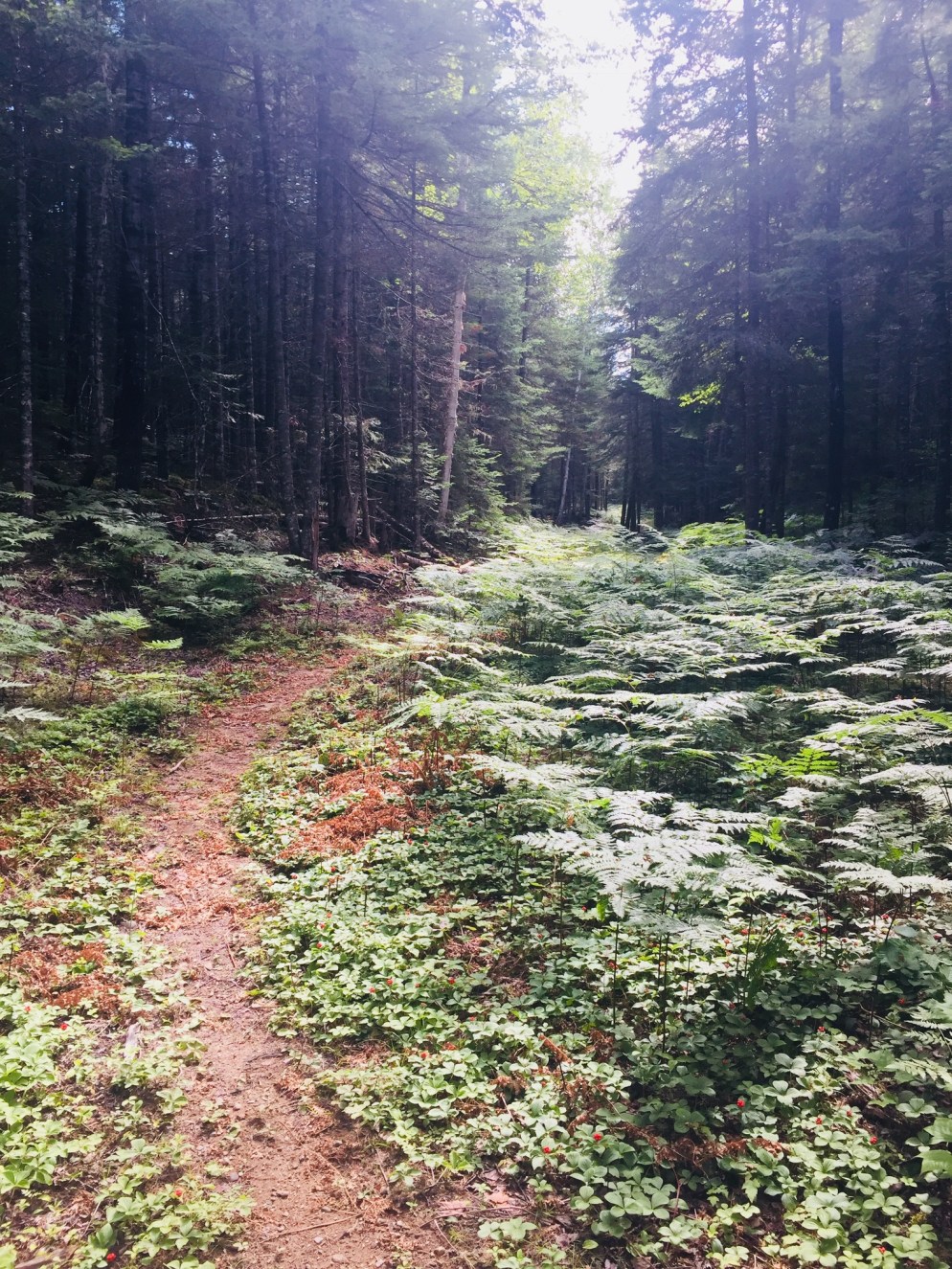
The gradual climb up the gravel road, bounded by wildflowers and berries.
The steep trail that turns off through the woods at utility pole 18.
The trail route provided by the AMC guide needs no addition – we easily followed the logging road (fire road 32) from the trailhead, past the turn-off for Little Peaked Mountain, and turned into the woods at utility pole 18. A steep trail through the woods (which felt like a jungle on this hot, humid day) leads up to the open areas below the summit.
Mom/wife and daughter reached the cliff edge below the summit, and enjoyed the cooler breezes, while Dad continued to the top and looked at the expansive views. The longer alternative, taken by another group of hikers while we were there, is to take the road all the way to the summit cell tower.
Benchmark at summit.
Cell tower at the end of gravel road.
The trip down the mountain was much faster than the way up, descending the gravel road with occasional stops for raspberries and blackberries. Little Peaked Mountain would have to wait for next time. Most importantly, a stop on Route 9 in Aurora at Mace’s American Snackbar for cold Gifford’s ice cream capped a great hike.
(Disclaimer: This post contains affiliate links, and as an Amazon Associate Hiking in Maine blog earns from qualifying purchases.)
Off the West Falmouth exit of I-95 (exit 53), tucked behind the Hannaford plaza, is a hidden gem. You can find a detailed description of the land and its history at the Town of Falmouth site regarding the River Point Conservation Area. This 1.4 mile network of trails also links to the Cross Falmouth trails and Portland Trails, as well as being accessible by canoe from the Presumpscot River.
On the cloudy late July afternoon we visited the trails, mosquitoes were thick, and ticks were abundant in the tall grassy areas, so plan appropriately with insect repellent/gear. This did not hamper our enjoyment of the flowers and birds throughout the conservation area. Also, stay on the trails to avoid poison ivy.
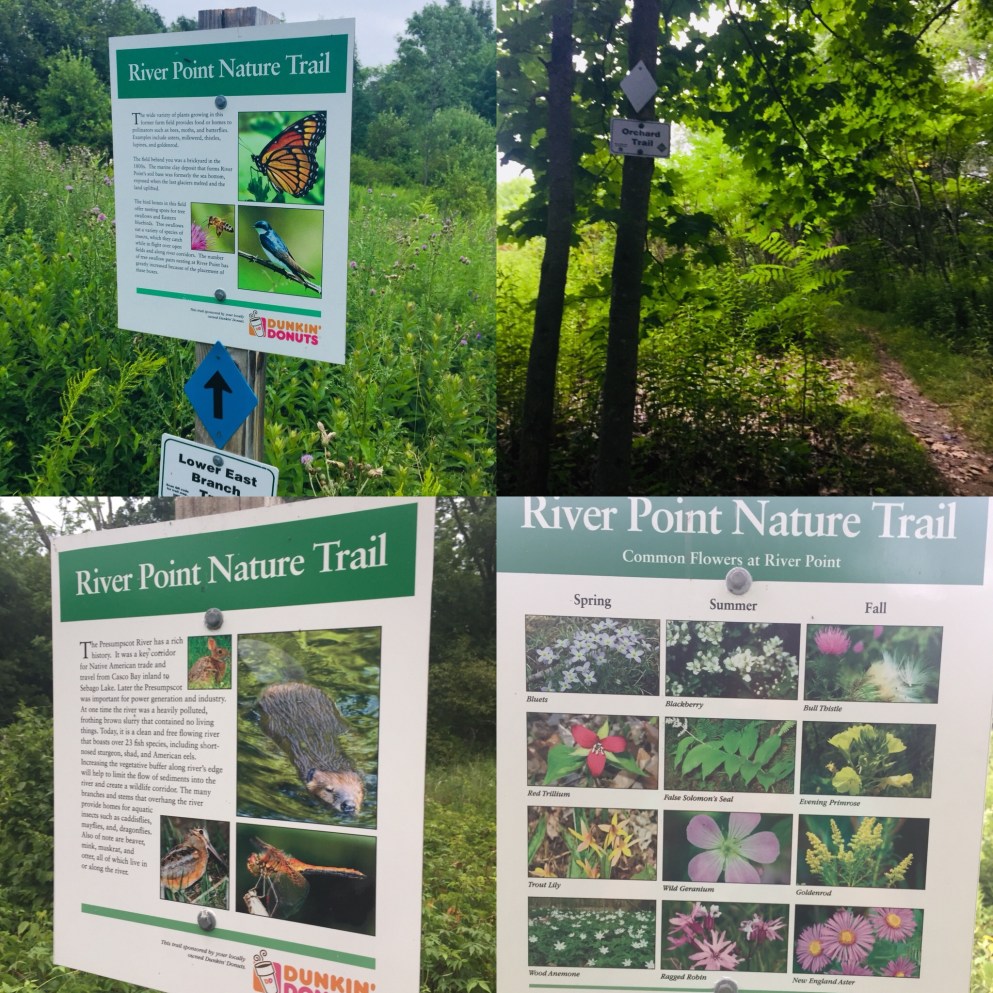
Interpretive signs along the trails.
The interpretive signs along the trail would be good for scavenger hunt-type activities with kids, and provide insight to the area, its history, and the flora and fauna that inhabit it. The signs also disclose that the trail is sponsored by Dunkin Donuts, which has a location at the adjacent shopping center.
A massive beetle encountered on the trail.
According to the Town of Falmouth website, River Point was used for thousands of years as a campsite by Native Americans as they traveled seasonally from Sebago Lake to the ocean. The first white settlers homesteaded the original 151-acre property in 1775, and farmed there until 1883, establishing a brickyard and shingle mill on the property. In 1859, the Kennebec & Portland Railroad line bisected the property. The bridge, the only bridge in Maine built to connect to just one house, provided access to Route 100. The town acquired River Point in 1995 when the shopping center was developed. The Town Council designated the 41-acre property as a conservation area in 2009.
This small conservation area, with a short, flat loop trail, is perfect for a lunchtime or after-work walk in the greater Portland area, and the open fields, with birdhouses, are excellent places to observe songbirds (and in the evening, bats). The town of Falmouth lists allowable uses as: Hiking, mountain biking, snowshoeing, cross-country skiing, fishing, and nature study. For those with pets, just check the signs beforehand, as pets are not allowed when birds are nesting.
(Note: As of May 17, 2020, according to MH&T website, all Maine Huts and Trails “huts are closed – there is no access inside the huts for water or bathroom facilities. The bunkhouses are closed. Please know it is for your safety and the well-being of others. Be well, stay healthy.”)
Hello! I am the wife and mother of this happy hiking team in Maine. I tend to exist on the hiking periphery and I’m known mostly for cherry-picking the hikes I attend and forgetting critical supplies, like appropriate snacks and waterproof shoes.
On that note, welcome to the post on our recent 3-day hike from the Long Falls Dam trailhead in New Portland, Maine to the Flagstaff Hut (1.8 mi) to the Grand Falls Hut in West Forks, Maine (11.2 mi) and back (13.0 mi) to the trailhead (described on the Maine Huts and Trails website as the Hut-to-Hut Shoreline Trek). Maine Huts and Trails, which has four “huts” in the Carrabassett Valley region of western Maine, is a non-profit with a stated mission “to create and operate a world-class system of backcountry trails and eco-lodges for people-powered recreation to enhance the economy, communities and environment of Maine’s Western Mountain region, for the benefit of current and future generations.” You can view and download trail maps here.
Trailhead on Long Falls Dam Road
View West across Flagstaff Lake from Shore Trail
Husband and I (we were sans daughter this trip) took a route that began with a two-mile walk along the Shore Trail from the trailhead along a wooded route bordered to our left by glimpses of nearby Flagstaff Lake to the Flagstaff Hut – a beautiful, modern and welcoming property. Flagstaff Hut is the largest and most popular of the huts in the Maine Huts & Trails system and was built in 2009. I was glad to get there and take off my shoes. I know what you are thinking – she is tired after two miles? The answer is yes- it was incredibly hot. A handwritten dinner menu on a chalkboard awaited us, letting us know that at promptly 6pm we would get meatballs and pasta and blueberry pie!
A patient and friendly staff member who was turning out fresh bread in the kitchen greeted us and told us where our room was (she even switched us to a private room because one was available), answered questions about where we could swim and borrow paddleboards and explained the token system for the shower and how to operate the composting toilets. The main building houses a large community/dining area, a reading room, bathrooms, showers, and a drying room for wet gear. The dormitories are separated from the main lodge at Flagstaff Hut.
Yes, it looks like a crime scene photo, but this is what a room looks like.
The room was spartan but clean, well-lit and I won’t say “comfortable” but I am comparing that to my bed at home. It’s a thin, plastic mattress, folks. And a plastic pillow. But it sure beats the ground.
A snowshoe hare in its summer colors looks for food near Flagstaff Hut
Dinner is served family-style promptly at 6:00 pm. The food is fresh, sometimes local and healthy. On the night we were there, there were thirteen of us spread over two tables and the staff accommodated all sorts of dietary restrictions, which is no small feat these days. We also tried lobster mushrooms foraged by the staff. Guests mostly discussed their plans for the next day or tips about what they had already seen and done in the area. It is a family-friendly environment, with children of various ages reading and running around. After dinner, we took a guided tour to see how energy is used throughout the hut and then we took a .1 mile stroll along the Birch Trail to the end of the small peninsula to watch the sun set over the Bigelow Mountains.
Kids were swimming and friends were chatting. We returned to the reading room where I read about the history of Flagstaff Lake, which was man-made and a controversial project at the time it was created. Quiet time begins at 9:30. Make sure to bring earplugs because you can hear your neighbor snoring. I would also bring a fitted sheet for the mattress next time, as it can feel like sleeping on a diaper.
The shower is warm and quick and will give you an activity especially if you wake up at 6:15 ready to walk but need to wait until 7:30 when breakfast is served and the sandwich bar is put out so you can make a bag lunch. With sausages, eggs and pancakes in my belly, I was ready to go! We set out at 8:30 am to walk the Maine Hut Trail to the Grand Falls Hut. I must admit that I had some anxiety about the distance because it was 11.2 miles and I’ve never walked that far with a pack on. Let’s be honest here, I haven’t walked one mile with a pack on prior to this. Fortunately, my pack was light and husband graciously carried my water and a few other supplies.
The narrow trail runs along the Dead River for several miles
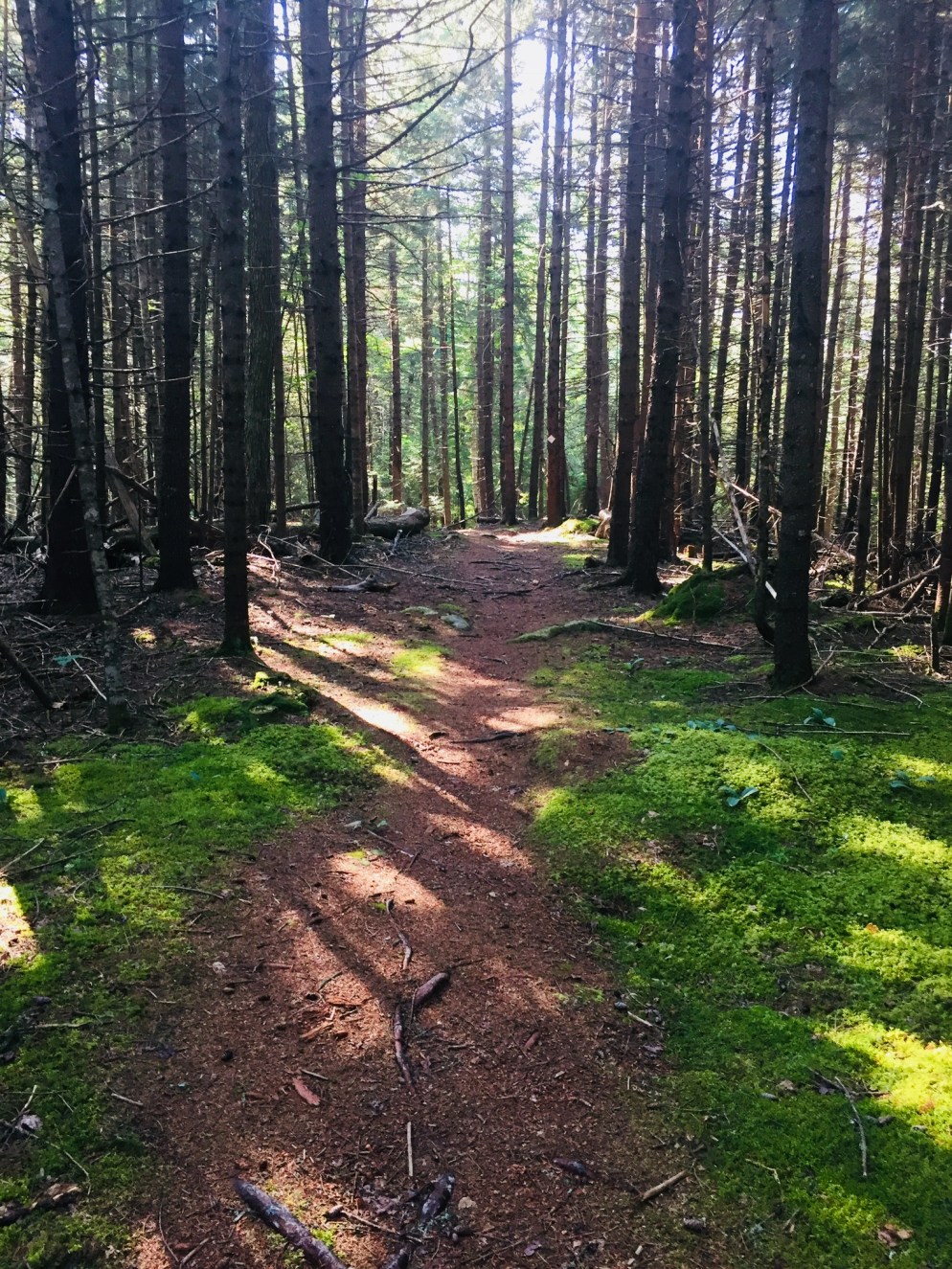
I discovered quickly that this was going to be a single-file walk. The trail is well-marked and clear but too narrow for two people to walk side by side, so conversations are nearly impossible. Also, you may not see anyone on the trail for the entire 11.2 miles, as was the case with us. The first third of the trail hugs Flagstaff Lake and then you enter the wooded Big Eddy area, and finally you follow the Dead River for the remainder of the trail. While there are numerous signs that say “Maine Huts & Trails” there are very few mileage markers or landmarks until you get close to the huts. Just after leaving the hut, the first bit of the trail was boggy and wet and not a good place for expensive, new running shoes. I’m just saying. The Big Eddy area was my favorite walking area because of the soft, pine-covered floors and the sunlight filtering through the tall trees onto the trail. Hiking poles are not necessary but we both found them helpful. There is very little elevation on this route and the only place I would say you have to be careful is the part right around the Grand Falls, which is rocky and steep for a short period. It is not so much a hike as it is a very long walk in the woods and along a river.
The peaceful morning sun hitting the trail
Yes, do bring a mosquito net and some Deet. Due to the proximity to the water and the low-lying areas, there were several stretches of trail that I did a lot of cursing and swatting and power-walking and questioning my decision to walk this trail. I came out looking like I had the chicken pox. Husband is completely unappealing to bugs.
There were brief pit-stops to pick blueberries or raspberries along the way, but we mostly just motored along. The banks are steep, and not conducive to swimming, except at a canoe and kayak launch off Dead River Road, and then a small beach right before Grand Falls.
We stopped for about twenty minutes to eat smushed, warm tuna salad sandwiches, raisins and granola bars, but there were no obvious picnic spots along the way, save for a lone picnic table about 2/3 into the trip and not marked on the map. The picnic table may actually have been placed there by mosquitoes as a trap.
Moose use the trails, too.
Although there was evidence of bear and moose, we did not see any. Shortly after crossing the Dead River on a footbridge, we startled a large predatory bird mid-meal, causing it to drop a headless squirrel Ozzy Osbourne-style right next to us. During the course of the three-day hike we saw a garter snake, a small green snake, kingfishers, a hawk, a school of trout and lots of curious red squirrels.
The big highlight is the impressive “Grand Falls.” It is certainly mesmerizing, and you can stand close enough to cool off in the mist it throws off.
We got to the Grand Falls Hut at about 2:30pm and quickly stripped off our socks and shoes (no trail shoes in the huts) and met our two new hosts who directed us to our room and said they would be available if we had questions. My first question was “can you drive me back to the trailhead tomorrow?” (no.) “How about a gear shuttle?” (we’ll check on that.) “How about a canoe?” (We’ll check on that.) “Is there a shorter way?” (no.) “Can I have a glass of wine?” (yes.)
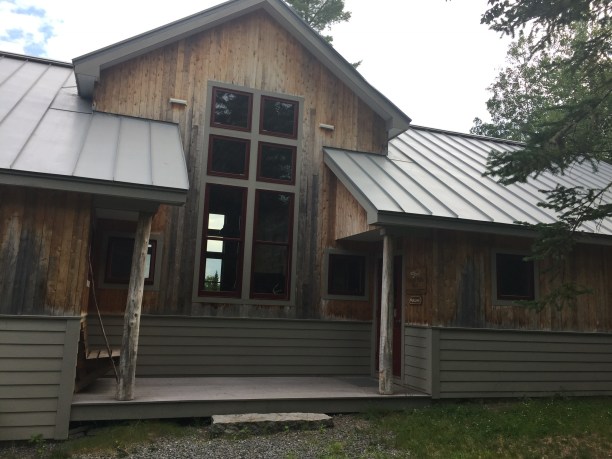
Grand Falls Hut
The hut was quiet and peaceful and had a similar set-up as Flagstaff. The dorms were connected to the main lodge through a walkway. The showers felt deliriously good. How rewarding to walk all day, then get clean, grab a book and sit on a couch in a beautiful, sunny lodge with a glass of wine next to the man you love? It was also nice to be able to have a conversation with him after staring at his back for six hours. It was not as nice to contemplate the fact I had to walk 13 miles back to the car the following morning.
Next time, we will paddle this stretch of the trail
I would highly recommend renting a canoe in advance from Maine Huts and Trails, putting in at the Big Eddy canoe launch, and canoeing the 6 miles along the Northern Forest Canoe Trail on the Dead River to break up the walking. Everyone else staying at the lodges had canoed or kayaked that stretch. Once you are at Grand Falls Hut you will have your canoe/kayak and at least the option to paddle that stretch (I feel certain if you elected to leave the vessel there at that point and walk back, you could). I would also strongly suggest that you check in with your group and be honest about how nice it would be to have your gear shuttled back to the trailhead. By the time you get to Grand Falls Hut and your feet are tired and your shoulders are sore, you very likely might not have that option anymore, as was the case with us – no canoes left and no gear shuttle available. There may or may not have been some internal cursing when I found that out. I guess this is how I learn my physical limits!
Before dinner, we took a short walk along the Fisherman’s Trail to a swimming spot. We soaked our tired feet in the cool water and enjoyed watching the Dead River rapids. Dinner was plentiful and delicious – roasted chicken with pesto, kale salad, warm berry crisp. Guests traded stories by a big bonfire and quiet time began at 10 pm.
The dining area at Grand Falls Hut
The next morning we set out at 8:15 after a breakfast of eggs, sausages and fried (local) potatoes to hike all the way back along the same route to the the trailhead. You know it is a long walk when you finally see a sign letting you know that you have five miles left and you are excited. It is about 13 miles from Grand Falls Hut to the Flagstaff trailhead and it felt so nice to get my socks and shoes off, change my clothes and sit in an air conditioned car for a while. We arrived at the trailhead about 2:20 pm (yes, we were moving along!!) and a large, boisterous group of parents with teenage girls was just gearing up to hike into Flagstaff Lake. We let them know that they picked a great adventure!
Dad and daughter hiked Mt. Zircon (2,240 ft) in Milton and Peru, Maine, on July 21, 2018. This moderate out and back 5.8 mi hike took us about three hours, with a picnic lunch at the summit, and plenty of breaks to enjoy the scenery. As described in online articles and guides, the start of the hike, a gravel road off South Rumford Road across from the Androscoggin River, is not the easiest place to find (Google Maps will likely point you to the wrong side of the road). The best directions we found were in the AMC Maine Mountain Guide – look for the Rumford Water District tree farm sign, and the gravel road leading uphill past a red gate.
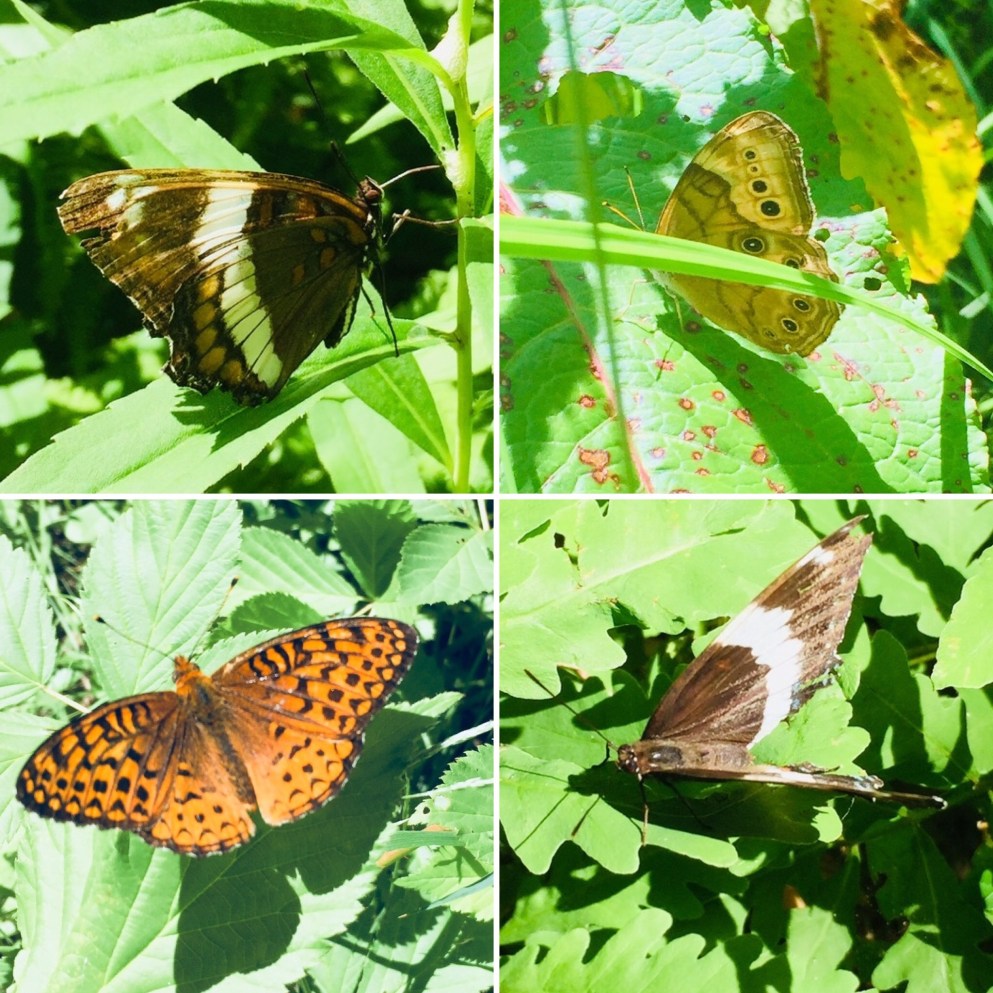
The trail starts with a steady uphill climb on a gravel road for 2.1 miles. This summer day, there were numerous raspberries and wildflowers on the sides of the road and the edges of adjoining woodlots, as well as a variety of colorful butterflies.
Butterflies along the Mt. Zircon trail
At about 1.5 miles, we reached a spring house on the left side of the gravel road, with an outlet pipe falling into a mossy hollow on the right side of the road (you can read more about the Moon Tide Spring house and the now-defunct Zircon Water Bottling Company here). The water was cold and fresh, and we filled our 3L Osprey water bladders to capacity on the return trip, and enjoyed this spring water for several days after the hike.
The Moon Tide Spring House and its outlet
At 2.1 miles, we turned left onto the path to the summit through the woods, which gained elevation quickly along a narrow but well-maintained path.
We saw a variety of toads and a couple wood frogs, as well as the recent tracks of deer.
Deer tracks
Perching toad
Find the toad?
To our delight, the beginning of the rocky section to the summit was filled with blueberries, our first ripe ones of the season. The path to the top weaved past several rocky ledges, giving views in almost all directions, including the Whites, Black Mountain and Sunday River.
A dragonfly zooms past the tattered flag and cairn atop Mt. Zircon.
We had packed a lunch, and enjoyed it in a shady spot between the summit cairn and the fallen fire tower, with squadrons of dragonflies keeping away any biting flies. After we finished eating, we used the bag and containers from lunch to collect blueberries to bring back for the next morning’s pancakes, being mindful of the fragile plants and lichens surrounding them.
The same path and gravel road brought us back to our car after a relaxed downhill walk. We had the trail to ourselves most of the time, only seeing a couple people on the gravel road walking their dogs, and two riders on dirt bikes on the ATV section. Mt. Zircon is a quiet hike which delivers great views, fresh berries, and, as a bonus, cold, clear spring water.
(Disclaimer: This post contains affiliate links, and as an Amazon Associate Hiking in Maine blog earns from qualifying purchases.)
Sabattus Mountain (1,253 ft) in Lovell, Maine is an easy, family-friendly hike with sweeping views of the Lakes Region and White Mountains. Dad and Mom completed the 1.6 mile loop in about forty-five minutes at a relaxed pace, and Daughter went on ahead and finished in about half an hour. You can find a detailed description of this hike in the AMC Maine Mountain Guide, or the AllTrails app (download the map beforehand – not much cell service near the mountain).
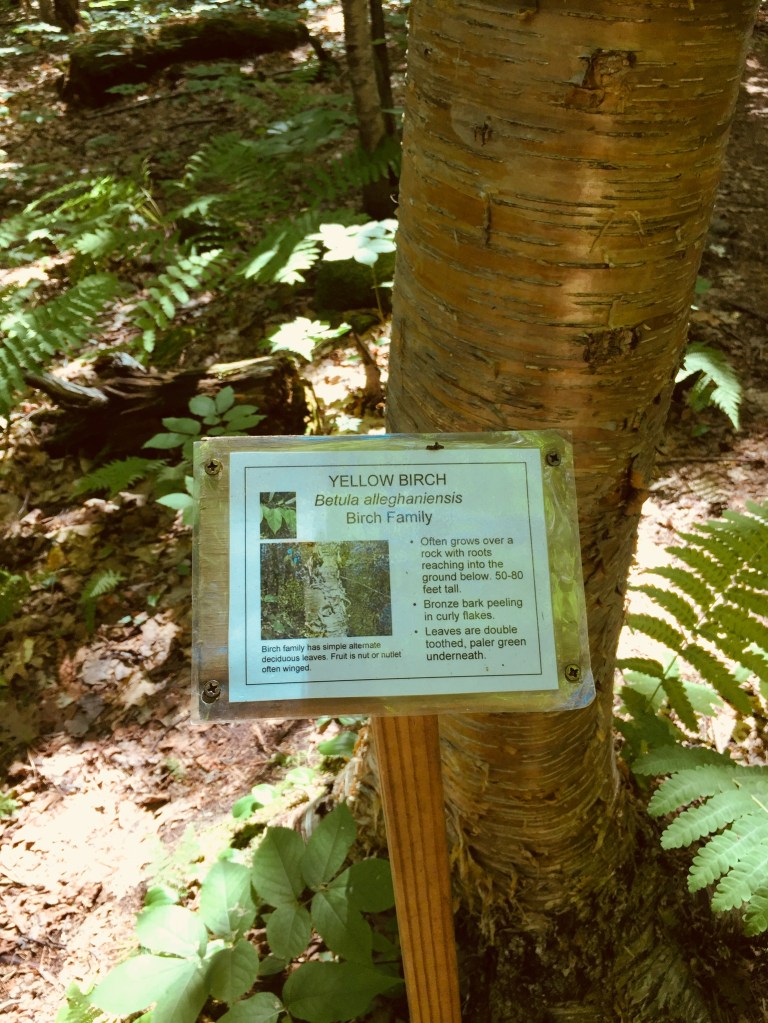
Can you tell birches apart? The Sabattus Mountain markers also help with ferns, mosses, and other trees.
The sign at the trailhead, located off Sabattus Mountain Road, credits cooperative efforts between the Maine Bureau of Parks and Lands and the Greater Lovell Land Trust (GLLT) with making possible public access to the area. A look at GLLT’s web site shows they have many educational activities to offer, and multiple other trails. The Sabattus Mountain loop trail, which passes through a variety of terrain, includes helpful markers identifying the flora (nice post here on their installation). We headed left at the loop to go up, and this seems like an easier ascent than the right/westerly path, which could be slick in rainy weather.
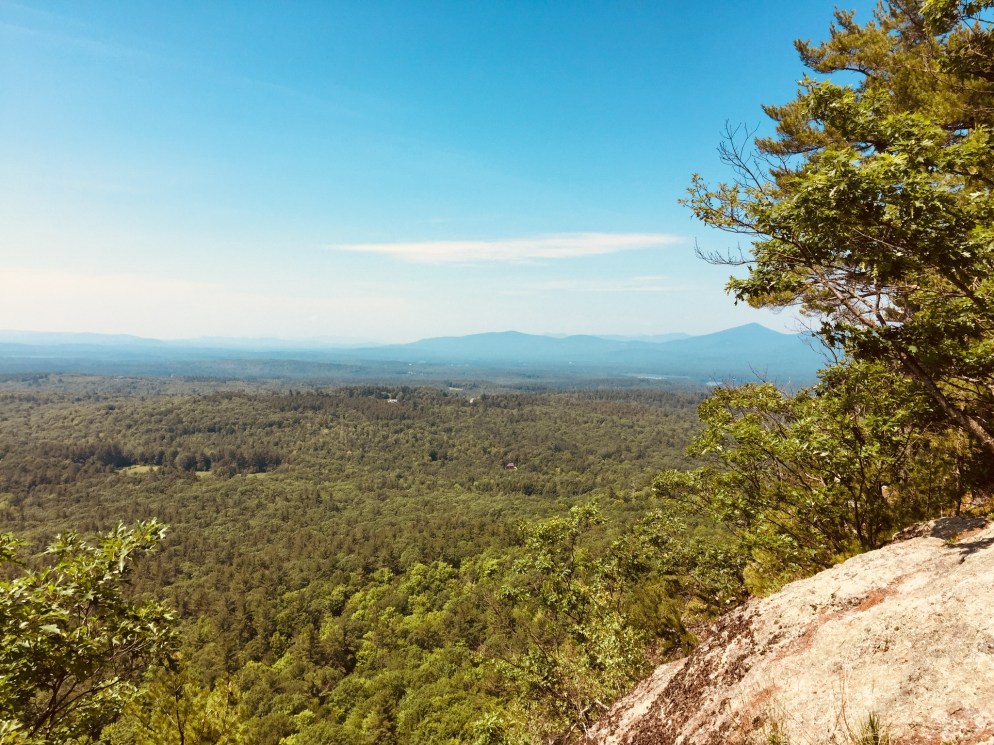
The views from the summit were as advertised on this clear day at the end of June, and there are even a couple park benches from which to relax and enjoy the scenery. Use caution with small children and dogs, as the cliffs drop off steeply. An observation tower at the loop junction is no longer there – just the base exists now.
Park bench on the summit
After a stop at the summit, we completed the loop, returning to the trailhead. A great stop before or after this hike is the Center Lovell Market, which has everything you would want for a picnic, as well as a restaurant. Sabattus Mountain is not that far from beautiful Pietree Orchard in Sweden, which has a farmstand, pick-your-own fruit options, and pizza. And, as mentioned before on this blog, Ebenezer’s Pub in Lovell is the perfect place to enjoy a Belgian beer.
(Disclaimer: This post contains affiliate links, and as an Amazon Associate Hiking in Maine blog earns from qualifying purchases.)
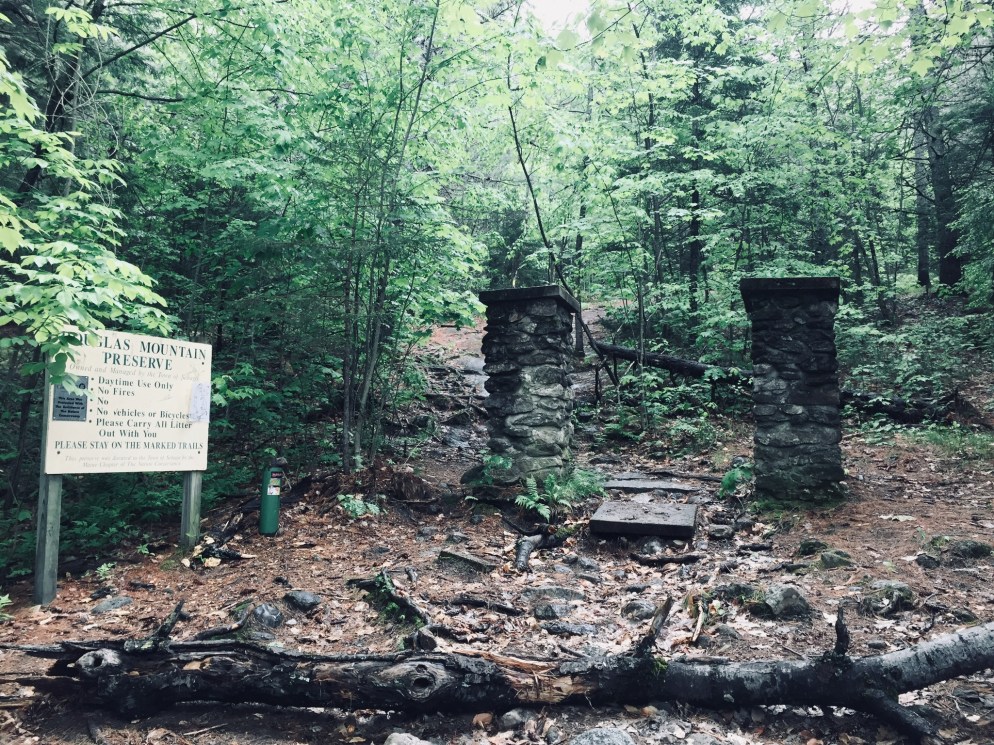
Douglas Mountain, the highest of the Saddleback hills near Sebago, is the third in a recent trio of Lakes Region hikes, preceded by Bald Pate Mountain and Holt Pond Preserve, all of which are in close proximity (I did the three hikes in a single day, so they are eminently achievable day hikes). I hiked Douglas Mountain (1,416 ft) in Sebago in June 2018, via the Eagle Scout, Nature Loop, and Ledges Trails (2.3 miles, approximately one hour). This is a hike we’ve done several times as a family. These trails, part of the 169 acre Douglas Mountain Preserve, are maintained by the town of Sebago, which has a trail map and guide on its site. As usual, the AMC Maine Mountain Guide has a great description. A fee of $3 is payable at a kiosk in the parking area.
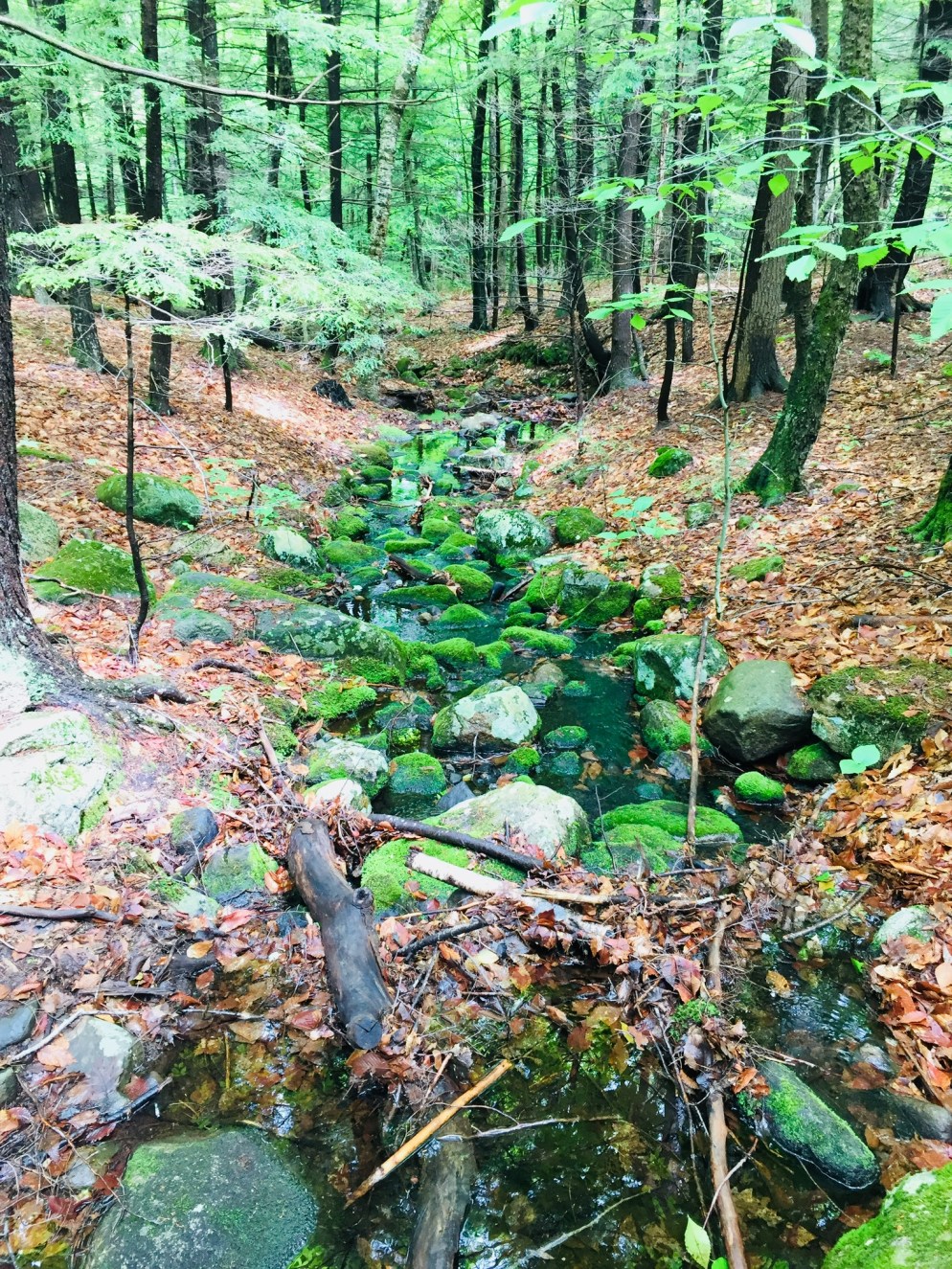
A mossy brook along the Eagle Scout Trail
The climb is a pleasant walk through the woods on a well-traveled path, with streams and beautiful trees. On the Nature Loop, you can start to get a sense of height from the ledges, but for the most part, the foliage hides the horizon and longer views until you reach the summit. As for Nature on the Loop, there were many mourning doves, plenty of wild blueberry plants, and innumerable chipmunks and red squirrels, who seemed suspiciously acclimated to humans.
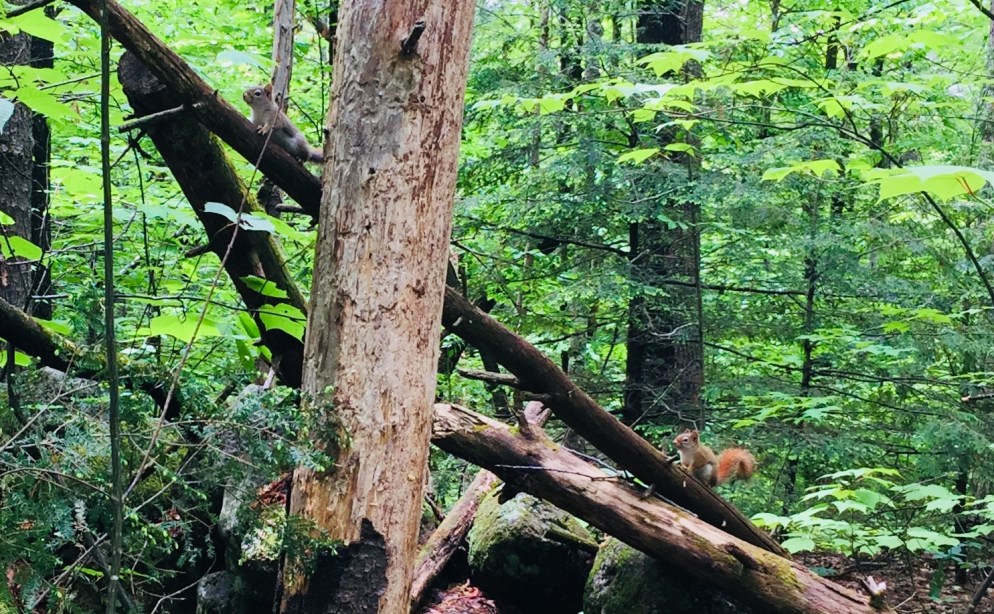
Two red squirrels hope for a handout along the Eagle Scout Trail
The summit’s stone tower allows for panoramic views, and a pictorial display helps to identify which peaks, lakes, and points of terrain you are able to see on a clear day.
Entrance to the climb of the Ledges Trail, or the end of the trail, depending on your direction of travel
A steep descent down the Ledges Trail can be slippery in wet weather, so use caution in selecting your route. The last .4 miles or so back to the parking lot is reached by walking along Douglas Mountain and Ledges Roads, past beautiful houses. This route to the summit is substantially shorter than the Eagle Scout Trail, and would be a short, challenging scramble for younger hikers.
(Disclaimer: This post contains affiliate links, and as an Amazon Associate Hiking in Maine blog earns from qualifying purchases.)
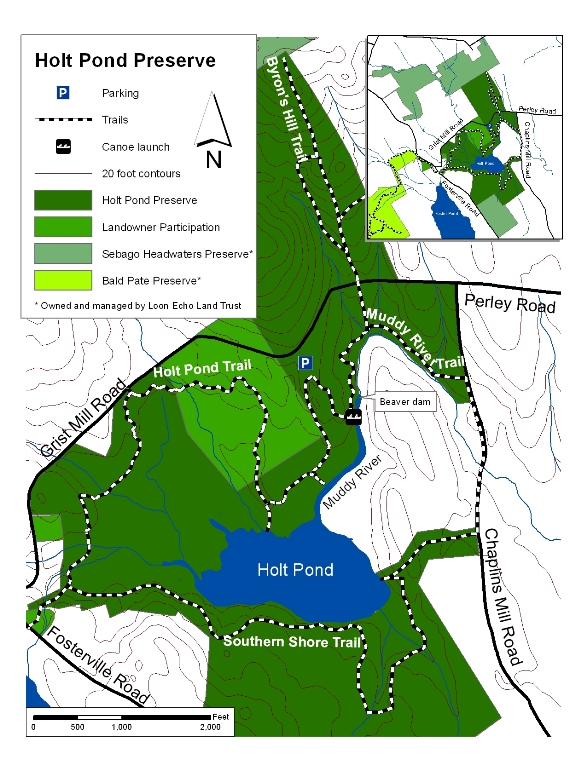
The Lakes Region of Maine continues to be a great place to hike. I hiked Holt Pond Preserve in Bridgton, what turned out to be a 4.5 mile loop (approximately an hour and forty-five minutes), on a June morning after heavy rains. Holt Pond Preserve is a preserve of over 400 acres, maintained by the Lakes Environmental Association (LEA), who have a site with interpretive guides and maps.
LEA Map from website
No dogs, bicycles, or ATVs are allowed at Holt Pond. There is, however, a canoe launch, which looks like a great way to see Muddy River and Holt Pond.
The preserve was alive with the sounds of waterfowl, including ducks and geese, and the distinctive calls of red-winged blackbirds and frogs. The boardwalk allows for fascinating views of plants that you would normally need hip waders or a kayak to see, particularly pitcher plants.
Pitcher plants next to the boardwalk
These carnivorous plants had flowers above them when I visited, something I had not yet seen. The bog breathed fetid air through the gaps in the boardwalk, a contrast to the cool breezes above. Animals use the boardwalk pathways, too, and I tagged along at times behind a chipmunk and a small fledgling bird, both of whom were unable to yield the path until they reached solid ground.
The trail’s path changed from bog to pine forest toward Grist Mill Road, and following it became more difficult, as it was overgrown, with a fair amount of upheaval to bridges and boardwalks from spring rains.
The trail was a bit overgrown in places
This moisture also brought with it plenty of mosquitoes. For those attempting the Southern Shore trail on the far side of Holt Pond, I would highly suggest pants and long sleeves, as well as insect repellent and a weather eye for poison ivy.
This stone wall on the trail bears the telltale sign of chipmunk dens – piles of pine cone scales
The trail skirts private property by moving onto Chaplins Mill Road briefly to the east of the preserve. I clearly missed the turn back to the trail, so I took Grist Mill Road east (left) to make a loop back to the parking area.
While the full perimeter of Holt Pond might be a bit much for most kids, the boardwalk near the parking lot is a perfect excursion for young ones, particularly using the interpretive guide on LEA’s site.
And, as mentioned in the Bald Pate post, this trail network is connected to the Bald Pate Preserve via the Town Farm Brook Trail, which ascends Southwest to the Bob Chase Scenic Loop.
The Lakes Region of Maine surrounding Sebago is a fantastic area for hiking, with many hikes in striking distance of lakefront idylls and other recreation. Bald Pate Mountain (1,150 ft) is an easy to moderate hike in Bridgton, Maine, with many trail options, comprising 6.7 miles of trails.
On this June morning, I took the Bob Chase Scenic Loop to the summit, then the South Face Loop Trail, returning the same way to the parking lot, for an approximately 3 mile hike (about an hour and fifteen minutes at a relaxed pace). Bald Pate trails are well-chronicled in the AMC Maine Mountain Guide, and the trail map and descriptions are available online from the Loon Echo Land Trust, which owns and manages the 486 acre Bald Pate Preserve.
Bob Chase Trailhead at the parking lot/kiosk.
Approaching Bald Pate from the south on Route 107, you can see the exposed rock that is the mountain’s namesake. The parking lot is located on the east side of 107, just south of Five Fields Farm and XC Ski Center, at the top of a large hill. The climb up 107 allowed the car to do a lot of the work of getting to the summit before I even started hiking.
Face of Bald Pate Mountain in winter, Bridgton, Maine
When I arrived, the lot was empty, and a small circle of depressed grass and milkweed next to my car looked like a place where a deer had slept the night before. I started up the Bob Chase Scenic Loop, with birch trees, lady slippers, wild blueberries, and ferns on either side, and red squirrels chattering loudly.
Views west from the Bob Chase Trail.
A wrong turn took me around a pleasant diversion/backtrack to the other side of the Bob Chase Scenic Loop, and I wound my way back to the summit. This was not the fault of the trail maintainers, as the Bob Chase Loop is clearly marked in blue, and the South Face Loop is clearly marked in orange.
View from the South Face Loop toward Peabody Pond.
The summit is easy to reach in 25 minutes or less, with excellent views, and it looks like a riot of wild blueberries awaits those who hike it later in the summer. The South Face Loop was much more challenging than the Bob Chase Trail, descending steeply, skirting the face of the mountain, and then ascending quickly to rejoin the summit (I thought several times, I already climbed this, didn’t I?).
The Pate Trail is a short, steep (.1 mi with 360 ft of elevation gain) trail connecting the summit to the South Face Loop, and I will have to try this one next time, as well as the Moose Trail, which can create a different loop back to the parking lot.
Don’t forget to “tip your bartender.” Conservation takes time and money.
This trail network is connected to the Holt Pond Preserve via the Town Farm Brook Trail, which descends northeast to the Holt Pond Trail, a link which could create a much longer hike in a very different environment (bog walkway). The Bald Pate summit is a nice, short hike, suitable for most age and skill levels, with great vistas along the way.
(Disclaimer: This post contains affiliate links, and as an Amazon Associate Hiking in Maine blog earns from qualifying purchases.)
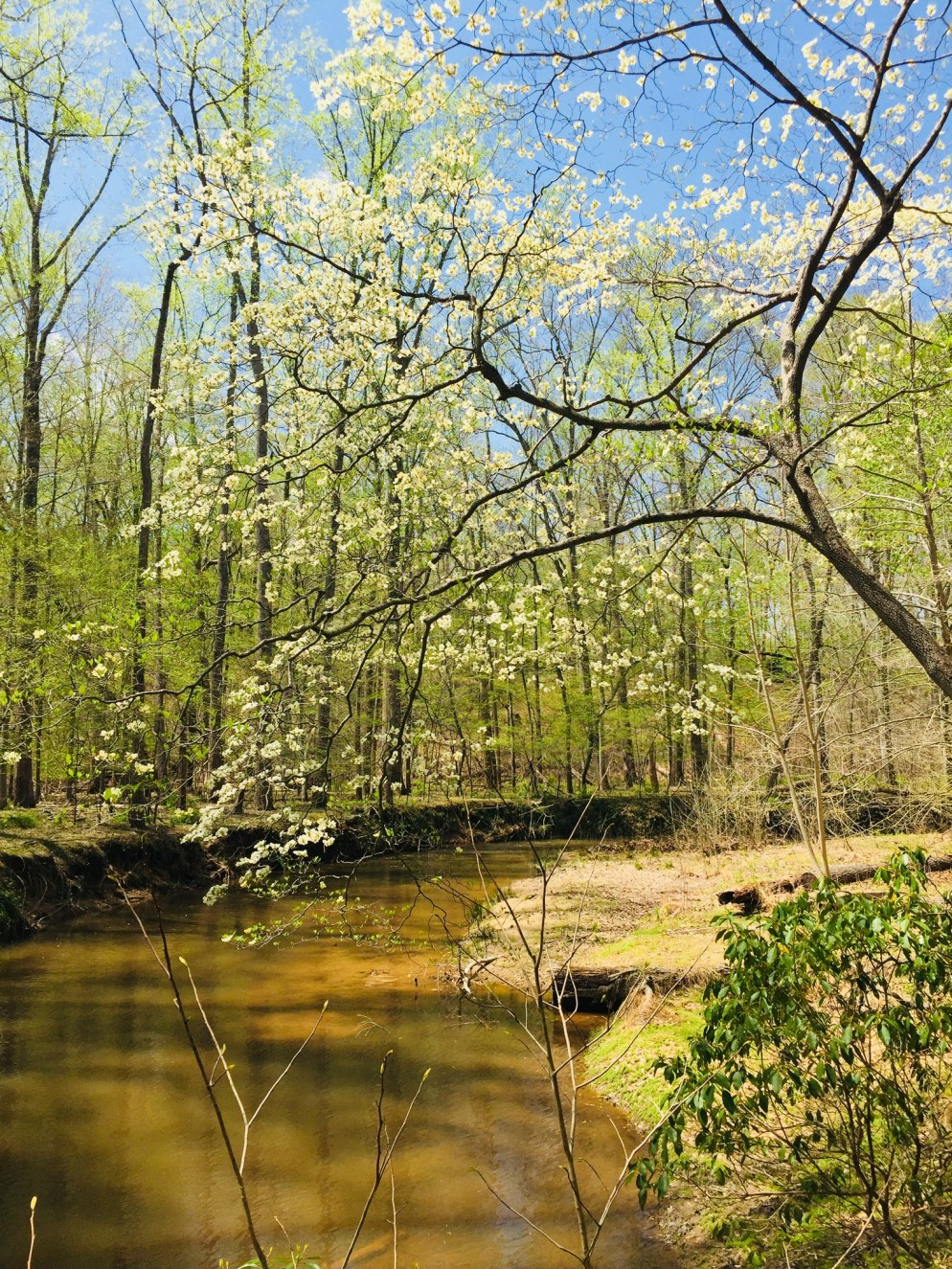
A bend in Quantico Creek at Prince William Forest Park
This blog has been quiet for a few weeks. When you’re out of town, whether for business or vacation, you can easily get locked in to indoor spaces because of the comfort of a hotel room or the challenge of unfamiliar surroundings, particularly in a place that seems like it’s hopelessly locked in suburban sprawl. But that would be a shame, as there are always new trails to explore via hiking and/or trail running which may hold surprisingly different flora and fauna.
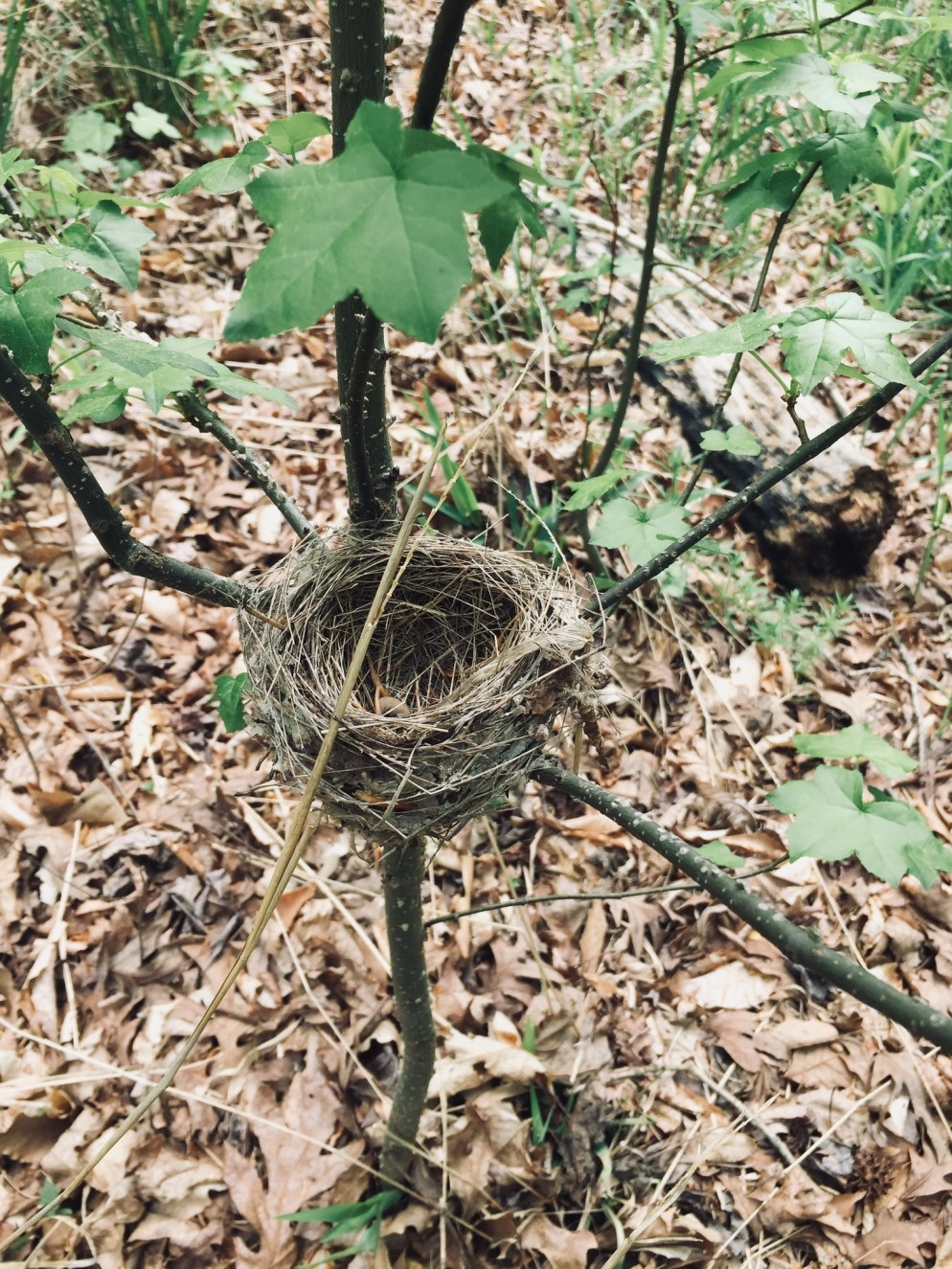
Bird’s nest at Locust Shade Park
I spent a few weeks in northern Virginia, and found that there are wild spaces to be found- not as wild as Maine, but still beautiful and historic, and blooming in what seemed to be a full season ahead of the Northeast. I used the All Trails app, National Park Service, state and county government websites, and word-of-mouth to find parks. Here are a few:
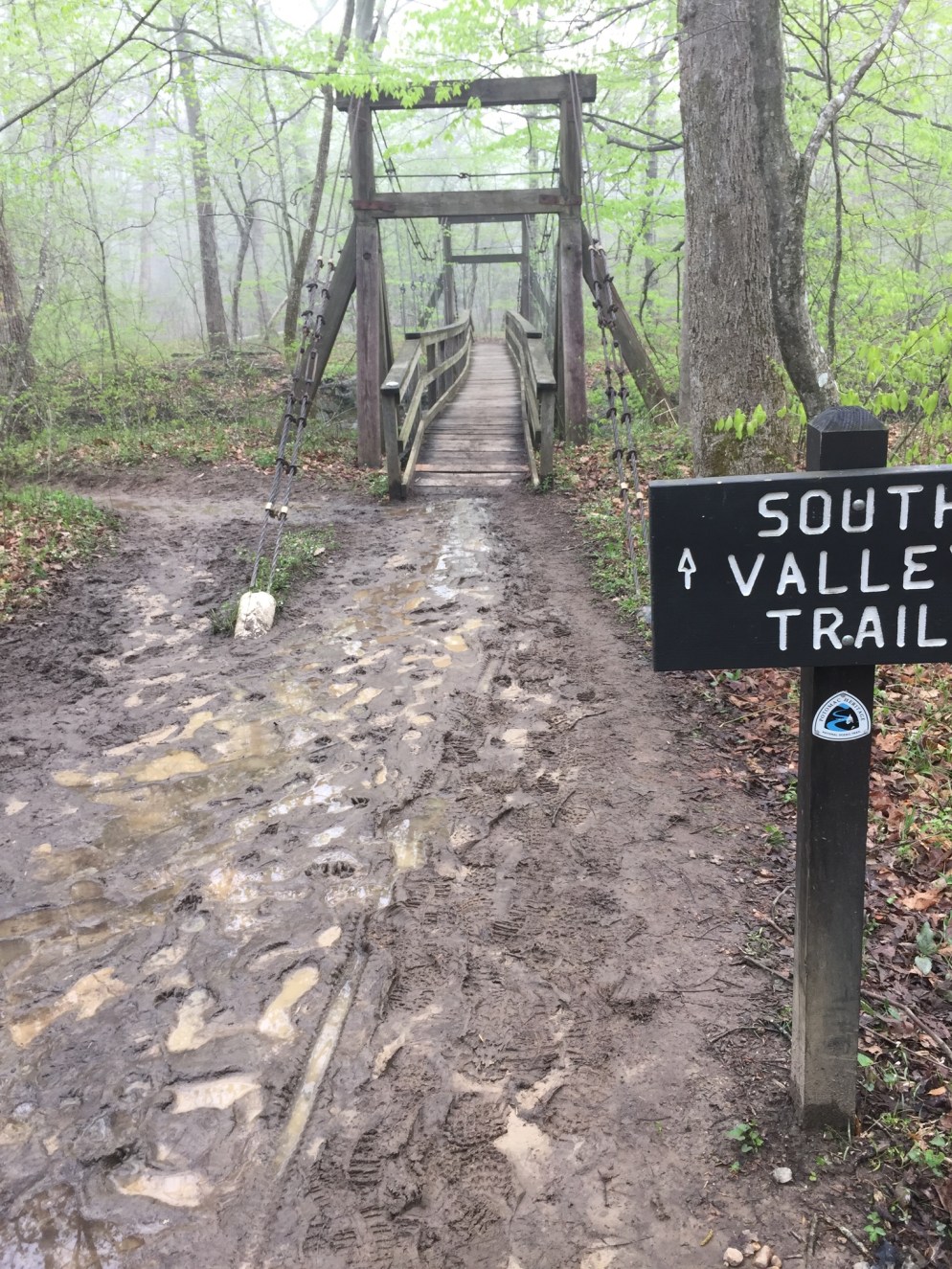
South Valley Trail to North Valley Trail at Prince William Forest Park
A $20 per vehicle admission fee (valid for 7 consecutive days) gets you entrance to a beautiful forest sanctuary in Triangle, VA with miles of trails (see official park maps here). I chose a fairly aggressive loop from the Visitor Center parking lot, using the Laurel, South Valley and North Valley Trails, Burma Road, Scenic Drive, Oak Ridge and (again) South Valley and Laurel Trails to create a tour of the park that spanned almost 15 miles.
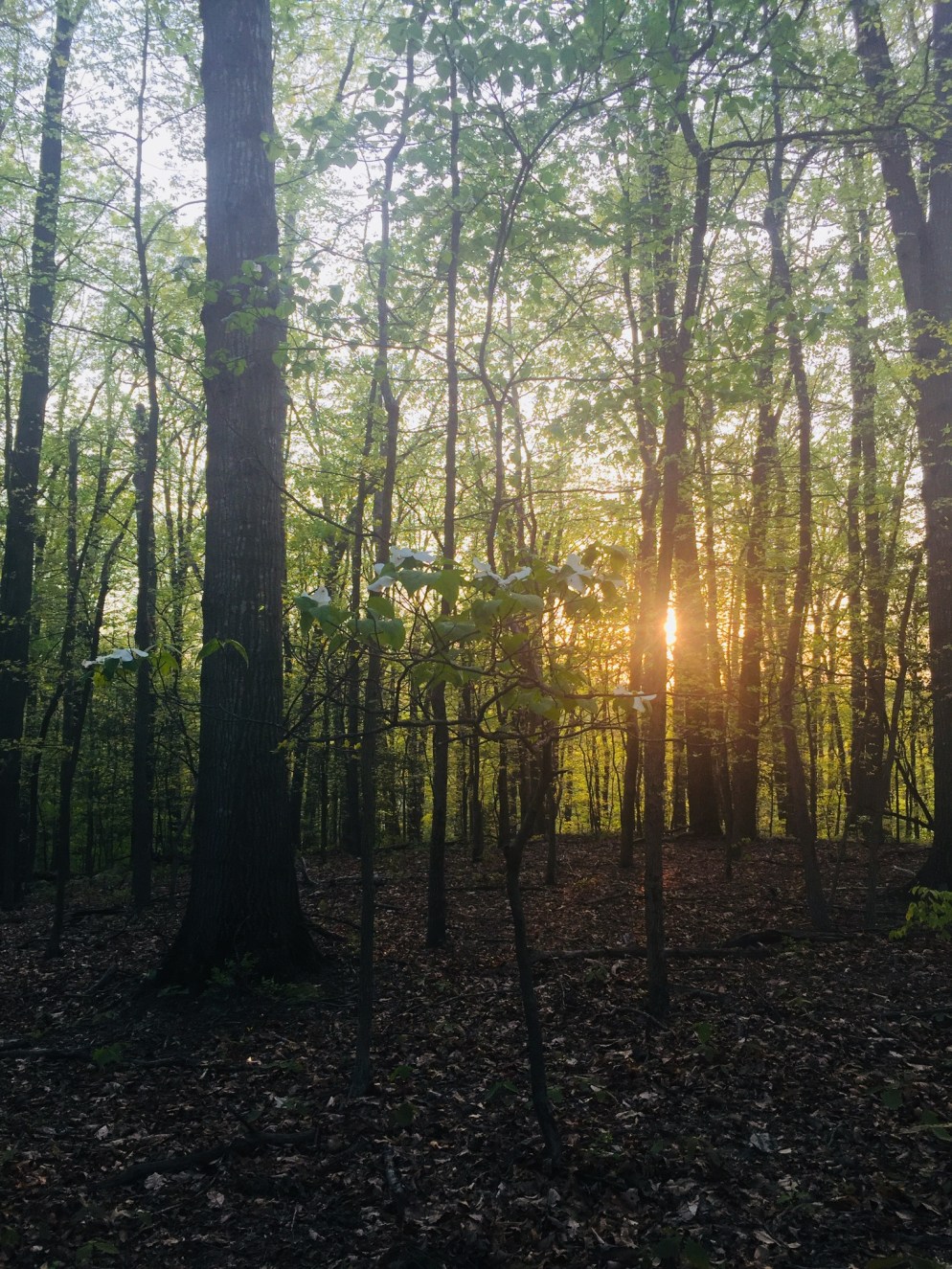
Like the other trails and parks I will describe below, this park appeared to have sustained heavy trail damage from storms, and trail crews had been busy. The loop took me through rolling hills, and included waterfalls, dogwood blossoms, and a large variety of wildflowers.
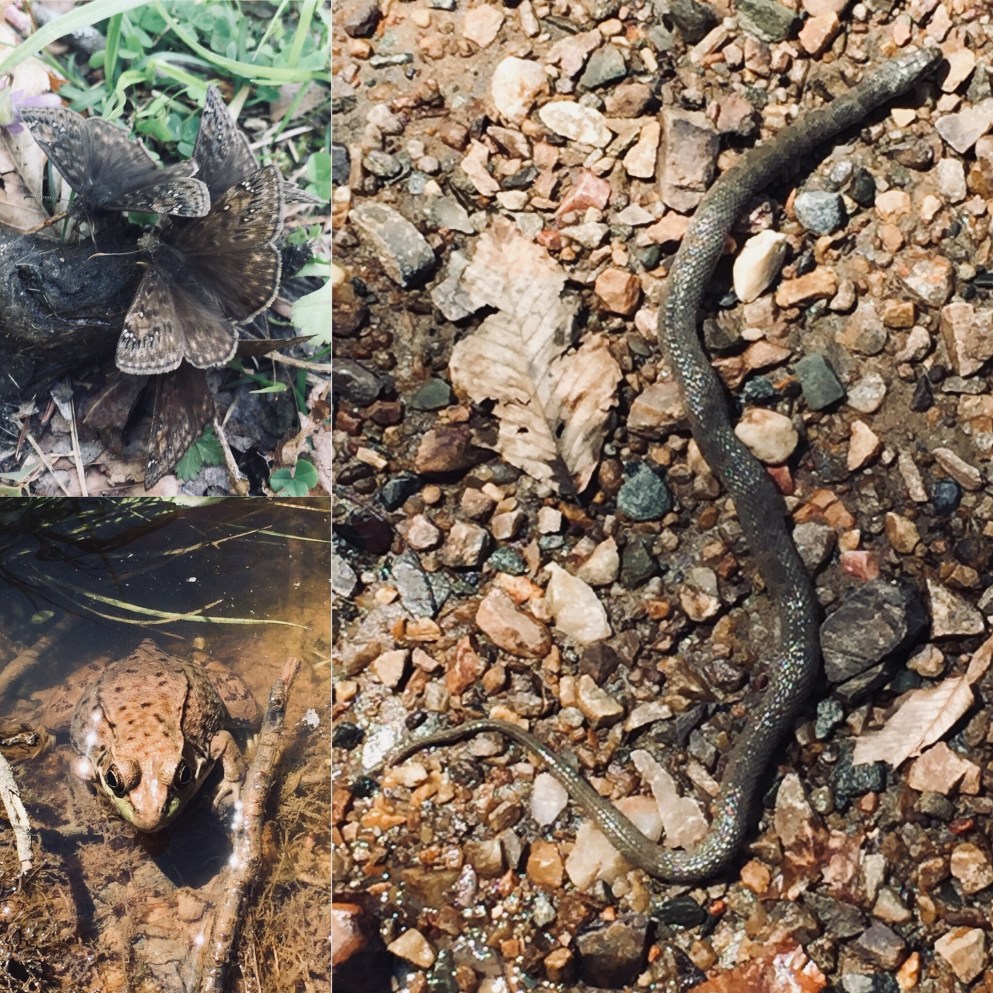
There were also animals to be found, including birds, butterflies, frogs, and what looked like a large water snake (I had no idea what “large” was- more on that at Mason Neck).
This was a beautiful, uncrowded, quiet park, minutes from terrible I-95 traffic and shopping malls, and a welcome respite. Originally built by the Civilian Conservation Corps (CCC) as the Chopawamsic Recreational Demonstration Area (RDA), it is a triumph of land management, including the reclamation of an old pyrite mine and its former pollution of the surrounding streams.
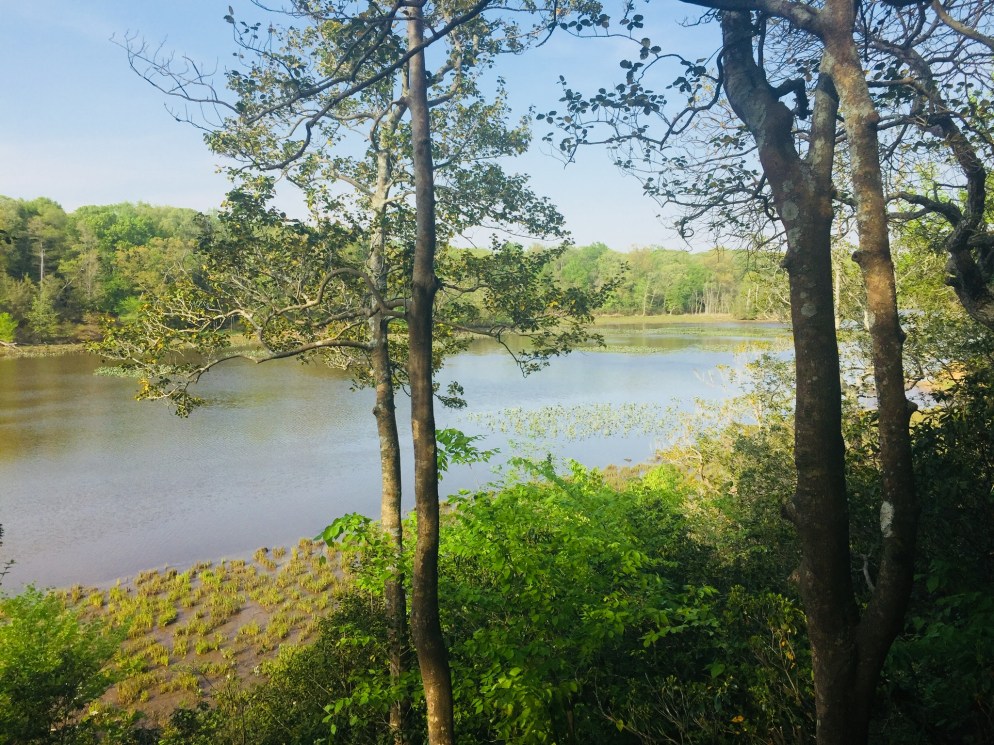
View from the Observation Blind overlooking Kane’s Creek at Mason Neck State Park
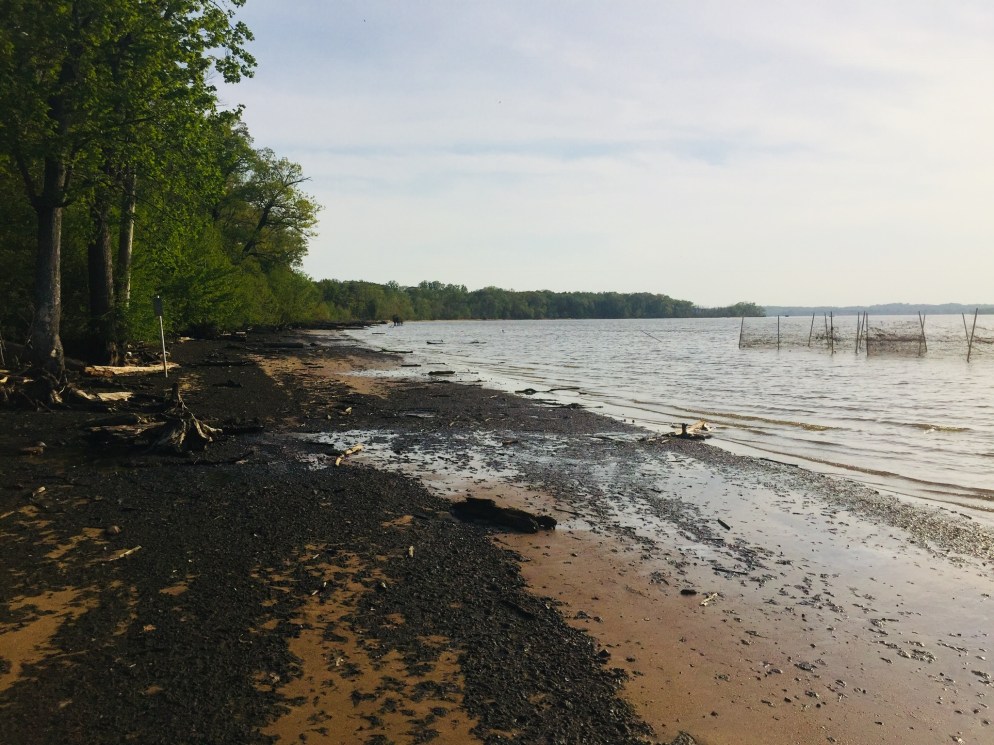
Mason Neck, located in Lorton, VA, is a peninsula on the Potomac River, with miles of hiking trails (see park map here), and water/paddling activities available, as part of the Occoquan Water Trail. Again, $7 for out-of-state residents. I was there on a weekday evening, and took the Kane’s Creek (1.2 mi) and Eagle Spur (1.29 mi) Trails, as well as the Bayview Trail (1.02 mi). This is a place to see bald eagles, and an observation blind sits at the end of the Eagle Spur Trail.
Bayview Trail, Mason Neck State Park
I didn’t see any eagles or osprey. What I ended up seeing on the Bayview Trail were snakes. Lots of snakes. Big water snakes.
But I didn’t bother the snakes, and they didn’t bother me. Mason Neck is, again, right next to the I-95 corridor, but a beautiful, well-maintained park. Each trail has its own self-guided tour, with brochures available at the map/kiosk next to each trailhead, and plenty of green space and benches to enjoy the scenery.
Locust Shade Park is sandwiched between I-95 and U.S. Route One, but has some great trails in between, with a listed length of four miles (see map here), full of birds, flowers, and lizards. A word of caution – the AllTrails app appears to have this trail transposed a mile or so to the east, which would put someone who used the app for navigation at the gates of the Quantico Marine base.
Yeah, you can see I-95 from the trails at Locust Shade
I visited this park in the late afternoon, and the nearby highway was jammed with traffic, making me feel lucky to walk or run on trails. The terrain was rolling, with a few hills and streams, and made for a pleasant hike, rather than the usual rocky challenge of Maine trails. The trail also has a Fitness Trail loop, with self-guided stations for exercises.
One thing that makes Locust Shade special is its proximity to the National Museum of the Marine Corps, and the Locust Shade trails connect at their northeast terminus to the silent looping trails of memorials winding around the museum by the side of well-laid brick walkways. Nobody does tradition like the Marine Corps.
Evening light at Locust Shade ParkTrail Map at Government Island
Government Island is a small park and historic site, originally a quarry purchased for the federal government in 1791 by Pierre L’Enfant, where freestone was extracted for construction of the White House and the Capitol. Navigation using Google Maps can be difficult, but using the physical address, 191 Coal Landing Road, Stafford, Virginia, seemed to work.
Admission is free, and the trails are only about a 1.5 mile out and back loop around the island on Aquia Creek (see the trail map above), full of birds and trees.
Overlooking Aquia Creek from Government Island
So, next time you find yourself somewhere different with time on your hands, look up a trail, and start walking. You never know what you might see.
Thru-hikers can have many different reasons to attempt the Appalachian Trail (AT), whether it be the fulfillment of a dream, a personal challenge, or any number of life events, and in Hike It Forward: Hiking the Appalachian Trail Strong, Safe and in the Spirit, (self-published, 2015) David Rough recounts his successful 2014 thru-hike from Georgia to Maine, as part of an “unavoidable call” and an effort to improve tuition assistance at the Christian school system in Ohio of which he was Academic Dean at the time. Rough blogged about his hike in the Hike It Forward blog.
Rough (trail name: Rowdy) details his preparations for the hike, and how these preparations stood up to the 2,186 mile test, including gear and clothing. In addition, Rough’s book includes three bonus features: Trail Preparation, Trail Journal, and a State-by-State guide. A bibliography includes everything from A Walk in The Woods to The Lord of the Rings.
Rough breaks down AT lingo, most importantly explaining the HYOH concept: Hike Your Own Hike, respecting the different goals, motivations, and methods of other hikers. Rough also converts the “trail magic” concept to “trail blessings,” which reflects Rough’s Christian faith. Most of the blessings involve food, which is central to the thoughts and well-being of thru-hikers.
The book reveals a daily life on the trail containing surprises, nasty falls, and unexpected acts of kindness. These vignettes range from uplifting conversations with other thru-hikers, most of them referenced by trail name, to lighthearted musings on moose encounters, to an incident with a peeping tom at a hostel.
These stories illustrate lessons learned by Rough, and his trail journal provides a sense of scale regarding the sheer mileage of a thru-hike, and its effect on his mood. Additionally, Rough is careful to credit his wife and sister, and the many others who supported his hike, showing that while an AT hike is inherently a solitary endeavor, the added motivation and encouragement to see it through can be the difference between success and failure.
Rough also discusses the challenges faced in adjusting to normal life again after his AT experience, and how small things like shoes, being inside, and changing his diet caused stress, and how Rough dealt with this, and how reconnecting with friends from the AT cushioned some of the loss felt upon leaving the trail. Rough concludes:
The Appalachian Trail is forever etched into my life. God allowed me to experience a path that few have walked. My hike was so uniquely mine and the spiritual journey so personally embraced me that words cannot describe its intimacy. A one hundred and fifty-two day walk incorporates 3,648 hours of experiences and people and blessing and adversity and adventure. To capture it in a book, to recall it in words, to reflect it in pictures, or even to fully understand it myself seems to evade my abilities.
Overall, Rough’s narrative effectively describes his initial romantic view of the trail being replaced by hardship, but then re-forged, one step at a time, hiking his own hike, into an appreciation of the trail as it is.
(Disclaimer: This post contains affiliate links, and as an Amazon Associate Hiking in Maine blog earns from qualifying purchases.)
 In August 2018, we hiked Peaked Mountain (1,160 ft), also known as Chick Hill, in the Clifton-Amherst area off Route 9. For years, we had observed the massive cliffs of Peaked and Little Peaked Mountains looming over the Airline, and hiking to the top was a great experience. We took our instructions from the AMC Maine Mountain Guide, as well as a November 2017 Portland Press Herald article by Carey Kish on Airline Road hikes. We did this 2.2 mile up-and-back hike during a sweltering heat wave, with temperatures in the nineties, and it took us about an hour, total.

























 Hiking in Maine