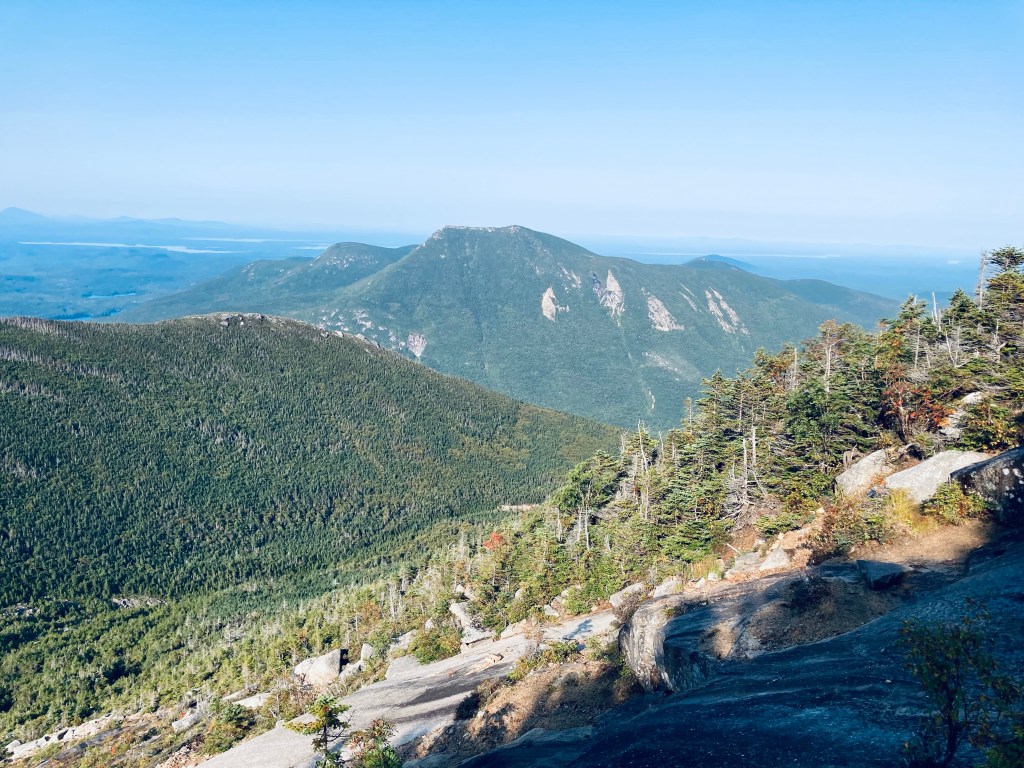
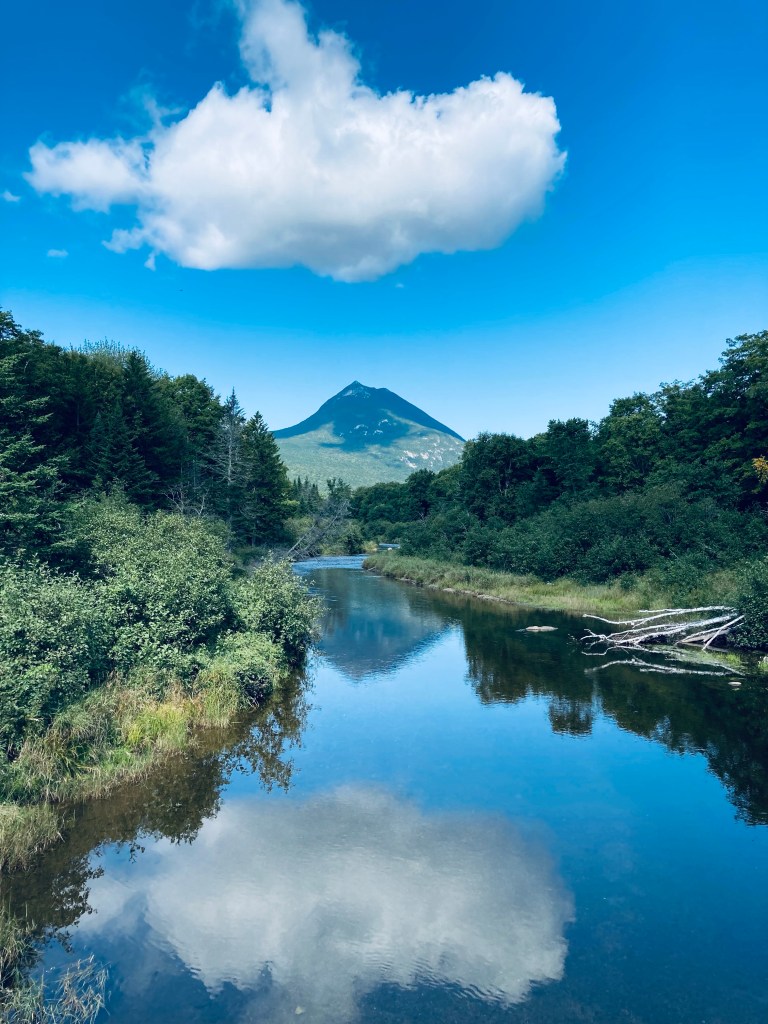
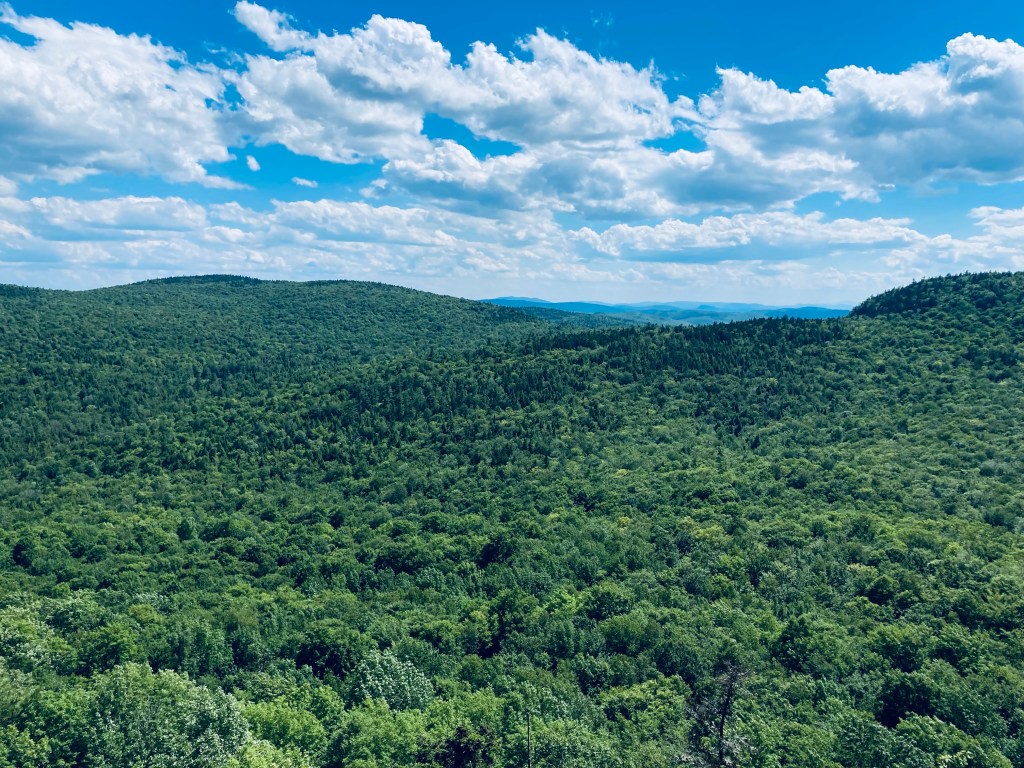
View of Doubletop Mountain from Nesowadnehunk Stream bridge to the south near Kidney Pond Campground, Baxter State Park, ME
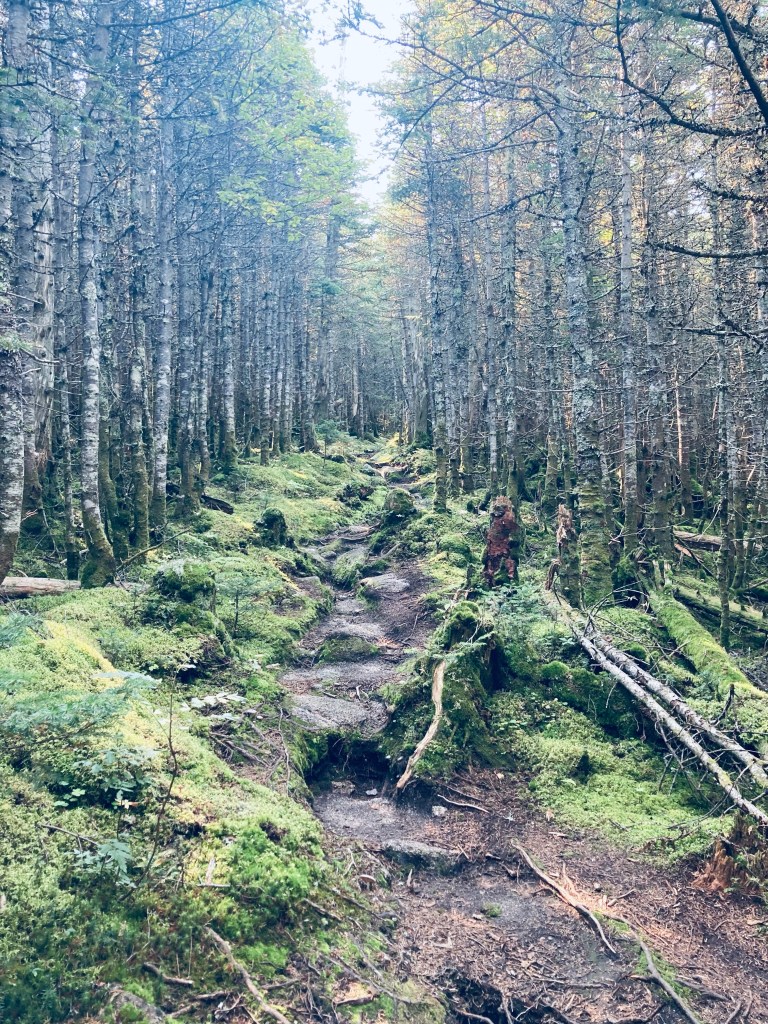
Doubletop Mountain (north peak 3,489 feet, south peak 3,455 ft) guards the western edge of Baxter State Park (BSP), its tufted, twin summit ridge looming like the profile of a slumped, pudgy Dark Knight. The views of this signature BSP mountain are impressive, as its unique profile and steep drops make for a formidable photo over Nesowadnehunk Stream or from the rugged peaks to its east. On a sunny mid-September afternoon, I ascended it for the first time, using a challenging 7 mile out-and-back route from the parking area at Nesowadnehunk Field Campground, which took me about three hours and forty minutes.
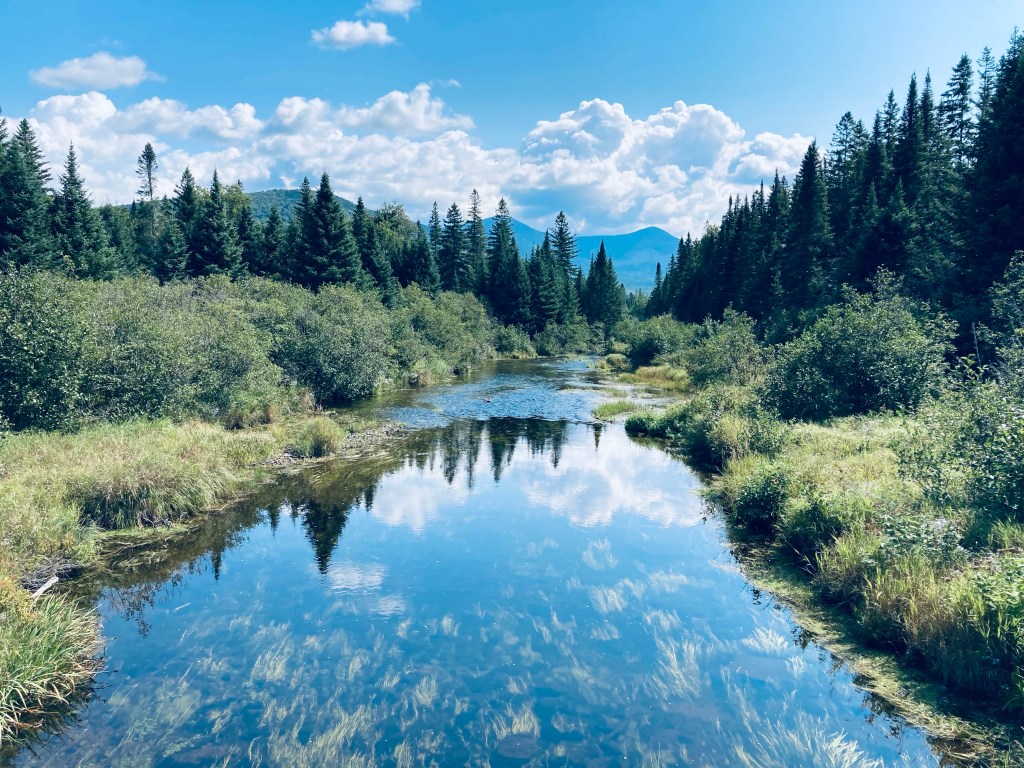
Nesowadnehunk Stream from bridge at Nesowadnehunk Field Campground by Doubletop Mountain Trail, Baxter State Park, MEContinue reading →
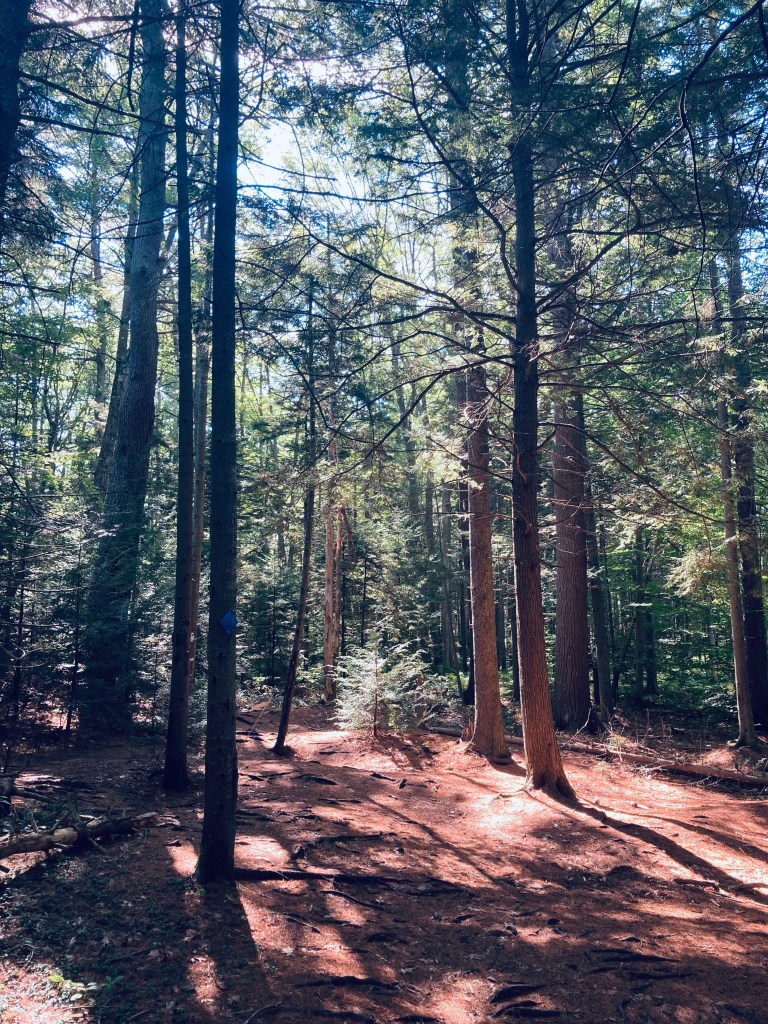
Winnick Woods is a 71 acre parcel of land owned by the Town of Cape Elizabeth, part of the Cape Elizabeth Greenbelt, which has a page with maps and a description. The trailhead is at a small gravel parking area with a map kiosk and space for eight vehicles off Sawyer Road. Be forewarned – the maps, including the ones posted along the trail, are not good ones. I used AllTrails to navigate an easy 3.8-mile Winnick Woods Long Loop that covered most of the preserve, and used the Cross Hill Trails to extend the hike, which took about an hour and forty minutes, with plenty of time to stop and examine the varied flora.
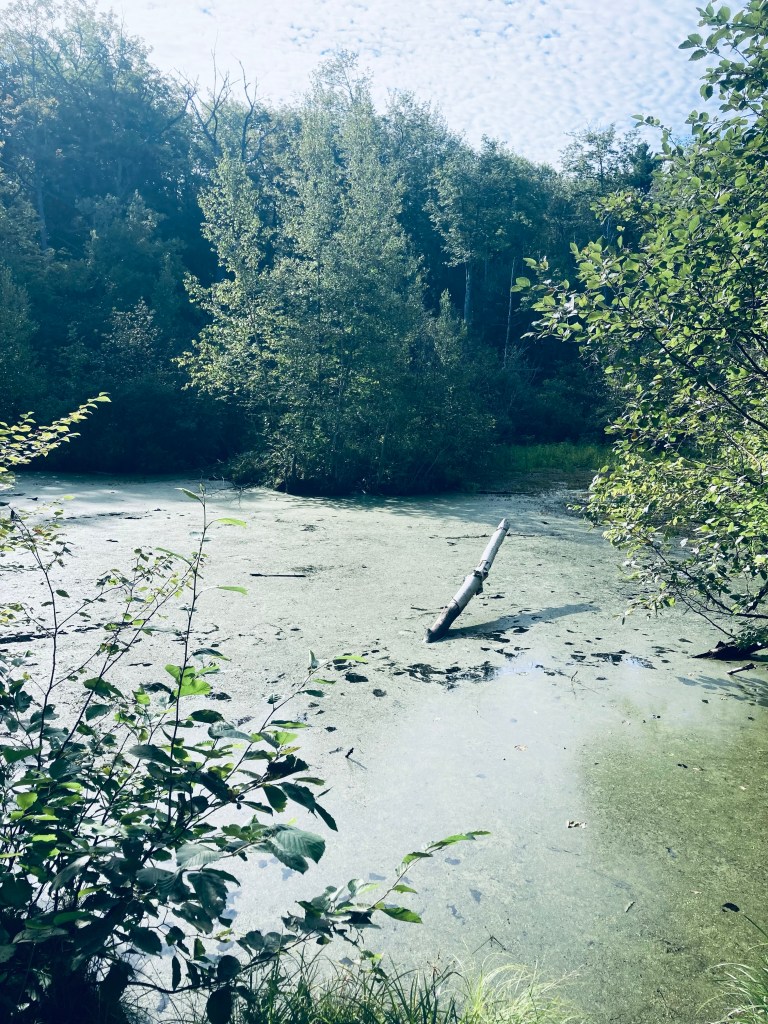
Stagnant pond, Winnick Woods, Cape Elizabeth, ME
This winds past some adjoining backyards, follows power lines in places, and crosses Cross Hill Road twice, but stays on established trails. Like many trails designed for mountain bikes, there are multiple twists and turns and intersections to maximize mileage and track length, which can be confusing for hikers and bikers alike. We encountered many mountain bikers and stepped briefly off the path to allow them to pass. The trail was also populated by trail runners and dog walkers.
Single-track through junipers on Winnick Woods Long Loop, Cape Elizabeth, ME
The trail begins with a wooded path (the White Trail), opening on a large meadow, where we saw (and heard) a large red-tailed hawk patrolling the skies above. We then turned left onto the Yellow Trail, which crosses the north side of a small, stagnant pond, and passes behind a neighborhood through a mixed forest. Throughout the early September hike, we saw a wide variety of berries, trees, shrubs, late summer flowers, colorful mushrooms, and birds. Regarding the fern family alone, we identified bracken fern, cinnamon fern, eastern hay-scented fern, Japanese painted fern, and Christmas fern. Nuthatches and brown creepers serenaded the woods and foraged along the tree trunks.
Winnick Woods Long Loop, Cape Elizabeth, ME
The marshy area to the east of the loop signals a move to higher ground along power lines, and the beginning of the Cross Hill Trails, lined with juniper and wildflowers. Here, a cacophony of catbird sounds greeted us in the lower-lying areas, before turning west and north to return to the Winnick Woods Trails, where the forest opens up to sunlight. A flat, easy walk brought us back to the start of the hike.
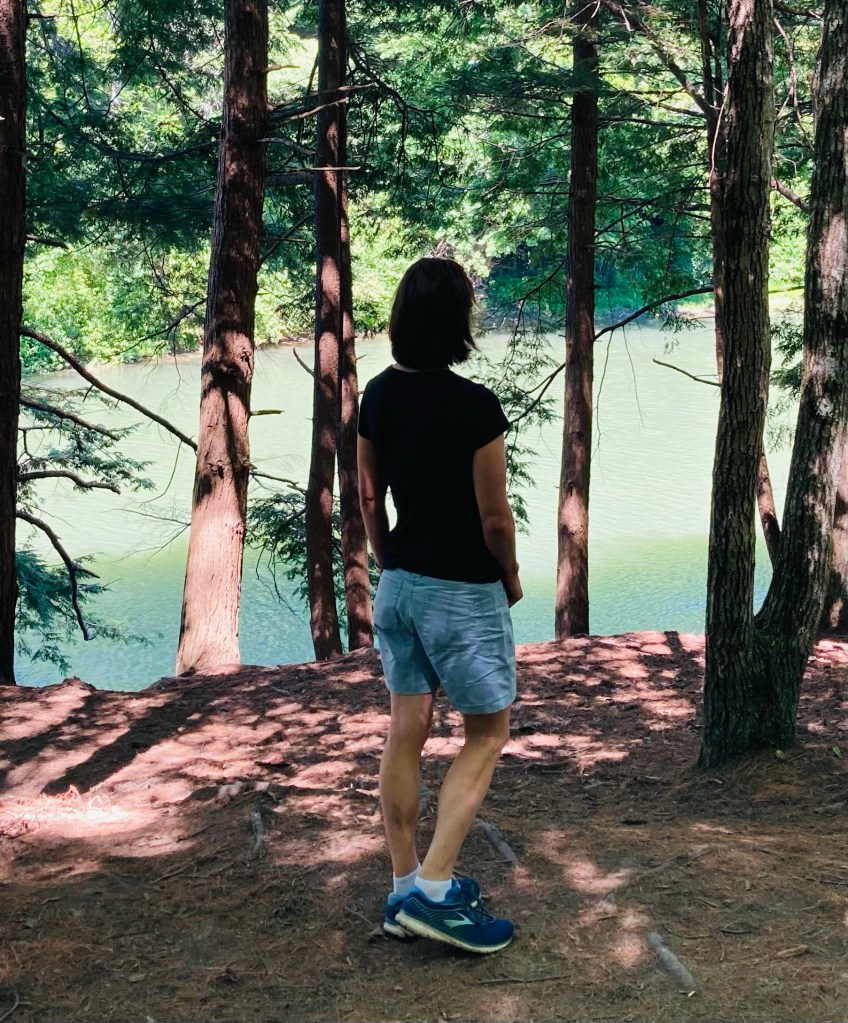
We recently tested three pairs of KÜHL hiking shorts, two women’s and one men’s, at a trail by the Presumpscot River in Portland, Maine. KÜHL prides itself on “top-notch outdoor clothing for rugged and relentless adventurers, travelers, and outdoor enthusiasts,” and as we fit in at least one or two of those categories and probably aspire to some others, we tried them out. These shorts are a tad more expensive than some less durable brands, but a single pair will last you as long as 2-3 pairs of the lesser kind.
Women’s Hiking Shorts – KÜHL Cabo and Kontour
KÜHL Women’s Cabo short, color Mountain AirKÜHL Women’s Cabo short, color Mountain Air
Mom’s review: The Kuhl Cabo short is versatile, durable and breathable. Post hike, just swap out hiking boots for a pair of sandals and change your sweaty t-shirt for a dry tank top and you can easily feel comfortable in a nice après hike lunch at a local cafe. This is my second pair of the Cabo and they wash so well, you can barely tell I have worn my first pair for years. They run bigger than the Kontour shorts and are substantially longer. They have a drawstring at the waist that you will need if ͑you are on the leaner side. Remarkably comfortable, cool and fast drying.
KÜHL Women’s Kontour short (4″ inseam), color Metal BlueKÜHL Women’s Kontour short (4″ inseam), color Metal Blue
Daughter’s review: The Kontour short has a lean fit and is comfortable and minimalist. This short is fashionable, cool in warm weather, and comfortable. The stretch makes it easy to move and walk.
KÜHL Men’s Silencr Cargo Short (8″ inseam), color Gun MetalKÜHL Men’s Silencr Cargo Short (8″ inseam), color Gun Metal
Dad’s review: According to KÜHL, their exclusive REFLEX™ fabric provides durability and stretch to the Silencr Cargo shorts, along with water resistance and maximum sun protection (UPF 50+). These were clearly positive attributes of these shorts, which were strongly constructed. The downside for me was that they are clearly designed for someone with a slimmer build, and at about 5’10” and 200 lbs, they were a bit more clingy than I prefer. That’s obviously a referendum on my own life choices, but I would likely pick a more relaxed fit for hiking. The tight fit made the cargo pockets less useful for me, as things like a phone or keys pulled on the fabric.
As humans, we can be dilettantes by nature, sifting through life by discarding difficulty and glamorizing what seems to be a simpler path. It’s not our fault – the world is too complex to completely understand, and shortcuts like this help our tiny brains operate and avoid pain. One of the ascendant thoughts that some keyboard warriors may cling to on Sunday nights (in the pre-work “scaries”) is the perceived freedom of being a park ranger. In the aptly-titled This Wild Land: Two Decades of Adventure as a Park Ranger in the Shadow of Katahdin by Andrew Vietze (AMC Books, 2021), the author, who is a former editor at Down East magazine, explores such a transition, relating stories from his time as a park ranger at Maine’s Baxter State Park.
Vietze skillfully cycles through stories over his twenty-year career involving the various and legendary animals at Baxter State Park, relating stories and history about deer (the original “Bambi”), moose, bear, beaver, the various blood-sucking insects, and their collective futures. The winter tick and habitat challenges facing the moose are particularly compelling. Baxter State Park is different in many ways from other state and national parks, due to the unique nature of its charter: as Vietze says, “Here, wildlife has dominion,” making recreation secondary to conservation. Vietze explores the essence of being the referee between human and wilderness, with the predictable ranges of experience and attitude on the human side. These are the most resonant and interesting of his stories, casting careless thru-hikers or overmatched tourists against the uncaring monolith of Maine’s North Woods. The takeaways? Be humble, carry water, and maybe go for a walk or two before you try Maine’s highest, most remote mountain. According to Vietze, fatigue is considered “causative” in 66 percent of the park’s medical calls.
The book dives into the history of park rangers, Baxter State Park, and the Appalachian Trail. The uneven relationship between the Park and the Appalachian Trail thru-hikers who view it as their finish line is the subject of several anecdotes, including a (tongue-in-cheek) “Navy SEAL” operation by rangers nabbing thru-hikers camping illegally.
My sole critique is one of expectation – not the author’s fault. When a journalist investigates a topic, it is dispassion which can make the writing true and clear. Norman Maclean’s father in A River Runs Through It encouraged him to write fiction, saying, “Only then will you understand what happened and why. It is those we live with and love and should know who elude us.” Vietze, currently a ranger, clearly loves and respects his co-workers at Baxter State Park, so the “inside scoop” about working at the park is elusive. This is forgivable, and by the end of the book, endearing. His critiques are mostly self-effacing. But there were likely very good stories and insights left on the cutting room floor due to kindness, loyalty, and discretion.
Vietze also explores the family dynamics of being a park ranger, and the inherent sacrifice of living in the wilderness in public service makes Vietze’s accounts of interactions with his sons and wife more poignant, as well as clarifying the shared bond between park rangers. In a nod to the current understanding regarding the stress on first responders, the book ties in the stories about death and near-death encounters with those of training and debriefs to help rangers cope with loss.
This Wild Land contains enough variety of experience to sustain multiple books, with each story existing as a vignette that could be otherwise examined from vectors of conservation and psychology. Written during the “Year of Covid,” this book reminds us why we cherish the wilderness, why it must be protected, and is a gift to anyone who enjoys Baxter State Park and the North Maine Woods.
(Disclaimer: This post contains affiliate links, and as an Amazon Associate Hiking in Maine blog earns from qualifying purchases.)
Long Mountain (1,828 ft), located in Greenwood Maine, partially within the 12,000-acre Crooked River Headwaters conservation land, is accessed by a relatively recently completed lollipop-type loop trail, opened in the fall of 2021. We hiked this loop, listed as 5.5 miles, in early July. Given the many spur trails to overlooks, my recorded mileage was a bit longer, about 5.8 miles, for a little over two and a half hours. The Long Mountain Trail is accessed from a trailhead with a relatively large parking area off Vernon Street in Bethel (GPS is 1268 Vernon Street, Bethel, ME) and diverges to the left from Bacon Hill single-track biking trails. The size of the parking lot owes to its former role as a log yard.
Board walkway, Long Mountain Trail, Greenwood, ME
A trail map is posted to the kiosk at the parking area, but difficult to find online. The trail itself is very well-marked and maintained, and I used the AllTrails app to navigate. As much of the summer of 2022 has been, it was a hot day, and the forested trail offered shade through much of the hike. The first part of the trail moves over a series of boardwalks through some marshy areas, then crosses a logging road by Mill Brook. Here at the edge of the road, we saw a large, tattered Luna moth near the end of its lifecycle.
Mill Brook, Long Mountain Trail, Greenwood, ME
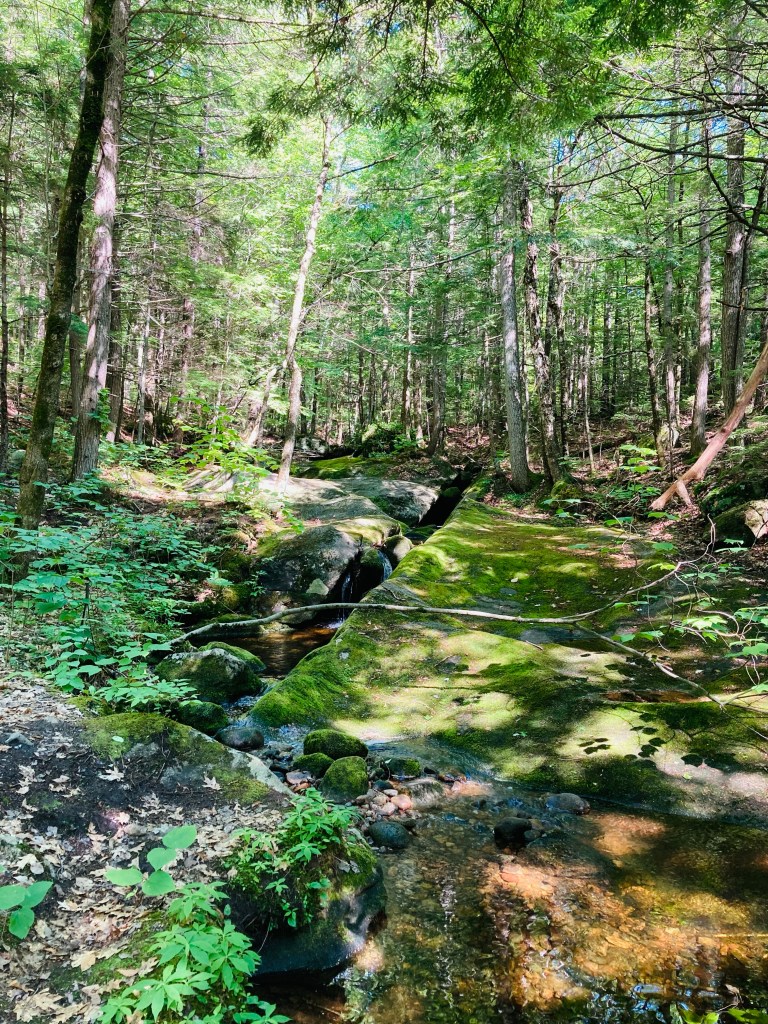
The trail then moves upstream past clear, cool Mill Brook, which is covered in moss and flows through large rock slabs. At about .9 miles, the trail splits into a lollipop loop, which we took clockwise, heading up first to the North Ledge. This is a challenging hike, heading steadily uphill until levelling out a bit, and becoming a ridge hike between the North and South Ledges. Long Mountain does not have a cleared summit with views, but the viewpoints from the ledges are outstanding.
McGaffey Mountain (1,288 ft), named for 19th century Mount Vernon resident Charles McGaffey, is the highest point in Kennebec County, and the trail to its wooded summit shares a Kennebec Highlands parking area in Rome with the trail to Round Top Mountain. The “A” Trail, a multi-use trail, diverges from the trail to Round Top a little less than a quarter mile in, in an unsigned left turn (Round Top Trail, however, is marked). It was quiet on the early July morning I visited, and I only saw two others, who were riding mountain bikes.
Flora along the A Trail, McGaffey Mountain, Rome, ME
I navigated using AllTrails, but a printable trail map is available from the 7 Lakes Alliance, which maintains the trails. A map is also inside the Maine Mountain Guide. AllTrails listed this hike as “Hard,” which relates to the distance (9.6 miles) and time, rather than the elevation. The A Trail is mostly unmarked, but provides a clear path, shared by mountain bikes. Like any mixed-used trail, it is graded relatively flat, and made to move quickly. At just under a mile, the trail crosses a logging road or ATV trail, and at about 1.3 miles, another old logging road, and passes over a moss-covered brook.
Viewpoint from A Trail, McGaffey Mountain, Rome, ME
The series of switchbacks heading up the mountain coincided with the beginning of hermit thrush songs. At about 3.3 miles, there is an open overlook looking east over Long Pond. The trail proceeds over rolling terrain, including sunlit boulders and blueberries, until reaching the summit, marked by the wooden handle of a tool protruding from a rock cairn.
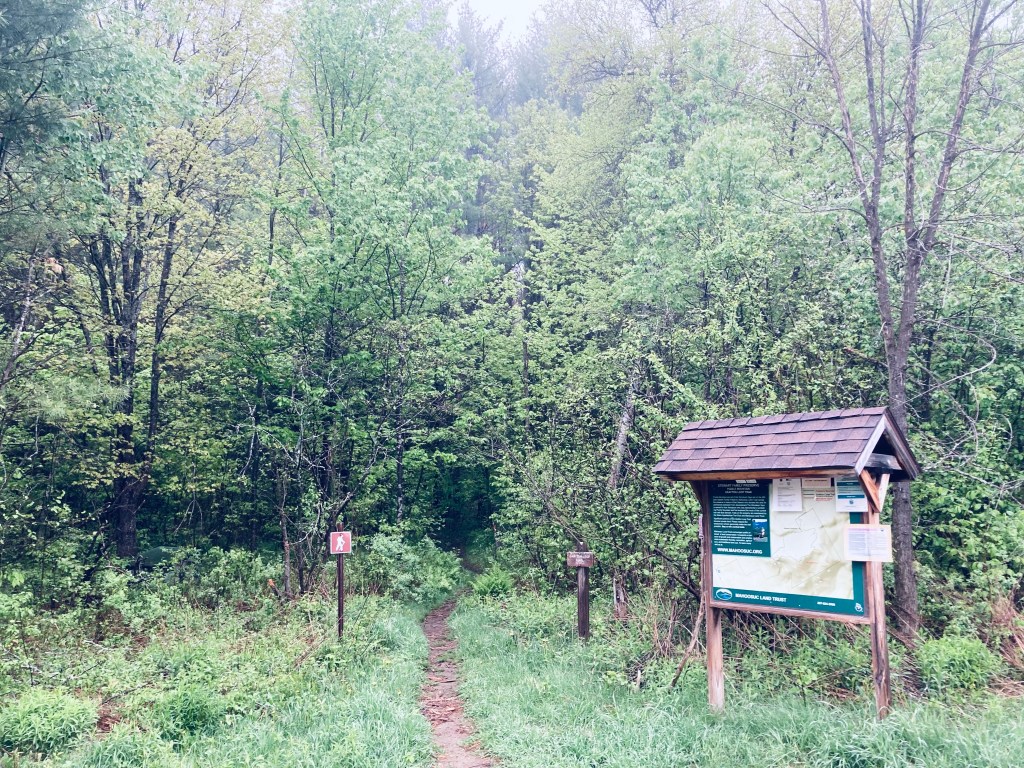
Map kiosk, Puzzle Mountain parking area, Newry, Maine
Puzzle Mountain (3,133 ft) in Newry, Maine, is a lollipop-style loop hike incorporating the Grafton Loop Trail and the Woodsum Trail, for an approximately 7.7 mile hike with expansive western Maine views, including Sunday River. The mountain is supposedly named after the discovery of a soft vein of rock on the mountain that was subsequently lost, making it a puzzle. Parking is available at a medium-sized parking area off Route 26, with a map kiosk. A map is available from the Mahoosuc Land Trust, which manages the 485 acres of Stewart Family Preserve land on which Puzzle Mountain sits. A detailed description is also available in the venerable Maine Mountain Guide.
Morning sun, Grafton Loop Trail, Puzzle Mountain
The blue-blazed trail crosses an ATV trail and then after about a quarter mile, a logging road, until beginning to climb by a small stream cascading down. Due to recent late May rains, the trail was slippery and the streams in the surrounding woods seemed to multiply. I knew this presaged a slippery trail with lots of bugs, and the clouds of mosquitoes were unrelenting. Clear spring streams criss-crossed the trail, which was a spooky green tunnel in the morning fog of beech leaves, birch, and hobblebush, with toads hopping out of the way.
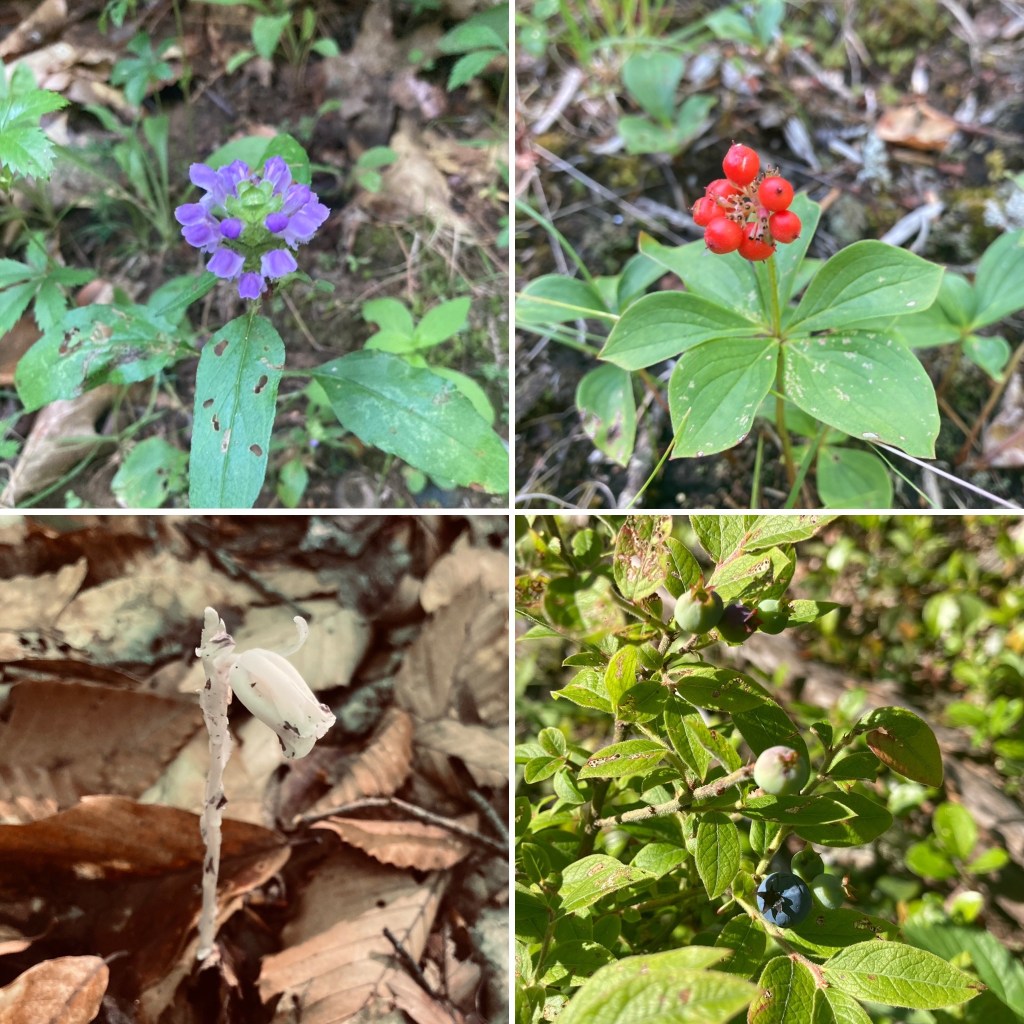
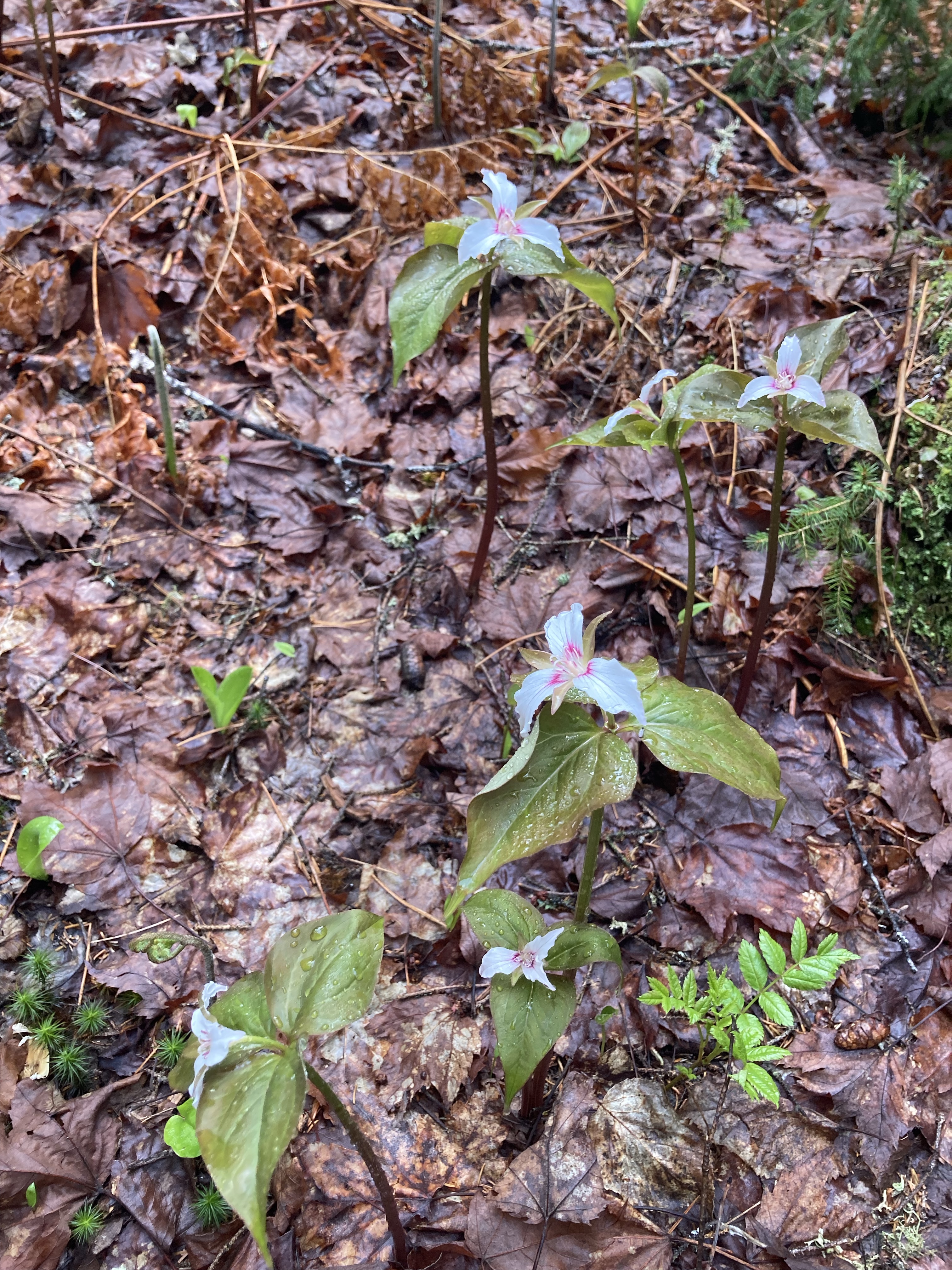
Spring Wildflowers, Puzzle Mountain, Newry, Maine
A Maine Appalachian Trail Club (MATC) register box was there to log the hike a little over 3/4 of a mile in. The sun began to light the way and changed the tunnel to an emerald forest, with trillium and other wildflowers dotting the sides of the trail, awaiting full bloom. This green deciduous forest ended abruptly as the trail circled a ridge with viewpoints over the valley surrounding the Bear River, switching to rocks, moss, and pine.
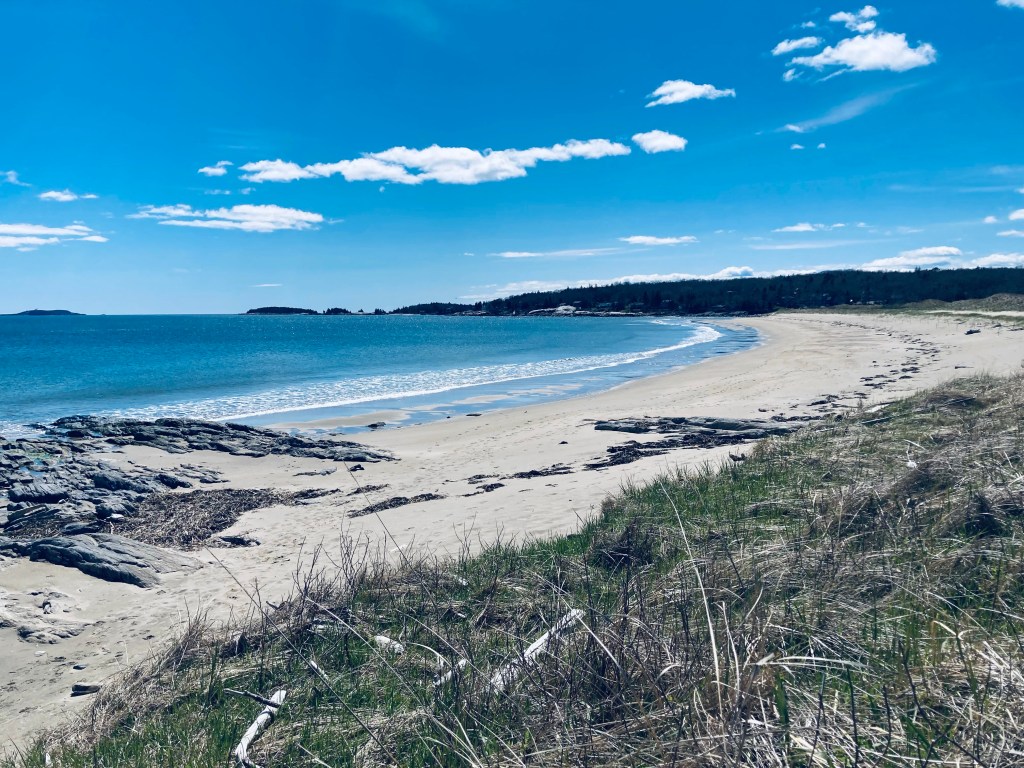
Reid State Park in Georgetown, Maine is at the southeast corner of the long coastal peninsula formed by the Kennebec River to the west and the Sheepscot River to the east. In 2015, Reid’s popular beaches were named #1 in New England for surfing by the Boston Globe. The fee for day use of Reid State Park, payable at the entry gate, is $6 for Maine residents, $8 for non-residents, and $2 for non-resident seniors. We visited at the tail-end of the winter season, enjoying the peace and quiet. As the parking lot at Todd’s Point was not yet open, we parked by the East Beach, and began our hike there, moving in an easy 4.8 mile clockwise loop covering Reid State Park’s best features in about two hours. The park does have a map, accessible from a link on the state park website. This map, though no doubt made available by a dedicated public servant, is terrible for hiking. First, know that the official map is upside-down, meaning north is at the bottom. Additionally, no trails are listed. Below is a screenshot of the correctly-oriented All Trails route we took, with helpful labels added by daughter.
The East Beach has a group picnic site overlooking the ocean, with a large shelter from the sun or inclement weather. Paths connect picnic sites, but to start our hike, we walked south along Griffith’s Head Road, crossing a small tidal inlet of the Sheepscot, where a red-breasted merganser rode the current foraging for food. We quickly arrived at Griffith Head, with the buildings shuttered for the winter (note: a pit toilet here was the only open winter bathroom). We walked down a stone staircase to Mile Beach, and the sun, sea air, and the sound of the waves filled the next mile of our walk along the sand.
Mile Beach from Griffith Head, Reid State Park, Georgetown, ME
The rocky promentory of Todd’s Point rises above the water, with a short climb yielding great views in all directions. Here, the bathing facilities were shuttered, as well, with the empty parking lots between Mile Beach and Half Mile Beach roped off until the summer season. We looked briefly at Half Mile Beach, then walked behind the dunes on a spur trail between the beach and the Little River, emerging with a long view towards Popham Beach.
Bridge across railroad tracks at Oak Grove Cemetery on Whiskeag Trail, Bath, ME
Thorne Head, the northern portion of Bath extending into the confluence of Whiskeag Creek and the Kennebec River, can be reached by foot from downtown Bath, over a Bath Trails and Kennebec Estuary Land Trust (KELT) network that is surprisingly wild for Midcoast Maine. On the first day of May, I created a 9.4 mile lollipop loop hike incorporating the Whiskeag Trail (see map here), Thorne Head Preserve’s Narrows Trail, Trail Connector, Overlook Trail, Ravine Trail (see map here), and an unmarked, unmaintained path leading back to the Whiskeag Trail, for a little over three hours of forest and water views and birds. All portions of the trails described are open from dawn to dusk, and leashed dogs are allowed. While the word sounds similar to “whiskey,” according to Bath Trails the trail takes its name from an Abenaki word meaning “a creek that runs nearly dry at low tides.” The Whiskeag Trail can be accessed from multiple points, including KELT’s Thorne Head Preserve, Sewall Woods, Oak Grove Cemetery, and McMann Athletic Fields. I chose to depart from the southern terminus, at the Bath YMCA, 305 Centre Street, where there is plenty of parking. The flat, wide pine-covered trail marked with blue blazes starts behind the YMCA and moves over a small ridge, where I heard the welcome morning call of a hermit thrush.
Beaver dam, Whiskeag Creek, on Whiskeag Trail, Bath, ME
Shortly after a marshy area, the Whiskeag Trail emerges at Congress Street at a pedestrian crosswalk by the Edward J McMann outdoor recreation area. The trail skirts the east side of the baseball diamond, then passes back into the woods. Across Old Brunswick Road, the trail curves left through Oak Grove Cemetery, crossing the railroad tracks over an attractive bridge dedicated to John C. “Jack” Hart, Jr. A short distance after the bridge, follow a small blue sign on the left marking the Whiskeag Trail, which winds down to Whiskeag Creek through a series of switchbacks. Bikes are allowed on this trail, and their frequent use can be seen through tracks in the spring mud. Here, the quiet creek was regulated by a sturdy beaver dam, and wider portions gave way to a marsh, where red-winged blackbirds called, and Canada geese sailed lazily away from my footfalls on shore.
Whiskeag Creek, Bath, ME
A mossy cliff and rock face marked the crossing of power lines, and in this gap sat a bench overlooking the creek. The spring return of birds made the Whiskeag marsh an improbably tableau, reminiscent of a children’s picture book, where geese, cormorants, herons, and ducks assembled in groups for identification. As the Whiskeag Creek got closer to mixing with the Kennebec, it grew flatter and wider. By overhanging rocks I noticed a safety feature of the trail, brightly marked alphanumeric emergency cards spaced out along the trail to tell someone in a medical emergency where they are, and how to communicate that quickly to emergency services.
Whiskeag Creek, Bath, ME
The trail then moves back inland through a pine and oak forest, winding across small plank bridges and over and around streams and vernal pools. A brief climb up and across a ridge by power lines takes the trail behind the Bath Public Works, then down and across Oak Grove Avenue. The Whiskeag Trail narrows and moves through a right-of-way next to residential properties, and then along the edge of a large horse farm, before crossing and briefly joining Whiskeag Road. On Whiskeag Road, walk east (right), until reaching the trail again on the left. Here, a large, boisterous pileated woodpecker was at the top of the telephone pole marking the re-entry to the Whiskeag Trail. Shortly after this point is a turn-off to the Sewall Woods parking lot, which you could use to break up this hike into chunks or start from a spot farther north.
Spring flowers on Whiskeag Trail near Sewall Woods, Bath, ME
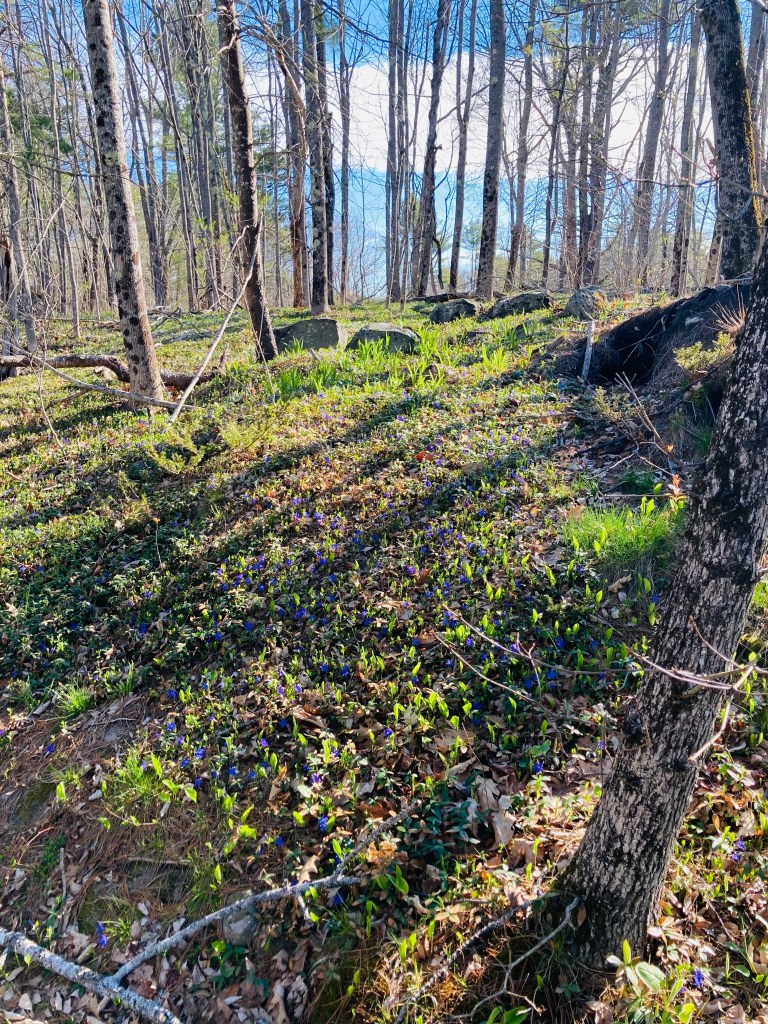
A series of KELT digital scan signs marked Sewall Woods (see map here), each with facts about the natural surroundings from the Digital Trail Project and natural forestry methods. As I climbed through the more open forest, I saw purple spring flowers, and started hearing the sounds of gulls, signaling the approach to the Kennebec River area. The trail finds Whiskeag Creek again, skirting the water’s edge and muddy flats until a narrow point where you can see the confluence with the Kennebec. I began to hear people and dogs again, as well, as I approached the more-trafficked Thorne Head Preserve.
Whiskeag Creek and Kennebec River confluence from Whiskeag Trail, Bath, MEContinue reading →
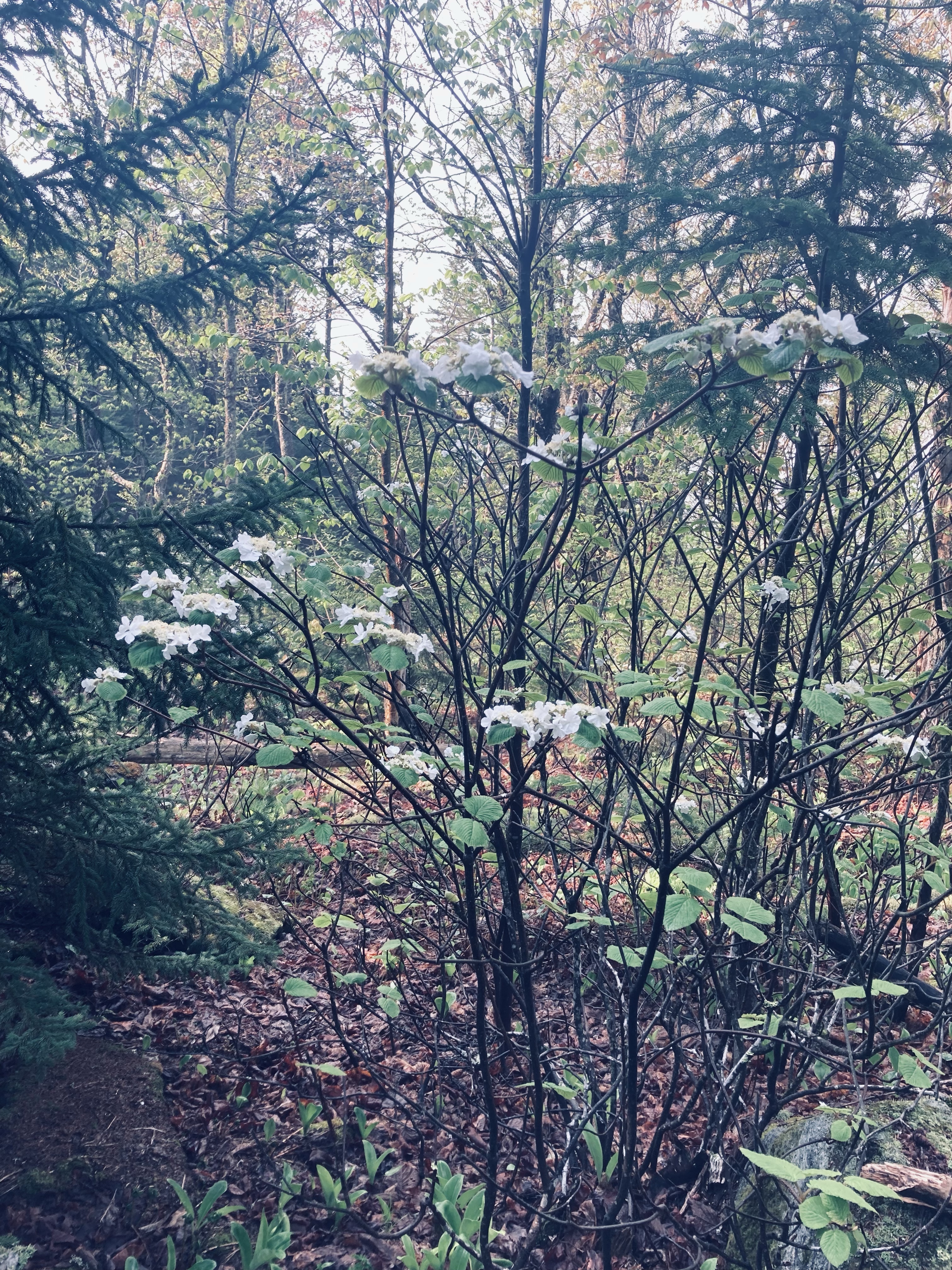
Winslow Memorial Park and Campground, owned by the town of Freeport, Maine, is a 100-campsite campground, beach, and park on a narrow peninsula between the Harraseeket River and Casco Bay. During 2022, Winslow Park will be open for camping from May 26th through October 1st. A map of the property, including trails, can be found here. According to the Town’s website, the 90-acre park was a 1953 gift from Adelaide Winslow Harb in memory of her mother, Delia B. Powers Winslow with the understanding that the land and its buildings, “… shall be used as a public park and for public recreational purposes…” A day-use fee is charged during the summer months (Freeport Residents: $2.00 per person; Non-Residents: $3.00 per person). Day use hours are from 8 a.m. to 30 minutes after sunset for use of all facilities, including trails.
Reflection bench, Winslow Park, Freeport, ME
The trails at Winslow Park are named in a simple fashion, and we made a loop of the Scenic Trail and Self-Guided Nature Trail, using Winslow Park Way to connect these short loops, for a 2.5 mile hike lasting about an hour. The footing was a bit mucky on the late April day we visited, but it was a small price to pay to avoid crowds and fees and see the stunning coastal views. We started with the Scenic Trail, accessed from the parking lot to the immediate left of the entrance gate. A wide, flat trail encircles the small wooded peninsula jutting out into the Harraseeket River. We continued on Winslow Park Way, then veered left past a picnic area towards a sign marked “Trails” to rejoin the Scenic Trail, which then became the Self-Guided Nature Trail.
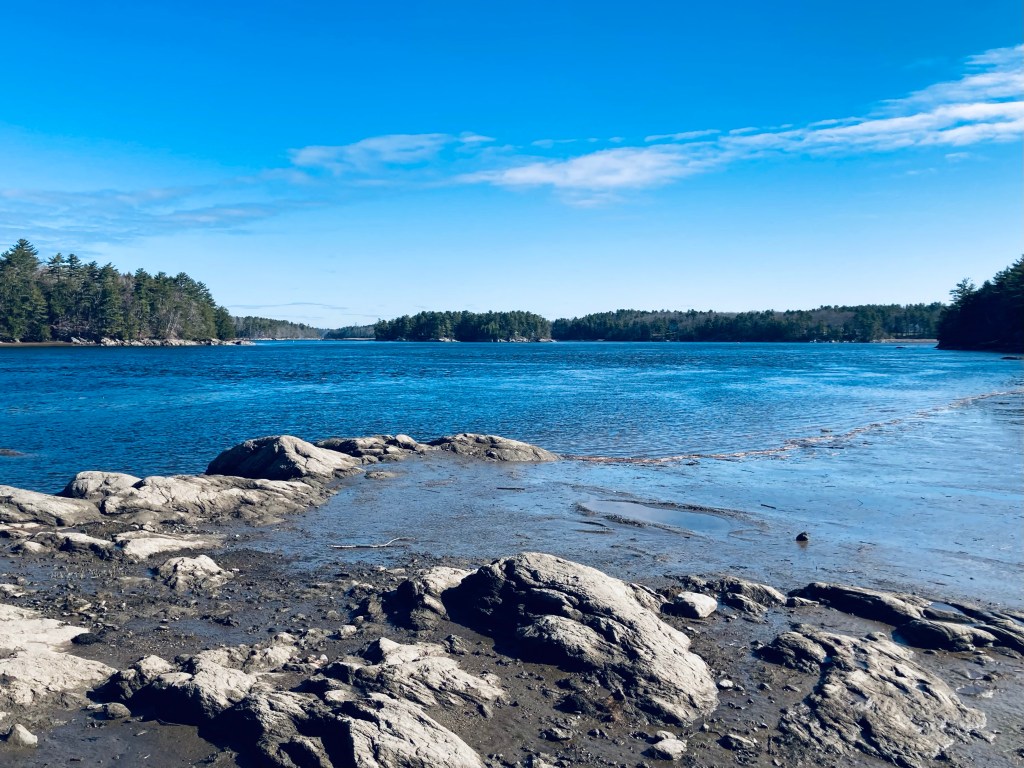
View of Harraseeket River and Staples Cove from Winslow Park, Freeport, MEContinue reading →