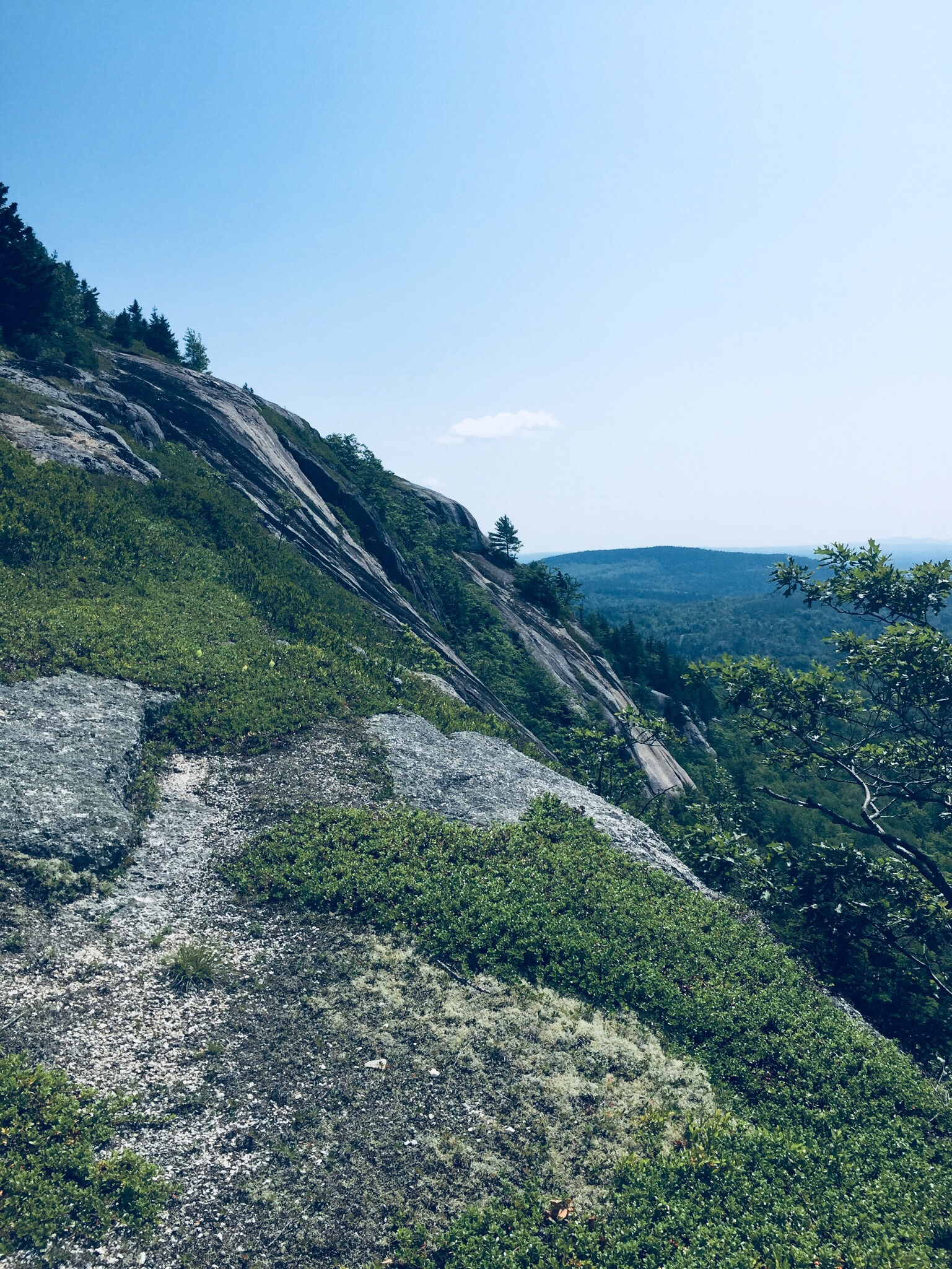
Town of Limington Scenic Overlook, Sawyer Mountain, Maine
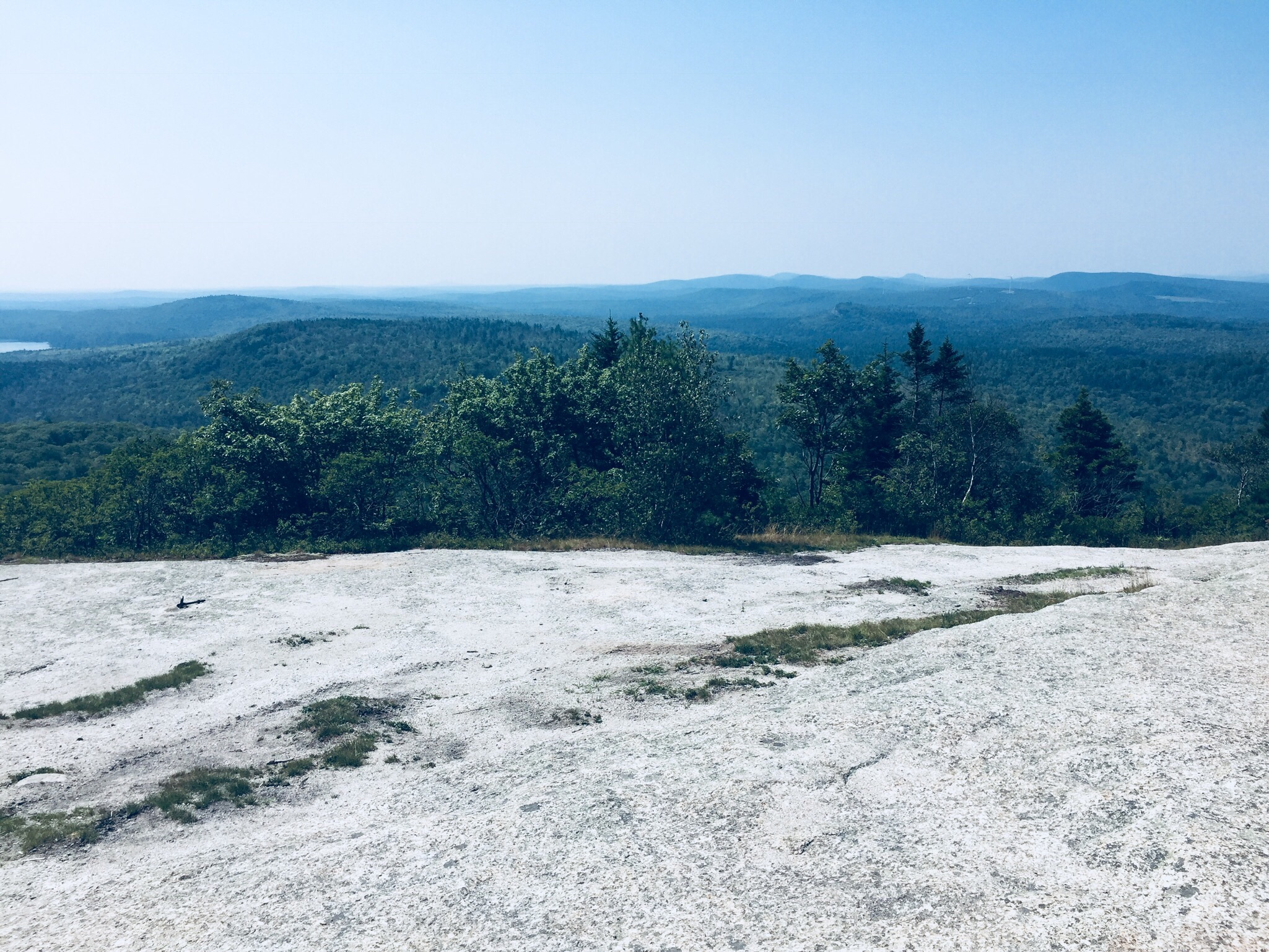
Sawyer Mountain (1,213 feet) is part of the Sawyer Mountain Highlands, 1400 acres of which is owned by the Francis Small Heritage Trust (see map here), which describes the Highlands as the single largest block of undeveloped land in York and Cumberland Counties. This summit can be reached from trailheads in Limerick or Limington. On the spring day we hiked it, we chose the Sawyer Mountain Trail from the Route 117 trailhead in Limington. The trail is well-marked, with signs and red turtle blazes, and maps were available at a kiosk at the trailhead.
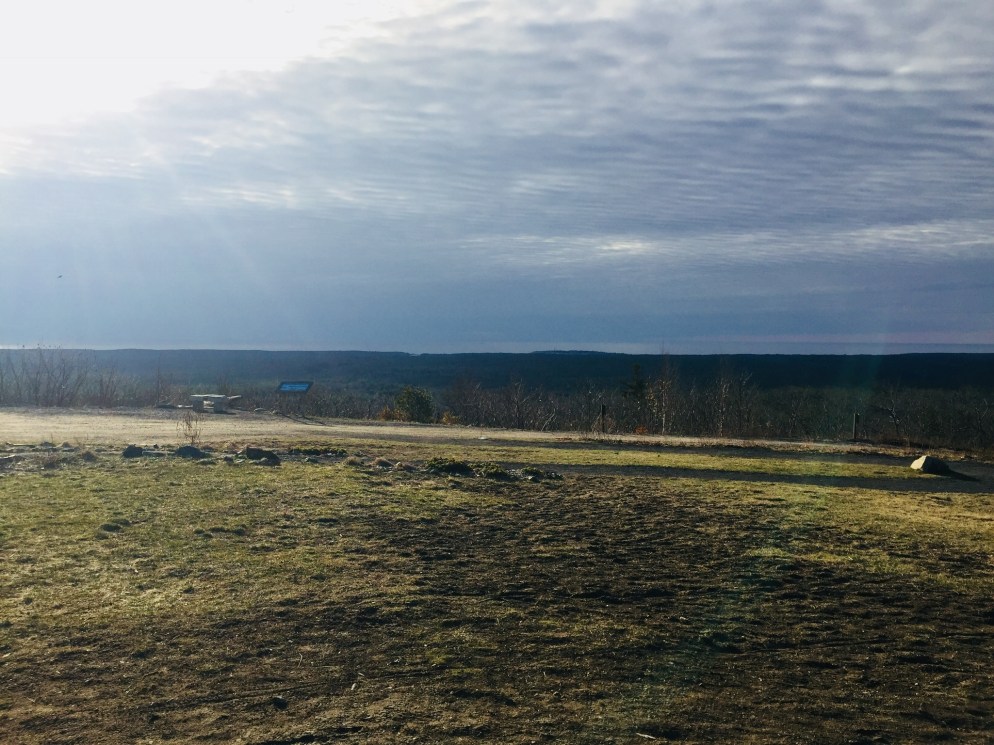
Sawyer Mountain Summit, Maine
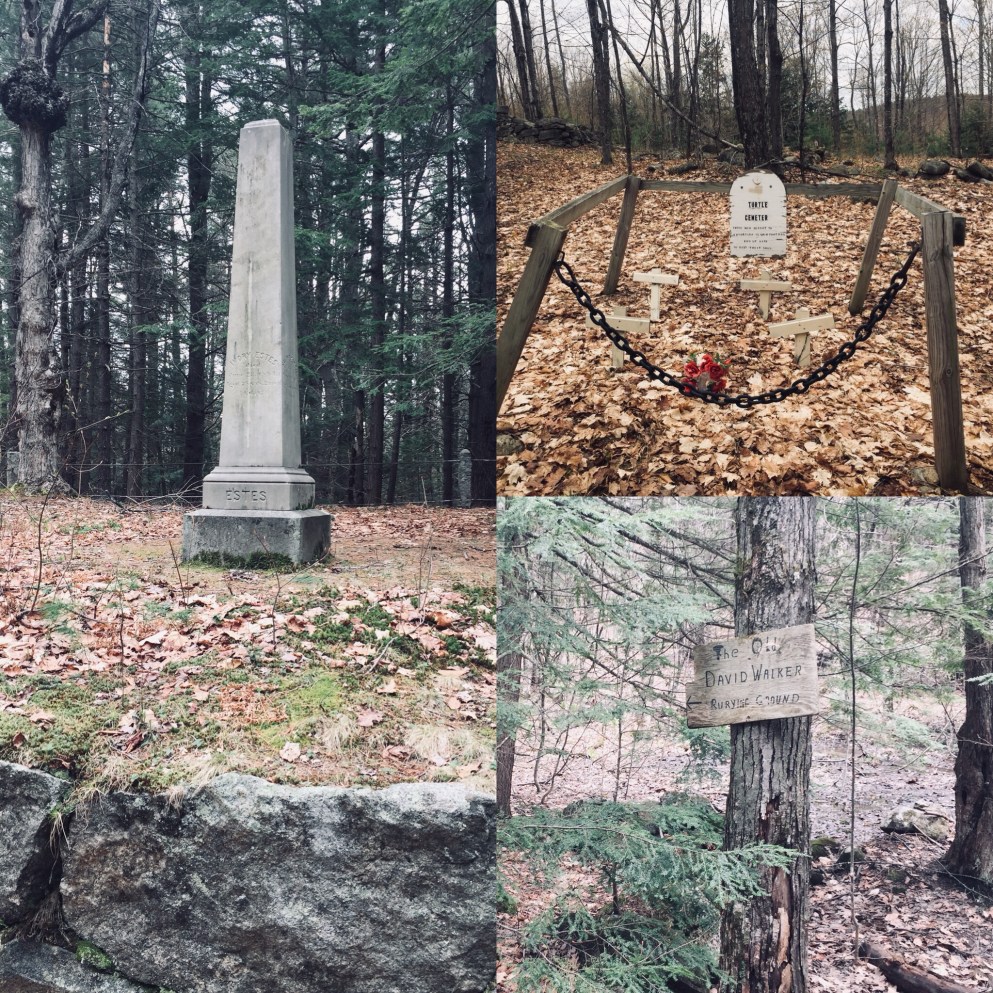
The Sawyer Mountain Road sections were rocky and covered in mud and running water, particular on the long uphill stretch preceding the last .3 mile push to the summit. Black flies increased in number as we moved, but were never more than a minor nuisance. Points of interest including the bright green spring vegetation surrounding streams and several cemeteries and burying grounds along the trail.
Cemeteries and burying grounds along the Sawyer Mountain Road Trail
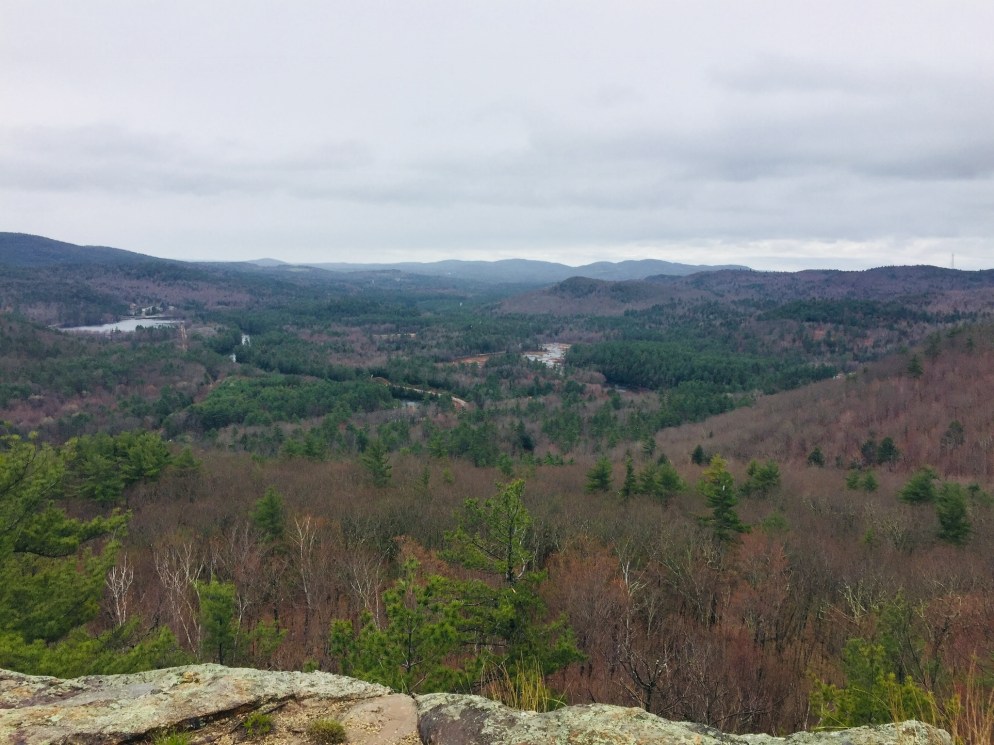
The summit offers views facing south, and another town of Limington scenic viewpoint is not far away along the trail, offering a more open view of southern York County. The lollipop-shaped route (about 3.6 miles, an hour and forty-five minutes at an easy pace) we took was easier on the return, as the trail descending along the New Skidway Road was less muddy than Sawyer Mountain Road. As previously mentioned, the summit can also be accessed from the west trailhead via a shorter route on the Smith Trail.
Mt. Cutler (1,232 ft.), part of a newly established Mt. Cutler Park and Conservation Area, is a relatively short hike in Hiram, Maine, with impressive views along the way, and multiple options for shorter and longer walks along five miles of trails (here is a detailed map and guide). Additionally, in the new 11th edition of the Maine Mountain Guide, Mt. Cutler gets its own map.
View of Saco River Valley from Mt. Cutler, Hiram, Maine
The direct route is the Barnes Trail, marked with red blazes, which ascends from a parking area by the former railroad depot off Mountain View Road, up through overgrown Merrill Park, where a (shallow) abandoned gold mine can be accessed from a side trail to the left. The trail quickly ascends up rocky ledges to points overlooking Hiram and the Saco River below.
Looking down towards Hiram from the front ledges of Mt. Cutler
The ridge walk contains great views and blueberries in the summer. The Barnes Trail does not extend to the actual summit of Mt. Cutler, which is on private land (there is currently no marked trail to the summit, but respectful bushwhacking to it is apparently ok), and instead turns hard left at the notch below the summit, where it meets the Saco Ridge Trail, completing the loop down to the parking area.
In addition to the parking area by the Barnes Trail, a second parking area is planned to be constructed by July 2019, with capacity for twenty vehicles, at the trailhead for the North Trail (blue-paint blazes) on Hiram Hill Road. This trail connects with the Moraine Trail, which climbs a glacial moraine, consisting of rock and other debris pushed into a ridge by a glacier (for those familiar with the Maine Ice Age Trail Downeast, check out this post on sites for western Maine’s Ice Age Trail). North Trail also connects with the White Flag Trail, which joins the Barnes Trail near the front ledges.
(Disclaimer: This post contains affiliate links, and as an Amazon Associate Hiking in Maine blog earns from qualifying purchases.)
View of the Atlantic from the summit of First Hill, Mount Agamenticus
Mount Agamenticus, overlooking the southern Maine coast, apparently derives its name from an Algonquin coastal place name also used in Gloucester and Charlestown, Massachusetts. It’s not a giant, only 691 feet tall, but is part of the Mount Agamenticus Conservation Region, which covers over 10,000 acres, including over 40 miles of trails, with a trail map here. Its location in York makes it readily accessible from the Maine Turnpike and Route One. I had never climbed Mount Agamenticus, and figured that a looping walk over rolling hills would be a perfect spring tune-up hike.
View towards Mount Washington from First Hill, Mount Agamenticus
These trails allow for a variety of hikes by length and ability. On this spring day, I traversed the First, Second, and Third Hills, using the Ring, Fisher, Big A, Sweet Fern, Chestnut Oak, Ridge, Wheel, Third Hill, and Great Marsh Trails, along with Old Mountain Road, Porcupine, Rocky Road, and, again, Ring Trails to complete a loop of around 7 miles. Much shorter loops are available (the complete Ring Trail loop is only 1.9 miles), and the Ring (west) and Witch Hazel Trails contain a “Story Walk” that might keep younger hikers moving from storyboard to storyboard, up the hill.
Observation Deck, First Hill, Mount Agamenticus
It’s not a long hike from the Mountain Road trailhead to the top of First Hill via the Ring (west) and Fisher Trails – I covered it in fifteen to twenty minutes at a moderate pace. For those with mobility issues, there are also parking lots closer to the top. The open summit has observation decks to orient you to the sights in all directions, from the Atlantic to Mount Washington, and a Learning Lodge is open weekends from 11 am to 3 pm from Memorial Day to Columbus Day.
Picnic Tables, First Hill, Mount Agamenticus
There are picnic tables with views of the ocean, and restroom facilities. Songbirds abound, and I spotted an American Goldfinch near the old ski lift structures. Descending toward Second Hill, the trail still held some ice in shaded places, the only sign of winter’s clutches. The low points around Second and Third Hills were dotted with vernal pools, which were already riotous with the sounds of peepers.
Tree on Second Hill, Mount Agamenticus
While First Hill is well-trafficked, with trail runners and dog walkers, the only other human being I saw on Second and Third Hills was a mountain biker. The trails here are not as well-marked as those on First Hill, and I had to double back several times to find the trail, particularly on the Ridge Trail, and Third Hill Trail. In addition, the summits are wooded, with less spectacular views than that of First Hill. But the hiking is not strenuous, and the scenery contains peaceful brooks and ample wildlife viewing opportunities. I saw turkeys, deer, and innumerable songbirds, as well as sizable ant mounds on the way down Third Hill.
Mount Agamenticus is an easily accessible, family-friendly trail network which allows the user to build his/her own itinerary based on activity, ability, and time, and provides boundless opportunities for observing fauna and flora.
Seal on observation deck, First Hill, Mount Agamenticus
Mowry Beach Trail from the Pleasant Street trailhead.
A short distance from downtown Lubec, the easternmost town in the U.S., Mowry Beach is a quiet 48-acre conservation area overlooking Deep Cove, Lubec Channel and Canada’s Campobello Island. This area, managed by the Downeast Coastal Conservancy (DCC), offers a .4 mile trail from Lubec’s Consolidated School on South Street to a parking area at the end of Pleasant Street, including a 1,700 foot boardwalk. The DCC publishes a map and brochure, available on their website.
View of Lubec village and the international bridge to Campobello from Mowry Beach.
We learned of this beach through a great Cobscook Trails Map and Guide published by Cobscook Trails, with hikes throughout the Cobscook Bay region, a free and widely available (at local businesses) pamphlet which I would recommend for anyone exploring the area. At the Pleasant Street end of the trail, which we accessed via a short walk from downtown, is 1,800 feet of shorefront along a sand beach. According to guides, ancient tree stumps can be seen along the lower portions of the beach at low tide, a forest that was present during an era with lower water levels.
On the October day we visited, seals were active, using the rapidly outgoing tide to move swiftly east at waterskiing speeds in the Lubec Channel in search of food. For sea-glass collectors, this working waterfront has a variety of shiny objects along the shore. During our walk, we also encountered two people helpfully picking up any garbage left on the beach.
Boardwalk on Mowry Beach Trail.
We turned into the trail, passing bright beach rose bushes. The trail and boardwalk are alive with birds, and we startled a large bird of prey that had been resting in a tree next to the boardwalk, which took off almost straight up, like a rocket (which, in turn, startled us). DCC’s guide lists rough-legged hawks, northern harriers, and northern shrikes as frequent visitors to the conservation area.
Mowry Beach conservation area from the playground of Lubec Consolidated School.
We continued through the coastal bog and an area lined with cattails and small trees, emerging behind the Lubec Consolidated School. For those with mobility issues, intimidated by longer hikes, or entertaining smaller children, this relatively short walk on wide paths and boardwalk is a great side excursion from the village of Lubec.
The “Bold Coast” of Maine is the area of coastal Washington County stretching from approximately Milbridge to Calais, and accessible through a route designated as the Bold Coast Scenic Byway (see map here from Maine DOT), which largely follows U.S. 1 North. Bold Coast Maine, a collaboration by the Washington County Council of Governments and Downeast-Acadia Regional Tourism, has an extensive site dedicated to the many attractions of this region, with a great interactive map, searchable by interest (Arts and Culture, Food and Drink, Recreation, etc.). For some area context, including post-hike food and drink, see the post on this blog on Quoddy Head State Park in Lubec.
For hikers, the centerpiece of this great region has to be the Cutler Coast Public Lands, managed by the Maine Bureau of Parks and Lands, which publishes an excellent guide and map. An important update to this map, however, is a rerouting of the Inland Trail, just east of the junction with the Black Point Brook Cutoff, which adds 1.2 miles to any loop using this segment, and was still in place as of October 2018.
Inland Trail Reroute (note 1.2 mile change in yellow), Cutler Coast Public Lands
These lands, overlooking the Bay of Fundy, have 10 miles of trails and three remote tent sites (first come, first serve) for hiking and camping with unparalleled views. We started on the Coastal Trail, which is a 1.4 mile hike east from the parking area off Route 191 in Cutler to the ocean. According to the guide, this is the easiest segment, and the remainder of the trails are “moderately difficult.”
None of the trails we explored here were particularly strenuous, but the paths are winding and require some climbing up and down over the rolling terrain. Like Quoddy Head, however, there are sudden cliffs that make it a potentially dangerous place for younger children. The rocky coastal sections are steep, and footing could be treacherous in rainy periods. And given the boggy inland areas, the insects in May and June must be fairly aggressive.
Coastal Trail view to south of Cutler Coast Public Lands.
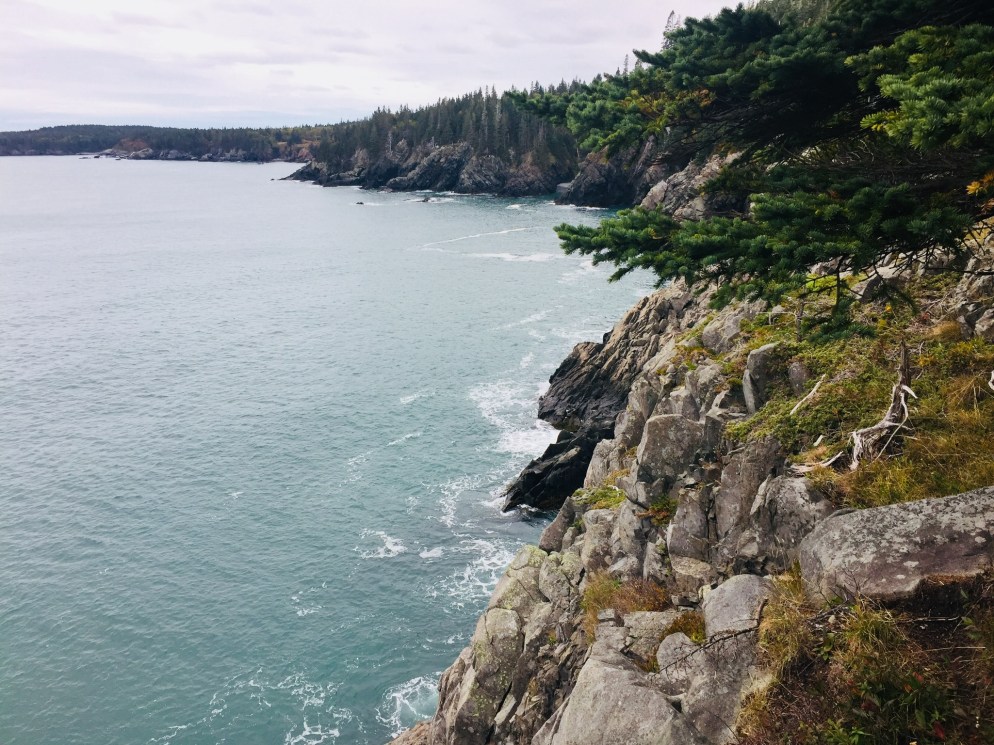
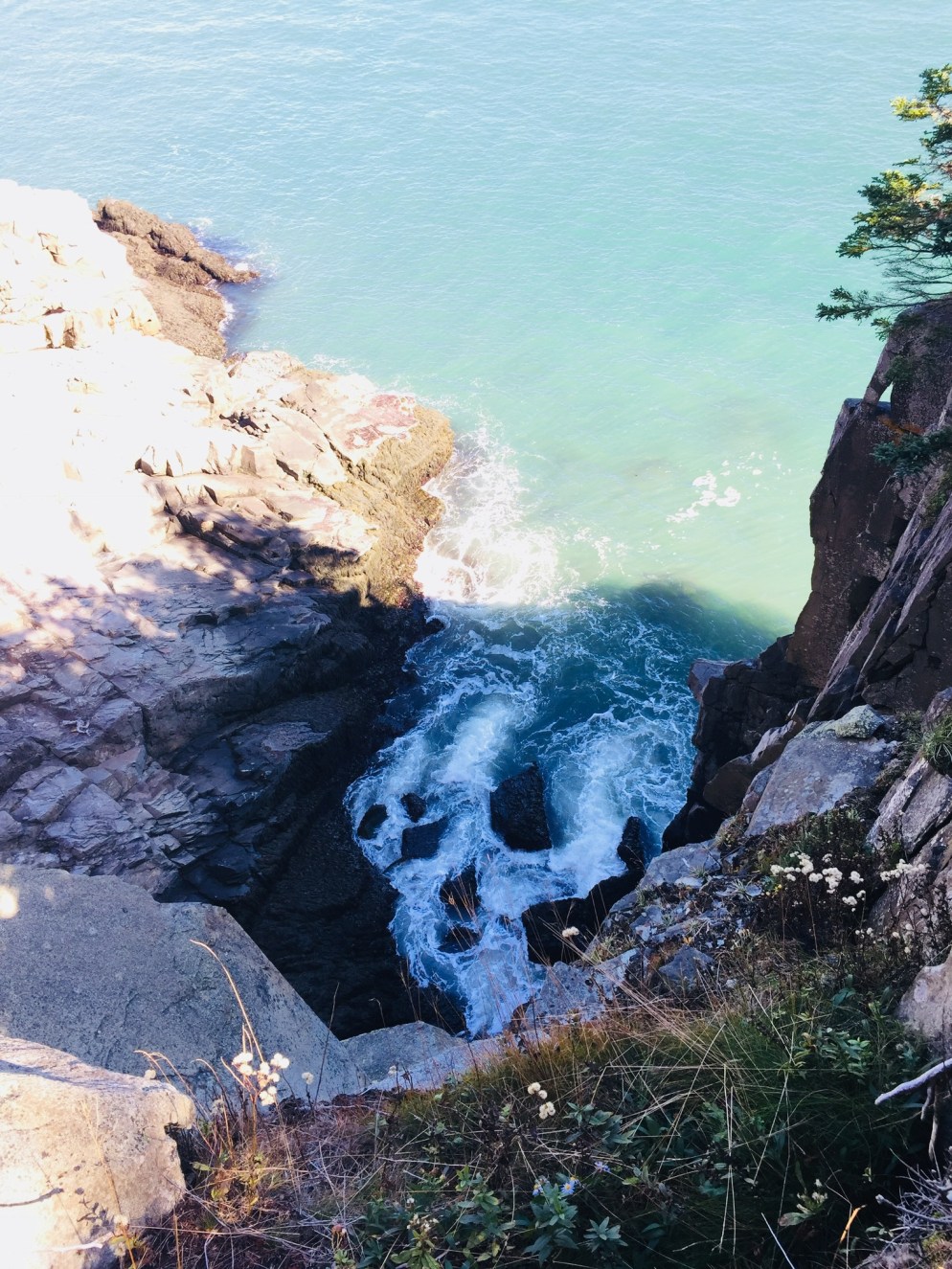
The payoff upon reaching the coast, however, is instantaneous, as the dark rocky cliffs and forested coastline meet dramatically with the ocean in a stimulation of the five senses that can only be experienced firsthand. We picked our way slowly down the Coastal Trail toward Black Point, stopping at each short side overlook trail to listen to the powerful rumble of the waves and smell the mix of sea spray and pine.
Maine’s Bold Coast, Cutler Coast Public Lands.
The Black Point Brook Loop, with a turnaround at the beach at Black Point Cove, is normally 5.5 miles, but with the reroute on the Inland Trail, was closer to 6.7 miles, which took us about four hours at a slow pace, with many stops.
We agreed that a better (delayed gratification) itinerary for us would have been to take the Inland Trail first to the Black Point Brook Cutoff, have lunch at Black Point Cove, then hike up the Coastal Trail, so that our route back would take us along the shore (rather than having the forested trail and circuitous reroute on the return trip).
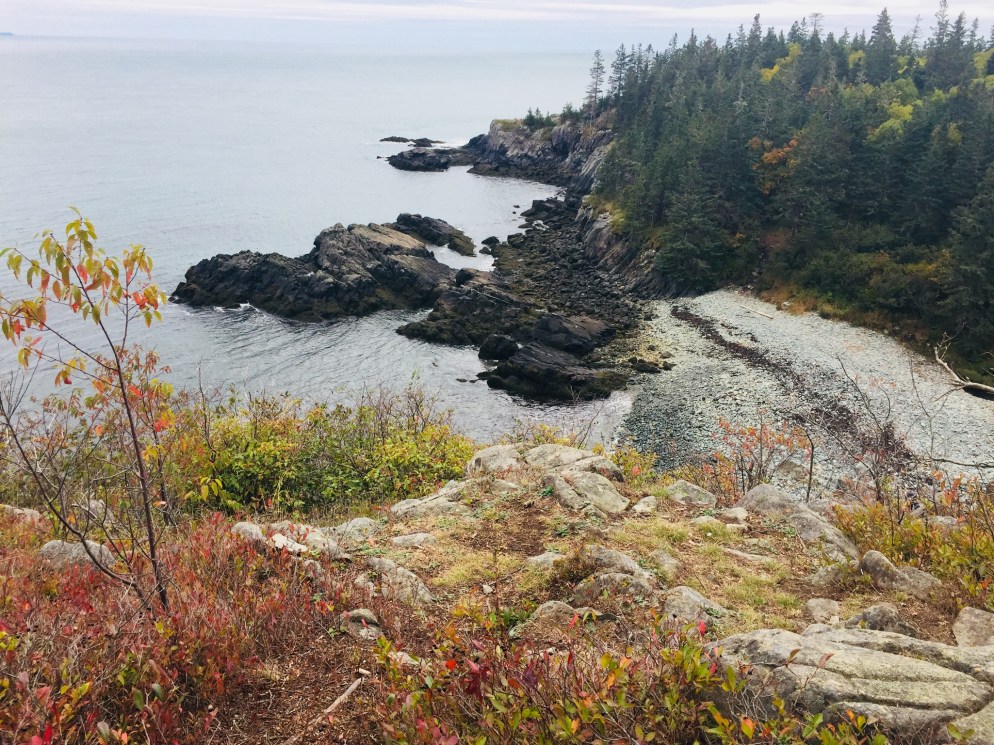
Rocky beach at Black Point, Cutler Coast Public Lands.
The Inland Trail was impressive in its own way, however, with variety in flora and fauna, rocky sections, mossy green hummocks, and some open meadows. The fall colors were much more pronounced in this section, with many deciduous trees and colorful bushes. We also saw many birds, including a noisy pair of Canada jays near the path.
For those looking for a longer route, or an overnight trip, the Fairy Head Loop is 9.2 miles (10.4 miles with current reroute), including 3.8 miles along the shore front, and this route accesses the three permitted campsites.
This quiet section of Maine’s Bold Coast, where the woods and the ocean come together, instantly became one of our favorite hikes. Any time a hike ends at a beach (see Morse Mountain), it’s special, and the Cutler Coast rivals any scenery on the East Coast, without the crowds of Acadia.
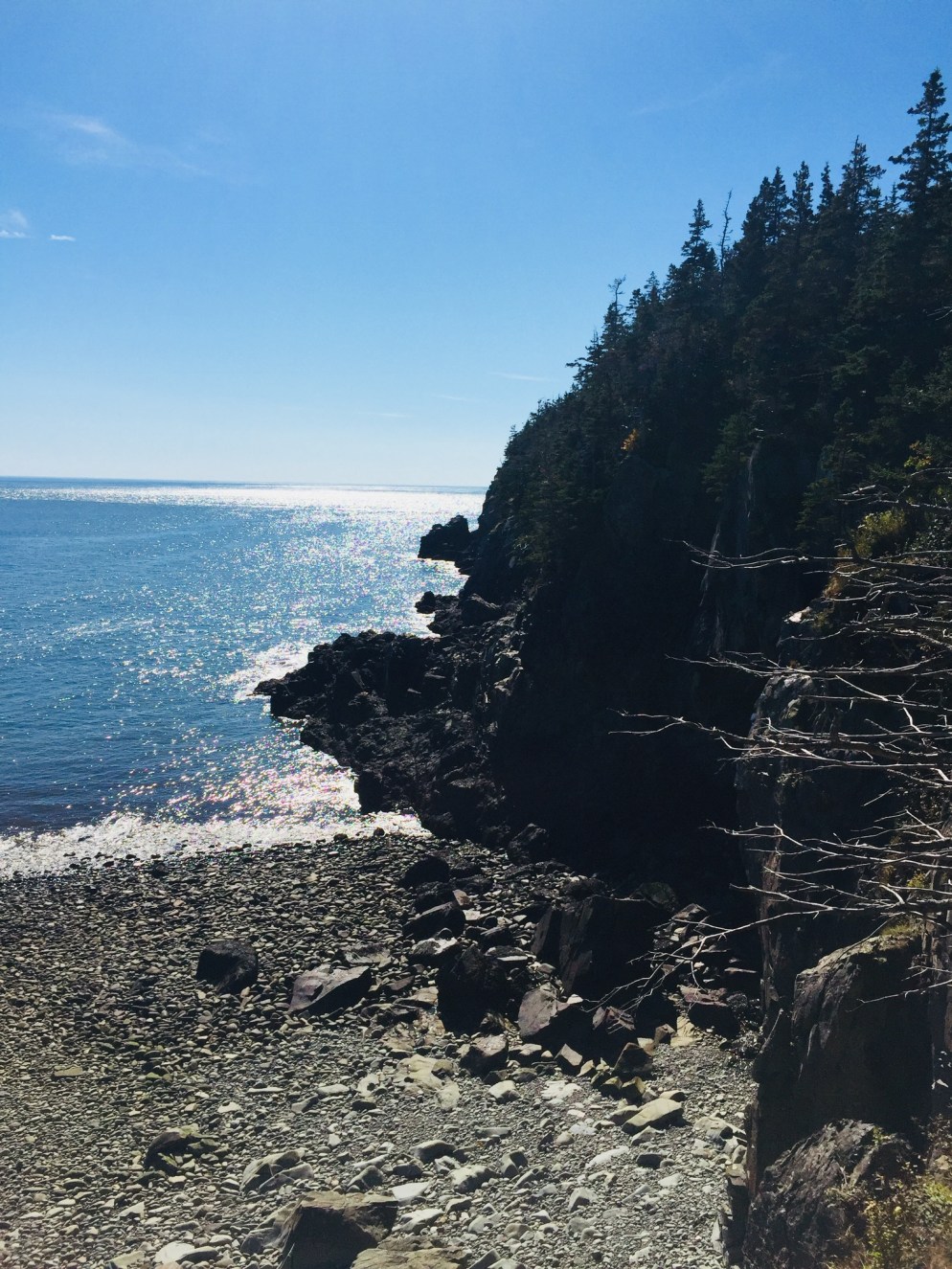
Rocky beach off the Coastal Trail, Quoddy Head State Park.
The word “Easternmost” is prominently advertised in many places across Lubec, including Quoddy Head State Park, which comprises 541 acres at the tip of the U.S.’s eastern reach. By the time you reach Quoddy Head State Park, off South Lubec Road, you will likely have seen many advertisements for all things “easternmost” (campgrounds, gift shops, etc). But beyond the quick tour stop and lighthouse “selfies,” this park offers an array of trails for all abilities with impressive ocean views and a variety of coastal vegetation. The best guide to the park’s trails is the map provided by the state of Maine: Quoddy Head State Park Guide & Map.
We started with the Coast Guard Trail, a 1-mile trail north of the entrance, which includes an overlook of the Lubec Channel, as well as a view of the town of Lubec back to the west, after a short climb up a wooden staircase. According to the Quoddy Head Guide, the first .5 miles of the western part of this trail is accessible by motorized wheelchair. After the lookout, the Coast Guard Trail then descends through the thick coastal woods to the lighthouse, passing several viewpoints along the volcanic rocks. The path was full of birds and squirrels gathering food on this warm, sunny October day.
West Quoddy Head Lighthouse, Lubec, ME
The small lighthouse museum (free, but donations always help) includes displays featuring the history of the lighthouse, flora and fauna of the area, and a guide to whales, commonly sighted off the coast. The area around the lighthouse contains a large number of picnic tables with excellent views, and the only restrooms in the park (easternmost privies in the U.S.? Probably). From the lighthouse area and most of the coastal trails, the cliffs of the Canadian island of Grand Manan are visible across the Quoddy Channel.
The terrain was impressive, and those with small children need to keep them close, as there are plenty of dizzying cliffs on the U.S. side, as well. The beaches are rocky, but make a far more interesting sound than sand beaches, combining the tidal roar with a rattling, suction sound as the rocks move together when the waves recede.
Coastal Trail at Quoddy Head State Park, Lubec, ME.
The Coastal Trail travels west along the shore past incredible views and scenic points like Gulliver’s Hole, High Ledge, and Green Point, with frequent stops in between to take in the powerful ocean. We did not linger at Green Point, a ledge with paths down to a beach, as we may have interrupted two hikers in some sort of extracurricular activity there (The trails became more and more empty the farther we got from the lighthouse).
At Carrying Place Cove, Thompson Trail heads back east, inland towards the parking area, with the short .2 mile spur of Bog Trail along the way. This side of the trail, in particular the sand beach at Carrying Place Cove, is also accessible from South Lubec Road. The Bog Trail includes a boardwalk and interpretive signs explaining the coastal plateau bog, also called a heath, according to the Quoddy Head Guide.
Thompson Trail is, for the most part, an easier walk than the coastal trail, with a few brief climbs. The best feature of this trail was the scent of pine, which created a perfumed evergreen tunnel in the narrower sections, redolent with notes of citrus and vanilla.
We completed most of the trails in the park, and stopped plenty of times to relax and take photos, making this about a three-hour visit. The difficulty level is described in the park guide as moderate, which seems about right. There are no strenuous climbs, but consistent steps over rocks and roots could make this more difficult for some hikers. There weren’t any bugs during this Columbus Day weekend, but the boggy areas guarantee mosquitoes and black flies in late spring and summer, and repellent would be a must. I would also suggest waterproof shoes, or at least wearing something on your feet that you don’t mind getting wet or muddy. Depending on your roaming plan, you may want to put your phone in airplane mode, as it will likely be using Canadian towers along this shore.
Lubec fishing fleet at dusk
Lubec, across a narrow channel from Canada’s Campobello Island, is the closest town nearby, but Machias is not that far away, and many smaller towns in Downeast Maine and the Cobscook Bay region are worth a visit. After the hike, if you can catch them open during fall hours, try the craft beer and pizza at Lubec Brewing Company or upscale pub cuisine at Cohill’s Inn on Water Street in Lubec. If you are headed south, go to Skywalker’s Bar and Grille in Machias (try the fish tacos) for a great menu and Machias River Brewing Company beers.
Quoddy Head, though remote, is hardly a secret anymore- we joked that AirBnB renters and vacationers from New York outnumbered locals in Lubec. But steps beyond the famous lighthouse is a surprisingly wild Maine coast to explore.
We had hiked Katahdin, but daughter had never taken the legendary Knife Edge Trail, the narrow 1.1 mile stretch (and Maine rite of passage) from Pamola Peak to Baxter Peak. At age 12, it was time. On September 9, 2018, we hiked together to Baxter Peak on Mt. Katahdin via the Helon Taylor Trail to cross the Knife Edge. On the way down, dad and daughter took the Saddle and Chimney Pond Trails (total R/T appx 10.2 mi). (For maps, other routes, and links to Baxter State Park’s great resources, see our September 2017 Mt. Katahdin post.)
On the way in to Millinocket the night before, we stopped at Hannaford to stock up on supplies before staying at the Parks Edge Inn. In preparation, we went with a chocolate and peanut butter theme, and for our lunches, wrapped Nutella, peanut butter, and bananas in lavash bread like some Willy Wonka burritos, and grabbed peanut butter chocolate chip Larabars and peanut butter M&M’s to snack on.
To get into line at the Baxter State Park gate the next morning, we woke up around 5 am, and signed in to start hiking at Roaring Brook at 6:47 am. The $5 Day Use parking pass for Maine residents has to be the most value Mainers can get for $5. This easy online step is essential to guarantee a spot in the park, which is kept wild in many ways, including the limitation on daily access to the park.
The climb up Helon Taylor Trail was steady and tough, but we took our time, and enjoyed the changing vegetation and ubiquitous chattering of red squirrels, often looking back to enjoy the views behind us to the east, as we slowly emerged from the forest, patches of scrub pine, and finally above the tree line, reaching Pamola Peak around 10 am.
Getting ready to descend into the beginning of the Knife Edge.
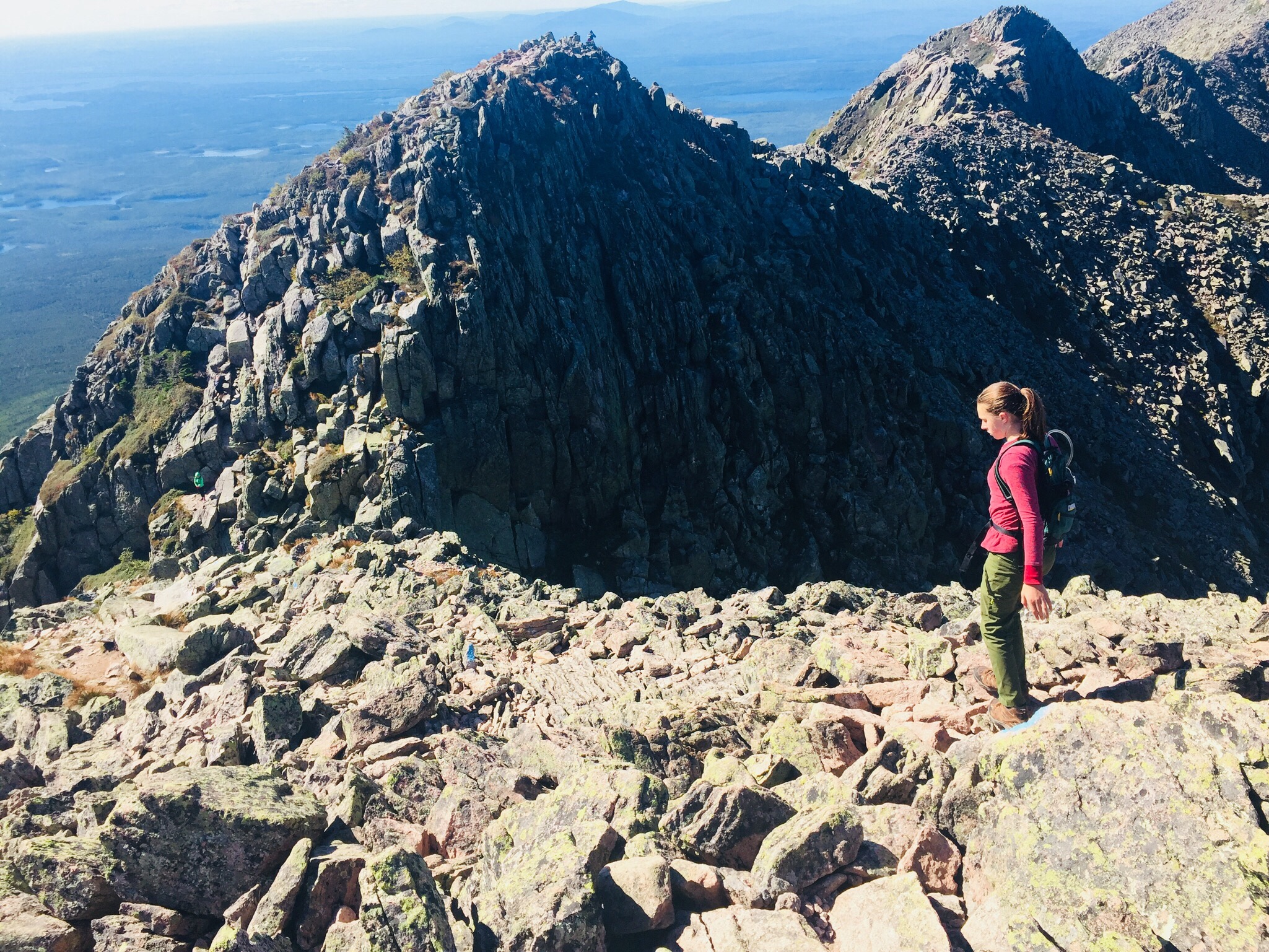
The first step of the Knife Edge was the descent into the chimney adjoining Pamola, then a quick climb back up, setting the tone for a fun traverse. We saw several other groups of people crossing the Knife Edge, including some coming from the direction of Baxter Peak, one of which contained the only other child we saw, a nimble little boy, younger than daughter, leaping from rock to rock.
The Knife Edge Trail is a dizzying series of up and down climbs.
After the climb up Helon Taylor, exposed to the wind, and steeply ascending until our legs ached, we agreed that the Knife Edge was more mentally than physically challenging, and stopped frequently to gaze down into the bowl created by the steep cliffs of Katahdin, look at rock slides down the cliffs to the south, and watch ravens wheel and glide on the air currents below us.
We did not spend long on the summit of Baxter Peak, which was crowded with thru-hikers and large groups, with a long line to take pictures at the summit sign. Millennial-types used the cell service available due to the summit’s elevation to FaceTime with friends (“You’ll never guess where I am right now”) and send Instagram pictures ad nauseam. Daughter waited for a quick break in the action and snapped a ghost summit photo.
A weather-worn sign cautions hikers on the Saddle to take care with alpine plants.
Much more interesting was our meeting on the way down to the Saddle Trail with a Baxter State Park ranger, who educated us about the fragility of alpine plants. She told us that even a small patch can take up to one hundred years to grow back, and can be killed by as few as seven footsteps on it. We asked a number of questions we had gathered during our hike, including why some slides looked different- she explained that the slides where the trees were laying downhill were caused by avalanches in the winter, but that when the mountainside was denuded of vegetation, it meant that a rockslide had occurred. This ranger, from Asheville, North Carolina, works at Baxter from May to October educating hikers, conducting rescues, and sometimes climbs Katahdin every day.
Relaxing on the descent by Chimney Pond.
Our descent of the Saddle Trail was slowed by the onerous process of passing what looked like a large school group, and we got to Chimney Pond around 1:40 PM, where we took a long break to enjoy the sunshine, air out our feet, and birdwatch.
From there, it was a downhill walk over rocks and roots to Roaring Brook and our car, getting back around 3:30, for a total of almost nine hours of hiking. During this last stretch, one of dad’s hiking poles snapped, but our hike was otherwise uneventful.
So what worked? Obviously, chocolate and peanut butter. But daughter felt good about her hiking and running in the weeks leading up to the Knife Edge, and it got her into shape for the climb.
Mentally, we had talked about the challenges, and even used technology to our advantage, watching YouTube videos of the Knife Edge (the volume was quickly muted) to dispel fears. We started hiking with the agreement that we would not stupidly try to push through bad weather, and even reserved another parking spot for the following day, just in case.
We had a ton of water, using our 3 Liter Osprey hydration systems (Dad still ran out with a mile or two left to go). Dad carried a light pack with extra clothing layers and food. Daughter stayed with a Camelbak pack that allowed her to carry water and a few energy bars, but didn’t hinder her while climbing.
We shared a great hike, and daughter enjoyed being the tallest thing in Maine, even for a few seconds. With the right attitude, preparation, and training, the Knife Edge can be an incredible, unforgettable experience for kids, as part of an exploration of Maine’s tallest mountain and the limits within themselves. Even an unsuccessful attempt, safely and properly handled, can create a goal for future conquest, and build decision-making and risk management skills.
Keeping an eye on the weather on our descent down the Saddle Trail.
Katahdin is the grandfather of Maine mountains, and the northern terminus of the Appalachian Trail. It’s hard to describe the way Katahdin’s bulk dominates the landscape without actually seeing it for yourself. Dad and daughter climbed Katahdin’s Baxter Peak (5,268 ft) via the Chimney Pond, Cathedral, and Saddle Trails (total R/T appx 10.5 mi) on September 9, 2017 to cap off our spring and summer of hiking. Dad had previously hiked Katahdin via the Hunt Trail (11 mi R/T), and via the Helon Taylor, Knife Edge, Saddle, and Chimney Pond Trails (total R/T appx 10.2 mi), but this was daughter’s first ascent.
(Note: for a deeper dive on the Knife Edge Trail, check out this update in September 2018.)
Here is the Katahdin trail map from the Baxter State Park website, which wisely suggests allowing 8 to 12 hours for a Katahdin hike, and has all the info you will need for a successful hike:
Climbing Katahdin requires some prior planning, due to the remoteness of Baxter State Park. We stayed in Millinocket the night before our climb, as well as the night after, as not much was available for campsites within the park. We booked late, and due to a good deal, stayed both nights at a large suite in the Parks Edge Inn, which was more space than we needed, but it would be a perfect arrangement for a larger group of hikers, as it was cozy, friendly, there was a kitchen, and there were plenty of places to sleep.
View of Katahdin from the Chimney Pond Trail.
Our day started early, with the drive out to wait in line by the park’s gate. Luckily, dad had secured a parking pass for the Roaring Brook campground beforehand, and we weren’t turned away, as some in line were. Definitely plan ahead, and allow yourself the time to get to Baxter State Park’s gate, as well as the time for the slow drive on the Park’s dirt roads to wherever your trailhead is, as this will always take longer than you think.
The Knife Edge from Chimney Pond.
We parked at Roaring Brook, took a look at the scale model of the mountain at the ranger station there, signed the log, and began our trek beside Roaring Brook on the Chimney Pond trail.
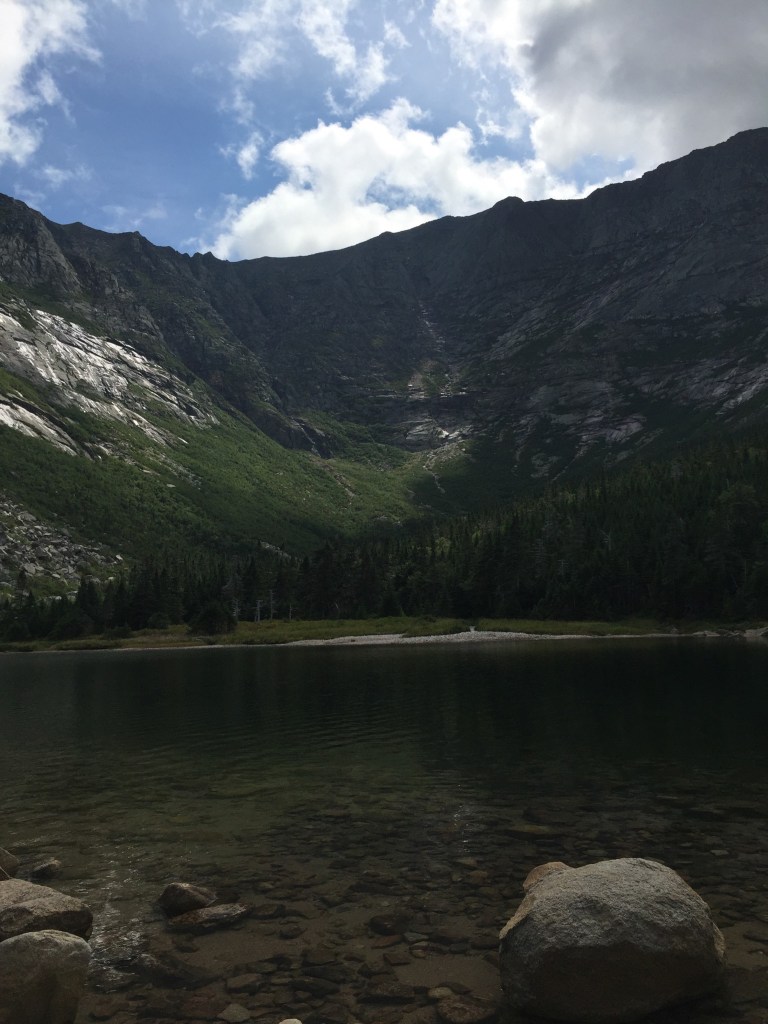
Chimney Pond is beautiful, and a great jumping-off point for multiple hikes, as well as family-friendly ranger-led programs in the summertime. With ominous clouds moving in, we signed the trail log, got advice from the ranger at Chimney Pond to avoid descending the Cathedral Trail, and decided to make our push up Cathedral, and to return via the Saddle Trail. We decided we would forgo the Knife Edge, and take it the next time the weather allowed us to.
The Knife Edge on a previous ascent – not for the faint of heart.
Dad and daughter started the steep climb, and mom, who had accompanied us on this trip and hiked with us as far as the Chimney Pond Campground, then turned back to wait at the Roaring Brook lot for us as we climbed to the top. We felt strong, and our packs were intentionally light, focused on water, food, and light rain gear (in that order).
Dad/daughter each carried a 3 Liter Osprey water bladder (dad is one of those humans who just flat-out uses a lot of water), and we left daughter’s less full to reduce weight. Water on Katahdin is crucial, as straining leg muscles can easily dehydrate and cramp up, making for a difficult trip. In addition to water, eating bananas, and/or taking small amounts of salt and magnesium with food can help counter this cramping.
Daughter pushing up the Cathedral Trail.
We encountered several other pairs of hikers, who we spoke to briefly as we leap-frogged our way past and then behind them again during rest breaks. Cathedral was a serious climb, with a few hand-over-hand scrambles to follow the blue blazes.
We didn’t linger long at the summit of Baxter Peak, or stay for our planned lunch break. There was a large crowd that had come up the Hunt Trail, and the clouds did not look friendly. When dad did this hike the first time, it had been an icy affair, with stinging hail and ice, combined with a steady rain, and sure enough, we heard distant thunder, and started to feel a few drops.
Looking back at Pamola Peak and the Knife Edge from the Saddle Trail.
We scrambled down the Saddle Trail as the rain began to pick up, and about halfway down, dad’s feet went out from under him on a wet rock, and he took the weight on his wrist. The pain was dazzling, and we looked at the joint and the hand, but besides the discomfort, it appeared to be fine, so dad pulled it into his stomach to minimize the jostling as we descended, and we kept going.
The rain really began coming down, and we stopped in the treeline to put covers on our packs, and for daughter to don her rain jacket. The rain began to lighten while we stopped to enjoy some PB+J in a covered shelter at the Chimney Pond Campground. From there, we covered the ground quickly down the Chimney Pond Trail to the Roaring Brook lot, and our truck.
Getting back in the truck, dad realized that he couldn’t shift, steer, or turn the keys in the ignition with his right hand, and used his left to reach over the wheel for these tasks. As we wrote in our brief post on this hike to start this blog back in September 2017, it turned out, after X-rays a couple weeks later, that the wrist was broken. Bummer. Again, a great argument for the utility of hiking poles on a slippery descent, which would likely have mitigated this injury.
Daughter and dad agreed that Katahdin was the most challenging mountain of the summer, far surpassing Washington. We were happy with our route, and would suggest it to those tackling Katahdin when the Knife Edge is not a good idea due to weather. Cathedral offered us incredible views, and we used our rest breaks to turn and survey our progress and the landscape. We are looking forward to hiking Katahdin again, as well as exploring more of the newly established Katahdin Woods and Waters National Monument.
A Post Script….
We did enjoy a great mini-hike the following day on the way home, as we had a full day available to us. We stopped on the way south at the Orono Bog Walk, a 1-mile boardwalk loop that starts at the Bangor City Forest.
We really like plaid.
This was fascinating, particularly for the opportunity to see pitcher plants, which we had seen in the Barren-Chairback range during our 100 Mile hike, and for the many varieties of birds along the route.
Views from the Orono Bog boardwalk.
It was also a relatively easy loop, and an opportunity to stretch our legs after Katahdin the day before. Larger loops are well-marked and available for running and walking within the adjacent City Forest. Just get there early- parking was at a premium.
(Note: The Katahdin Loop Road opened for the 2020 season on Saturday, May 23. U.S. National Park Service advises to drive with caution and be alert for soft spots and rough road sections. Haskell and Big Spring Brook Huts are temporarily closed, and updates will be posted to the NPS website.)
The standard route into the South Entrance is via Route 11 from E. Millinocket/Medway to the Swift Brook Road along the Katahdin Woods and Waters Scenic Byway, but we were feeling adventurous, and took the Stacyville Road north from Millinocket to where it meets the Swift Brook Road. We savored the lonely ride along this quiet logging road, occasionally startling game birds (this is not the way to take a low-clearance or non 4×4 vehicle).
The 17-mile loop of Katahdin Loop Road is punctuated by meadows, bogs, and ridges, and the south and west parts of the loop boast excellent views of Katahdin and the surrounding area. This is an opportunity to see the Monument and cover distance in a vehicle, while having the chance to get out and explore at a variety of hiking paths and overlooks. The best map of the loop we found (which I wish we had when we were there, as it is also an excellent interpretive guide) was from the Friends of Katahdin Woods and Waters, and can be found here.
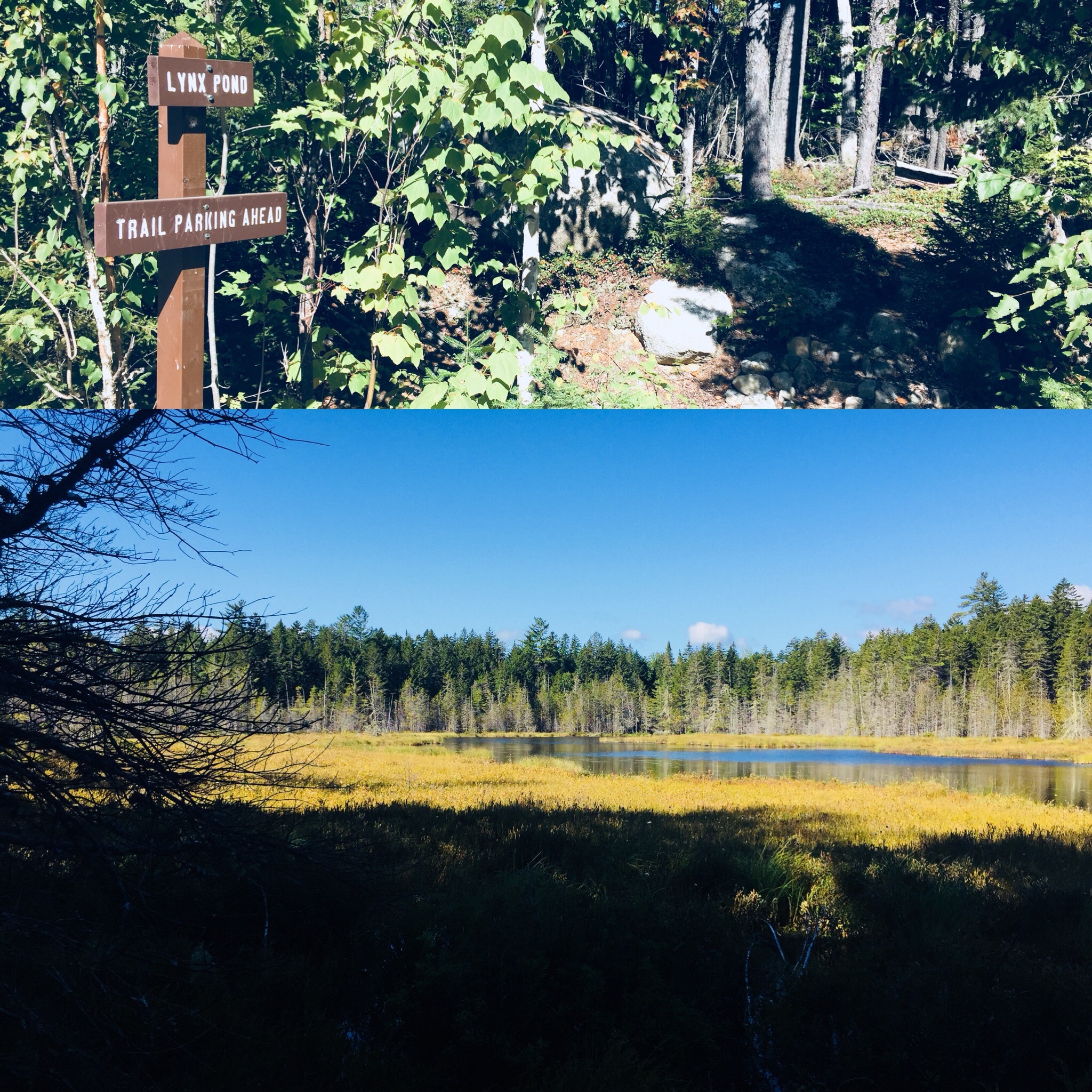
Lynx Pond
The Lynx Pond Walk is shortly past the Loop Road Gate, on the right just past the Mile 2 marker. Shortly after the trailhead is a parking area on the left of the Loop Road. This is a very short walk through the woods to a small boardwalk by the pond, and a spot for quiet reflection and wildlife viewing.
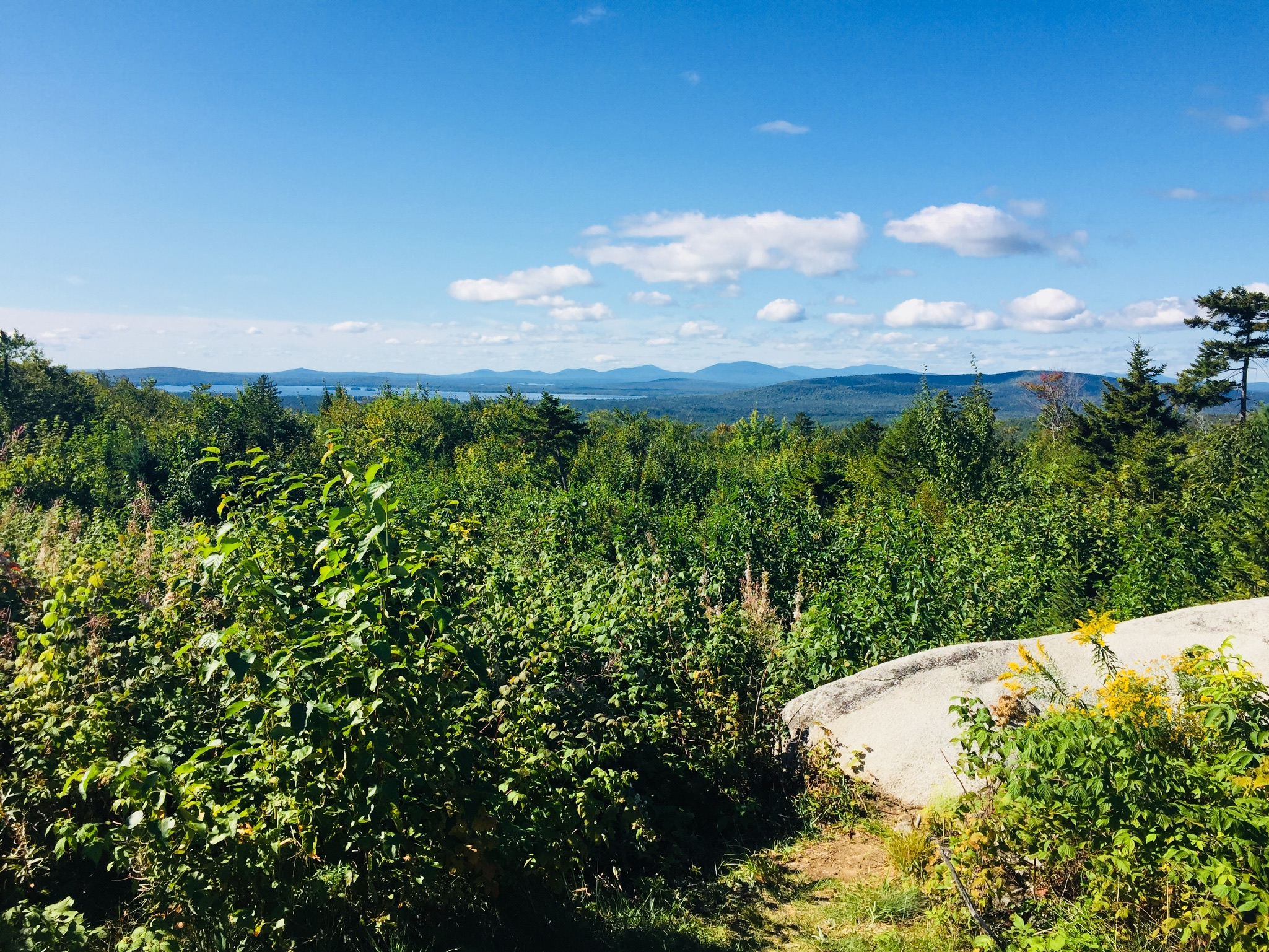
Looking south from The Overlook on Katahdin Loop Road. The large lake is Millinocket Lake.
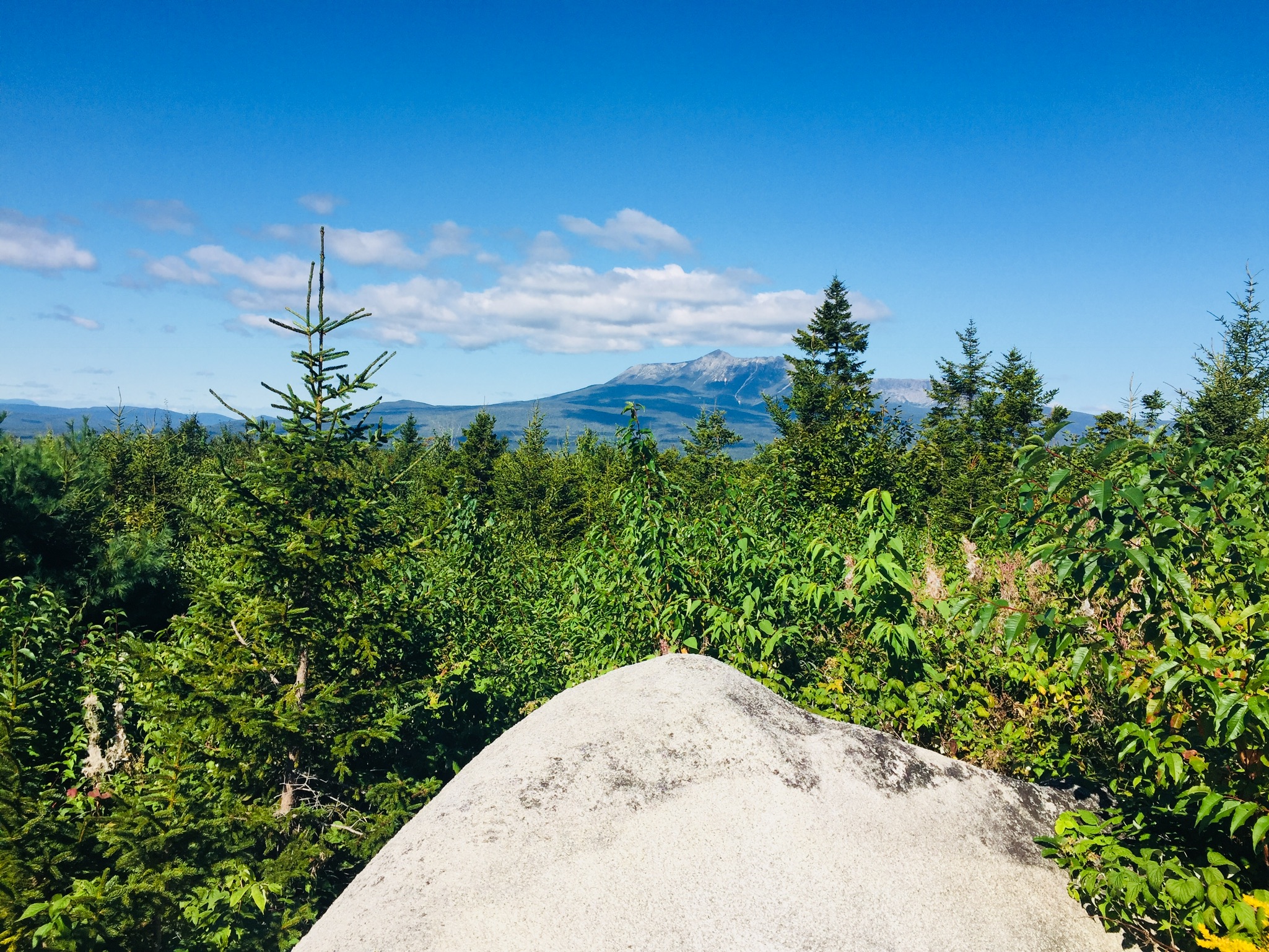
Views of Katahdin from The Overlook on Katahdin Loop Road
Katahdin towers over the loop, and there are multiple spots around the Loop Road with views of the lakes and mountains to the west and south, particularly The Overlook, between Miles 6 and 7, which conveniently has a picnic spot and a toilet.
The IAT and trail to Barnard Mountain
IAT Lean-To (toilet is behind lean-to)
We continued around the Loop Road, and got out to stretch our legs again at the International Appalachian Trail (IAT) and trail to Barnard Mountain, passing over Katahdin Brook and by the IAT lean-to. This wide logging road made for a sunny trail, and though we did not make the turn towards the Barnard Mountain summit, we enjoyed the walk, and the familiar plants and animals that inhabit newly overgrown woodcuts, with blue jays diving across our path and into the trees. The Barnard Mountain trail itself is a moderate 4-mile round trip with summit views of Katahdin and Katahdin Lake to the west.
Late summer flowers and plants along the IAT
The IAT continues from the northern terminus of the Appalachian Trail at Baxter Peak across Maine, into Canada, across to Greenland, and Europe, to the Atlas Mountains of Morocco. For a great exploration of the concept of the IAT, see On Trails by Robert Moor, reviewed on this blog.
Moose tracks and droppings on the IAT
There are seven mountains in the Monument to hike, including Barnard, as well as paddling opportunities and waterfalls. The Loop Road was quiet, as were the trails, with natural sounds, and only a few others exploring the area. A bumpy drive back down Stacyville Road took us to Millinocket, where we devoured a Hawaiian pizza without remorse at the Millinocket House of Pizza.
Katahdin Woods and Waters National Monument is a special place, and we will be back there for hiking, biking, and paddling. The views during peak foliage season must be spectacular. Ensure you plan ahead, bring maps, and a cooler with water and snacks, as there are no facilities at the Monument, and cell coverage ranges from little to non-existent. But that’s probably what you’re looking for in the first place.
In August 2018, we hiked Peaked Mountain (1,160 ft), also known as Chick Hill, in the Clifton-Amherst area off Route 9. For years, we had observed the massive cliffs of Peaked and Little Peaked Mountains looming over the Airline, and hiking to the top was a great experience. We took our instructions from the AMC Maine Mountain Guide, as well as a November 2017 Portland Press Herald article by Carey Kish on Airline Road hikes. We did this 2.2 mile up-and-back hike during a sweltering heat wave, with temperatures in the nineties, and it took us about an hour, total.
The gradual climb up the gravel road, bounded by wildflowers and berries.
The steep trail that turns off through the woods at utility pole 18.
The trail route provided by the AMC guide needs no addition – we easily followed the logging road (fire road 32) from the trailhead, past the turn-off for Little Peaked Mountain, and turned into the woods at utility pole 18. A steep trail through the woods (which felt like a jungle on this hot, humid day) leads up to the open areas below the summit.
Mom/wife and daughter reached the cliff edge below the summit, and enjoyed the cooler breezes, while Dad continued to the top and looked at the expansive views. The longer alternative, taken by another group of hikers while we were there, is to take the road all the way to the summit cell tower.
Benchmark at summit.
Cell tower at the end of gravel road.
The trip down the mountain was much faster than the way up, descending the gravel road with occasional stops for raspberries and blackberries. Little Peaked Mountain would have to wait for next time. Most importantly, a stop on Route 9 in Aurora at Mace’s American Snackbar for cold Gifford’s ice cream capped a great hike.
(Disclaimer: This post contains affiliate links, and as an Amazon Associate Hiking in Maine blog earns from qualifying purchases.)






















 In August 2018, we hiked Peaked Mountain (1,160 ft), also known as Chick Hill, in the Clifton-Amherst area off Route 9. For years, we had observed the massive cliffs of Peaked and Little Peaked Mountains looming over the Airline, and hiking to the top was a great experience. We took our instructions from the