Gulf Hagas Loop (KI/Jo-Mary)

img_6948

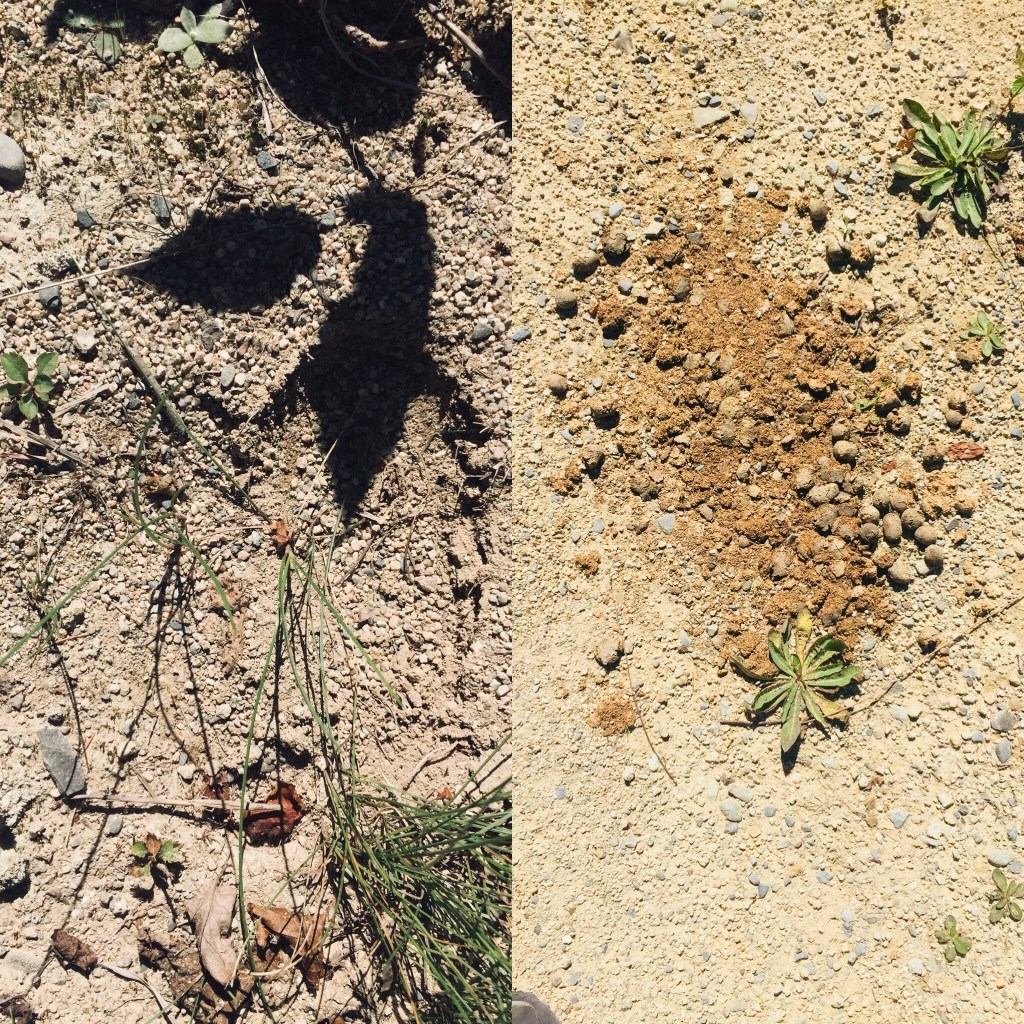
Gulf Hagas, a gem hidden in the 100 Mile Wilderness of Maine’s Appalachian Trail, has been dubbed the “Grand Canyon of the East.”  Recently, this moderate (in difficulty, not grandeur) hike along the West Branch of the Pleasant River is getting more press, for better or worse, including mentions in Outside Online’s Best Hike In Every State, and in the Sep/Oct 2019 Outside Magazine print edition. Why? Waterfalls! Appalachian Trail! Beautiful rock formations! Swimming holes! Moose (well, moose droppings, anyway)!  This is what you can tell any curmudgeons (I won’t name names) who come bearing excuses like, “too many bugs” or “that sounds like a lot of walking” or “I don’t have hiking boots.”

Gulf Hagas is located near the small town of Brownville, ME, about 3.3 hours from Portland and accessible through the gatehouse at Katahdin Iron Works Road (and two other checkpoints).  The Katahdin Iron Works (KI) Jo-Mary Multiple Use Management Area is a region of about 175,000 acres of privately owned commercial forest, wedged conveniently between Moosehead Lake and Baxter State Park.  All visitors – even those who are not camping – must stop at the gatehouse to pay the day use fee (and the camping fee if you are camping). They accept cash or check – and more cash than you might expect.  On our recent camping and hiking weekend to celebrate the end of summer, four adults and one child camping for two nights and hiking for two days was $176 (under 18 is free). Information on fees can be found at North Maine Woods site.  Also, pay attention while you are driving on those roads- the pot holes will get ya.

The gatekeeper at KI gate was friendly and helpful and happy to answer my questions about swimming holes and the state of the privy/outhouse at the campsite (brand new). I regret not asking him about a good spot to see a moose because I got the sense he would have known. The maps available at the gate (or print in advance here) of the area and of Gulf Hagas are particularly useful.

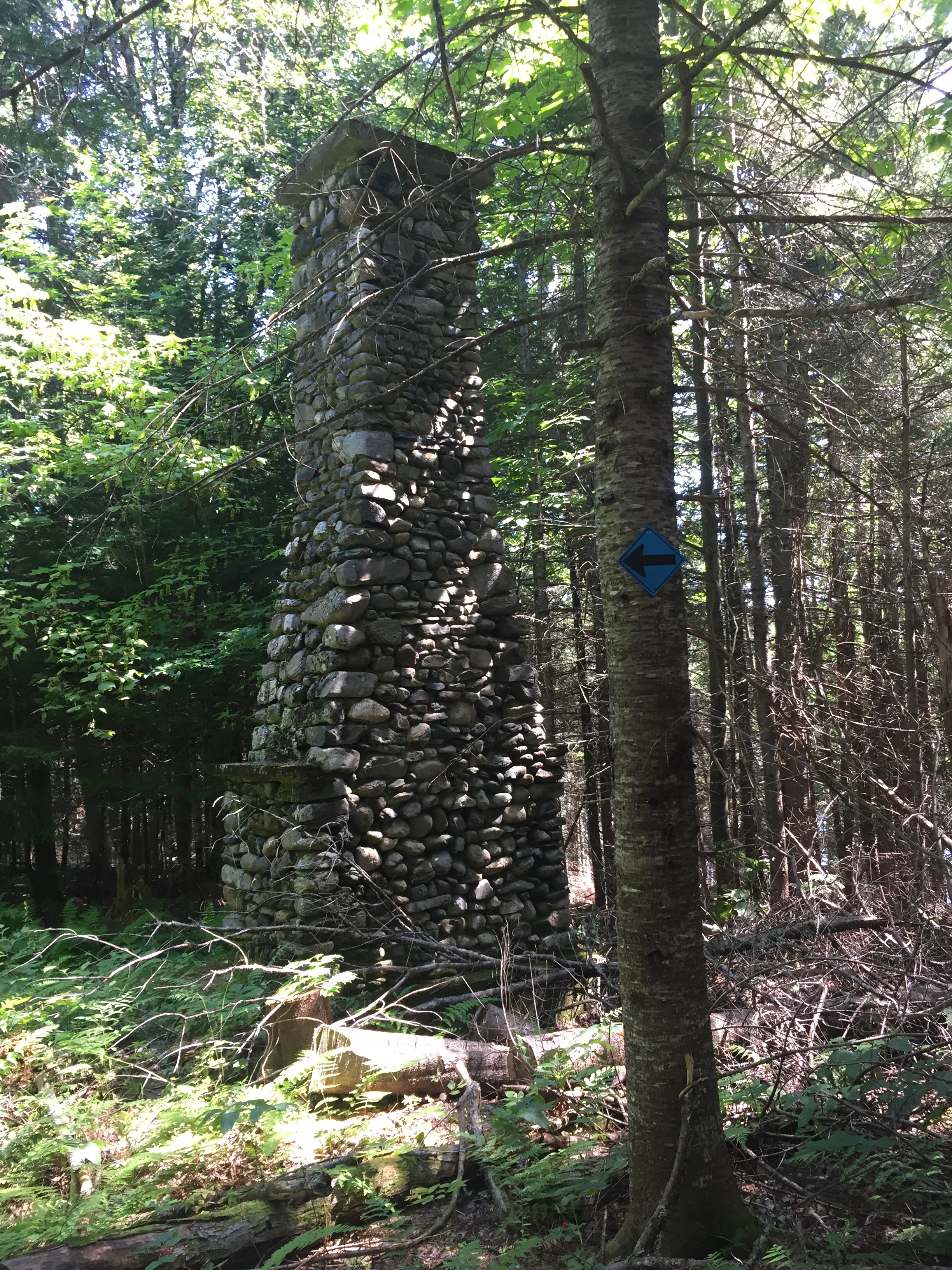
A small poplar grows at the top of the remaining Katahdin Iron Works furnace by the KI Gate.

I would recommend camping at the KI/Jo Mary campsites. Unless you are one of the few people that live nearby, you are going to want to relax somewhere after you hike for several hours.  We lucked out and got one of those late summer weekends where the evenings require jackets, the campfire is crowded and the days warm up enough to be in shorts. Late August in Maine!

Our camping site (Pleasant River #1) was sandwiched between a clean, quiet, shallow river and a dusty road that had about 4-5 cars per hour go by during the day. It included a new outhouse which (no joke) smelled like fresh pine when we arrived. The site had enough privacy and except for a few barks from a dog at a nearby camp site, we did not hear the neighbors. The covered picnic table was perfect for providing shade.

Pleasant River Campsite managed by Katahdin Iron Works / Jo-Mary, Inc., near Gulf Hagas
Pleasant River Campsites managed by KI Jo-Mary, Inc., near Gulf Hagas

I was practicing the art of low-maintenance and so decided this would be the trip that I would go without a pillow. I spent the first night with my head on a hard-sided duffel bag, cursing this decision. Alas, nobody will ever say about me that “all she needed was a small patch of land to lay her weary head.” Turns out I need a blow-up mattress and a pillow. And chocolate. And delicious “camping-easy” coffee that even has some health benefits. It is a splurge, but when you are camping without a pillow, you will want that coffee.

We set up three tents in the three nooks of the large site, which had a great mix of sun and shade and was approximately 3.5 miles from the trailhead.  My sole complaint was the road. Given the ruggedness of the road, the dust and the clouds of marijuana smoke billowing from passing cars, my advice would be to drive to the trailhead as opposed to walk. Save your energy for the gorgeous scenery along the Gulf Hagas Rim Trail! This is the hike with all the oohs and ahhs.
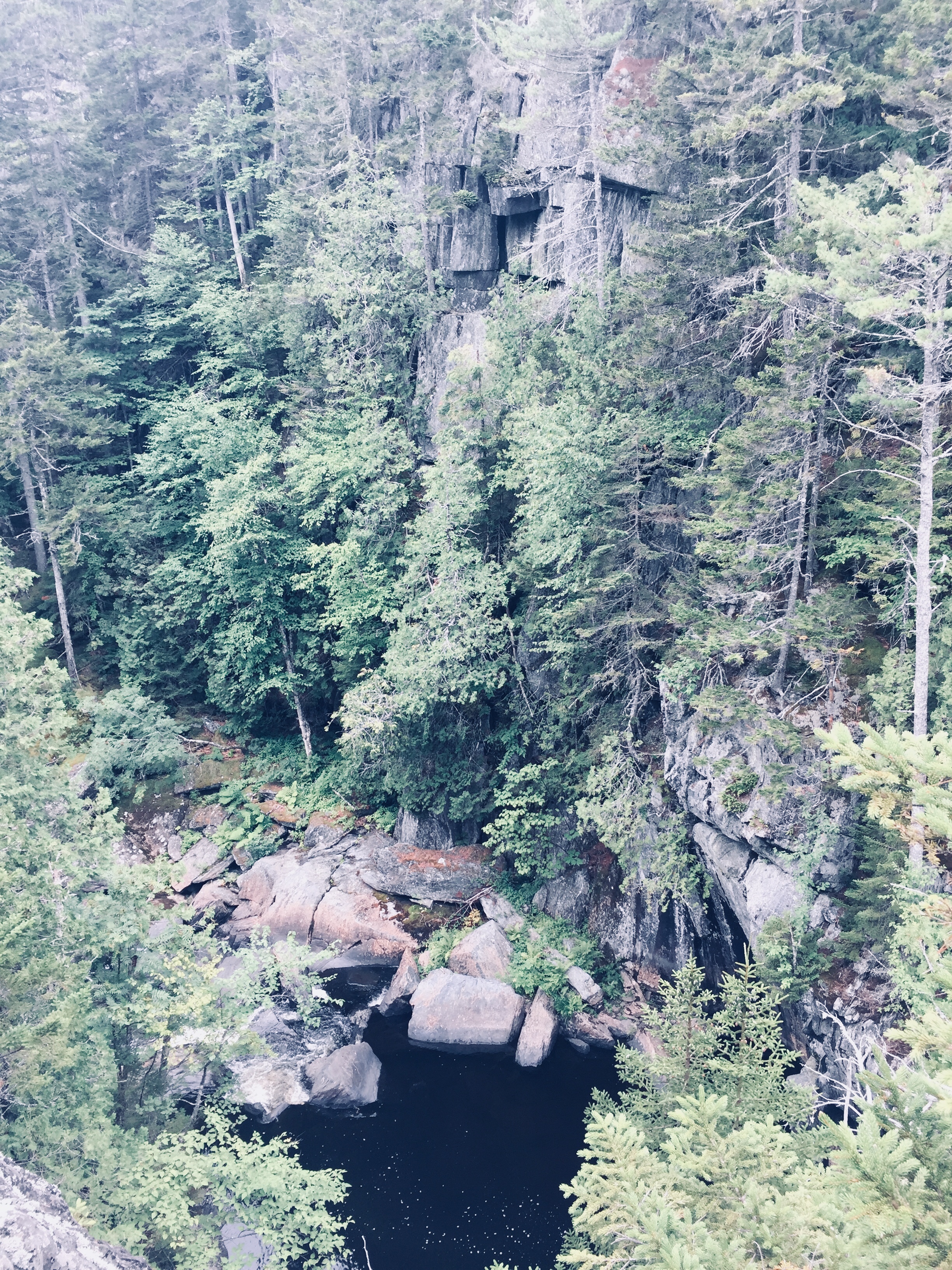
The trailhead for the Gulf Hagas Rim Trail is well-marked and on this sunny August Saturday the parking lot was overflowing. Several wooden hiking sticks rested next to the large trail map, to borrow for fording the river which comes at approximately .2 miles into the walk. Fortunately, the river was shallow and only reached mid-calf in the deepest areas. Because of the slippery rocks, I would highly recommend a walking stick or hiking poles and water shoes – my daughter crossed in bare feet but it did not look pleasant. The depth of the water varies from season to season and in dangerous conditions, there are other ways to hike the trail without crossing the river.

Crossing West Branch of Pleasant River on Appalachian Trail on way to Rim Trail, Gulf Hagas
Crossing W. Branch of Pleasant River on AT on way to Rim Trail, Gulf Hagas

After the river crossing, you are on the Appalachian Trail. I was impressed with all those hikers who had walked perhaps since Georgia. Follow those white blazes, through The Hermitage (lots of huge, old white pine trees and hemlocks) and continue to the Rim Trail, where you say goodbye to the folks who are walking the 100-Mile Wilderness of the AT and you follow the blue blazes instead.

We took the Rim Trail along the water and then returned along the Pleasant River Tote Trail. See map here. In total, with all the small side trails to viewpoints, it is about 9 miles and there is an option to make a smaller loop, if you take the Appalachian Trail cutoff.  Alternately, Gulf Hagas can be reached from a parking area for the Head of the Gulf Trail (opposite end from the AT), closer to the Greenville Road.

Many families with small children appeared to turn around at Screw Auger Falls or Buttermilk Falls. Several people were jumping into the water at Screw Auger Falls and it was the busiest spot along the walk. Everyone in our party seemed to be allergic to big groups of people (Husband mumbled something about Disneyland) and so we moved along. Certainly on a hot day this would be a great spot to cool off and I can’t imagine a more picturesque spot.
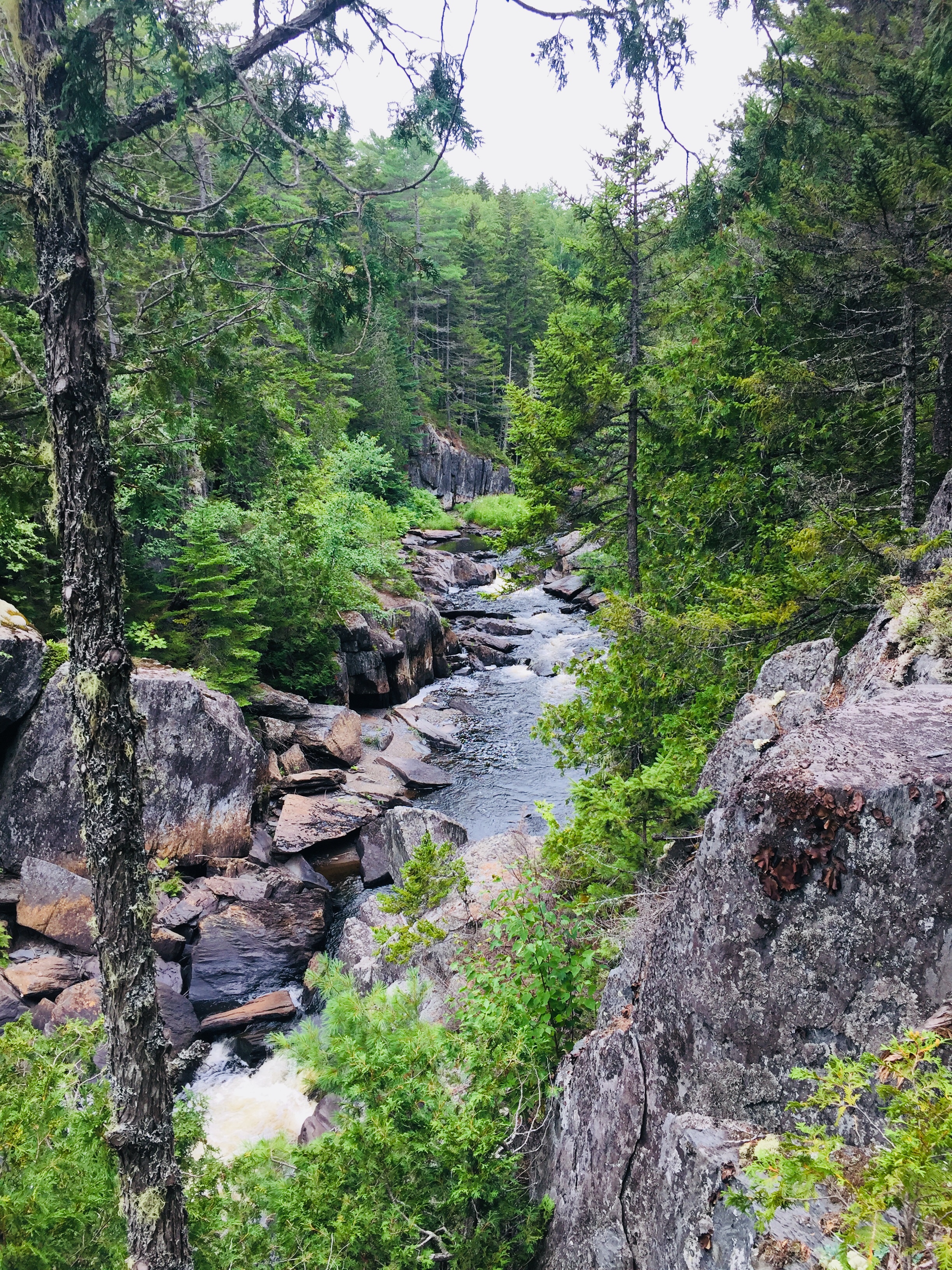
The hike does not include significant elevation and it is well marked. There are some little scrambles over rocks that a well-placed hiking pole or a tree branch would help with, but otherwise it is what I would call moderate.  The AMC Maine Mountain Guide suggested allowing 4 hrs and 25 minutes for the loop, which is reasonable.  We took plenty of breaks to relax and snack, and completed it in about 6 hours.

The trail has plenty of quiet, scenic areas to stop and sit and rest and stick your feet in the water while eating a peanut butter and jelly sandwich. My group had a couple of stoves and made sophisticated camping meals and hot tea. Daughter is a huge fan of Mountain House Chili Mac while the breakfast favorite was the Peak Refuel Breakfast Skillet. The JetBoil camping stove continues to impress in its efficiency.

We took the Pleasant River Tote Trail back and it was scenic in its own right – meandering woodland paths – quiet, green and easy. The walk back was much faster than the hike along the Rim Trail and the river crossing that you complete again to get back to the parking lot was refreshing on tired feet.

For post-hike refreshment, we enjoyed the cool river by the campsite, grilled hamburgers and beer and wine, and watching kingfishers and small, fast-moving ducks move by.  But if you are headed back towards Portland, consider stopping at Bissell Brothers Brewing Three Rivers on Elm Street in Milo (turn right at Dot Rd just before the red train car).  According to the cheery bartender, their double IPA, Preserve and Protect, is a tribute to the brothers’ father, Jensen Bissell, who was the Director of Baxter State Park for thirty years.  A Katahdin benchmark is imprinted in the bar, as well. Please stop by soon, though, as an open letter on their site advises that the Bissell location, open since July 2018, will close at the end of summer 2024.

Katahdin benchmark in the bar at Bissell Brothers Three Rivers in Milo, ME

The now-famous Bissell Brothers beers are all available on tap, and delicious food is also available for purchase outside.  Relax on the outdoor patio, and watch or play cornhole and ping-pong – all without the bustle at their Portland location.  And continuing towards the turnpike in Dover-Foxcroft is Butterfields Ice Cream, serving up unbelievable ice cream flavors (and now, burgers, fries, and lobster rolls) since 1950.

Gulf Hagas is a memorable day-hike with friends and family, customizable to each person’s individual abilities, with memorable scenery unique to Maine’s 100-Mile Wilderness.
Pond Loop (Little Lyford Ponds, KI/Jo-Mary)

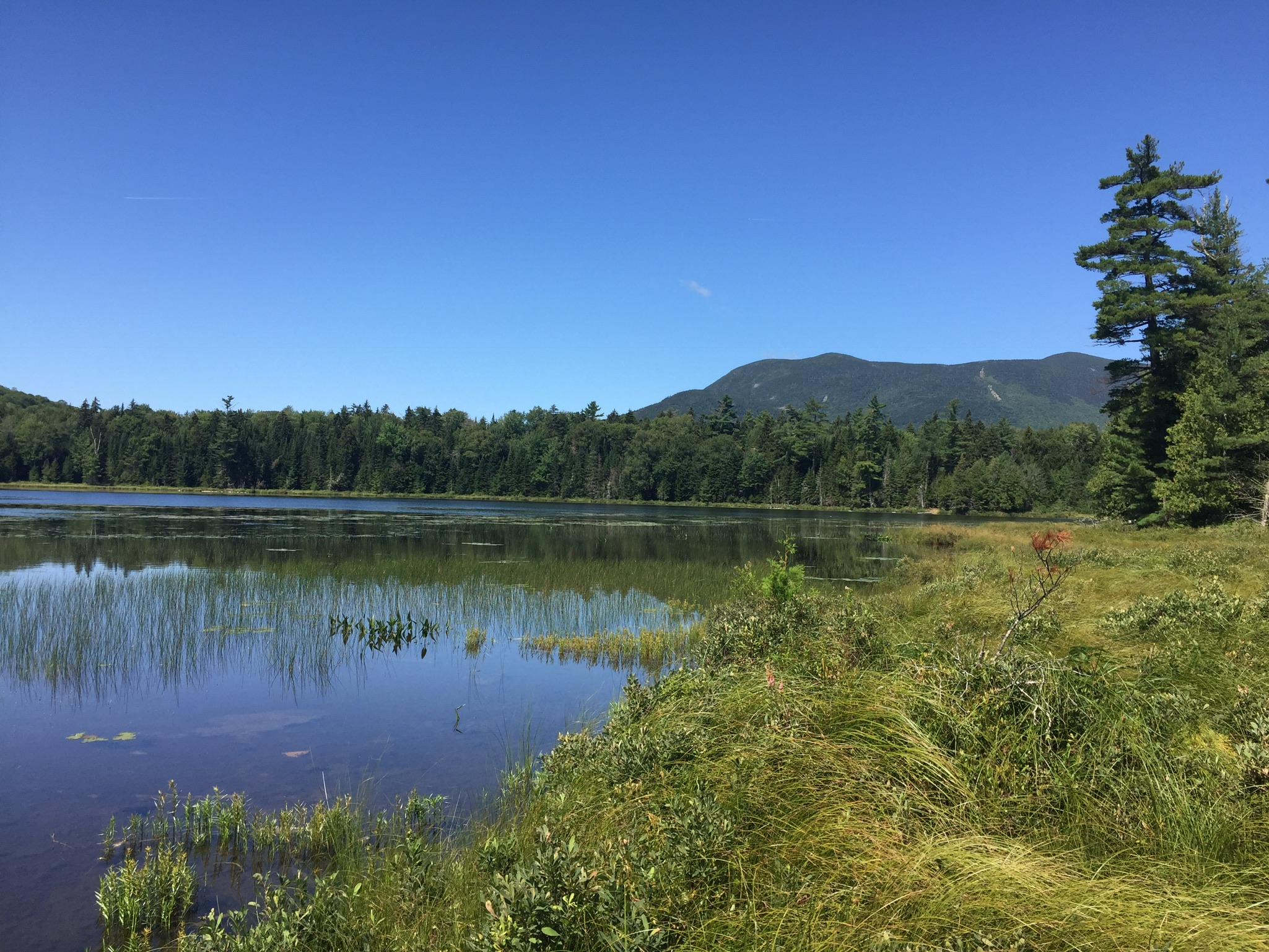
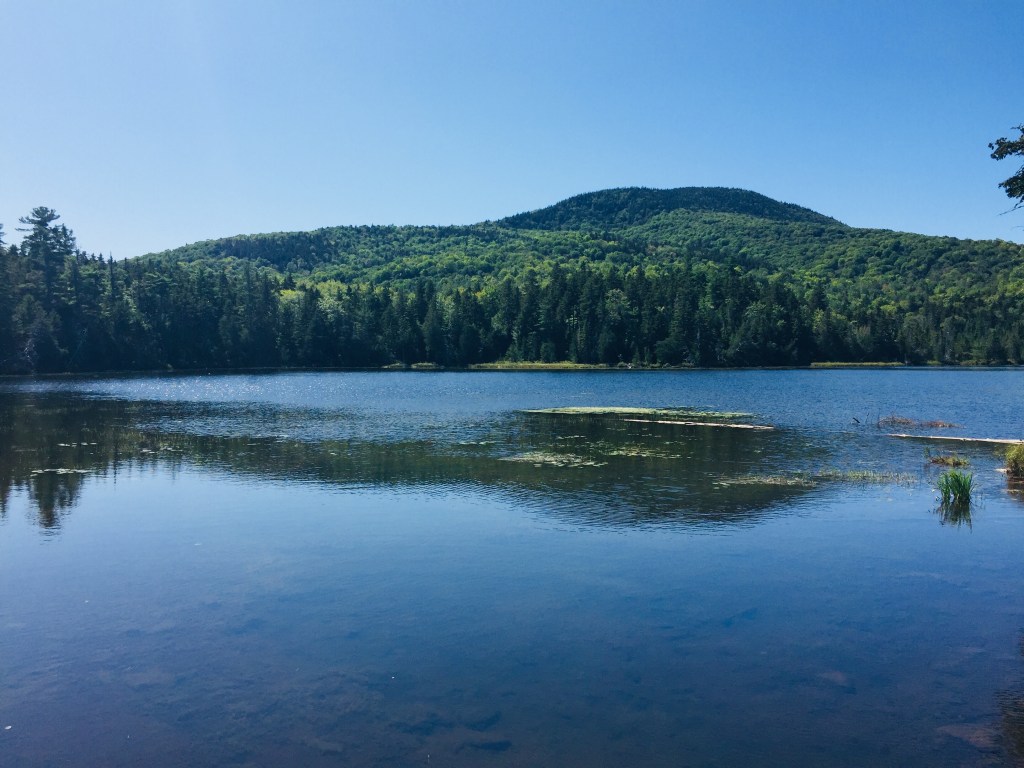
Little Lyford Upper Pond from the Pond Loop Trail

The Pond Loop Trail, a 1.9 mile hike around Little Lyford Ponds near the Appalachian Mountain Club’s (AMC) Little Lyford Lodge & Cabins, is a pleasant, easy walk with abundant wildlife.  The ponds straddle the townships of Bowdoin College Grant West and Bowdoin College Grant East, close to Moosehead Lake.  For detailed description, check out the AMC Maine Mountain Guide or the online maps available from AMC.  We hiked this short loop the morning after a longer Gulf Hagas hike.  We had camped overnight at a KI/Jo-Mary campsite on the Pleasant River, but a closer stay would be at the AMC Little Lyford Lodge & Cabins, with access to many nearby trails.  As with the rest of the KI/Jo-Mary Multiple Use Management Forest, there is a use fee ($10 per adult Maine Resident per day, $15 non-resident, under 18/over 70 free), payable at one of three checkpoints, the closest of which is the Hedgehog Gate on Greenville Road.  If approaching from the south on Upper Valley Road, the parking area for the Pond Loop Trail is past the sign for the AMC lodge and cabins, on the left-hand side, just before the spur trail marked, “Little Lyford Pond #2 Boat Launch.”
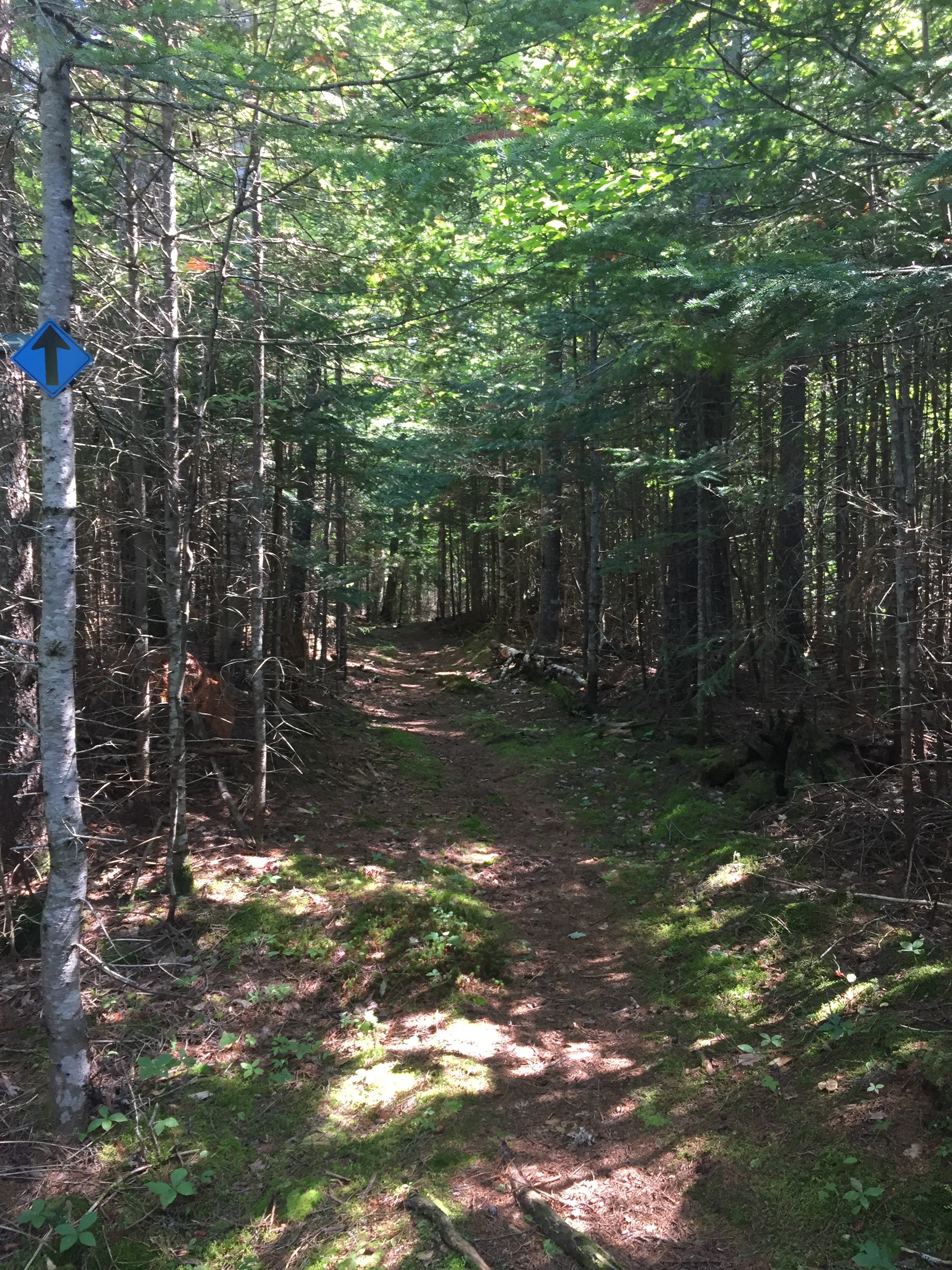
Pond Loop Trail, marked with blue signs

On this sunny Sunday morning in August, we saw no other hikers for the entirety of the loop.  The Pond Loop is known as a good place to see moose, but we were likely up too late in the morning to have a great chance.  Nevertheless, the woods and ponds were alive with smaller animals birds, and butterflies, and the tracks and droppings of moose were evident throughout the hike.  The trail is aptly named, skirting the edges of upper and lower Little Lyford Ponds.

Gerry's Gazebo, Pond Loop Trail
Gerry’s Gazebo, Pond Loop Trail

As suggested by the Maine Mountain Guide, we walked the loop counter-clockwise.  Our circuit took a fortuitous detour (we missed the hard left to go back on the east side of the upper pond), bringing us onto the Pleasant River Trail all the way to the AMC Little Lyford Lodge & Cabins.  Fun fact for dog-lovers: this is the only AMC Lodge that is dog-friendly.

View to the southeast of the Barren-Chairback Range from Little Lyford Lower Pond, along Pleasant River Trail

This added about 0.4 miles each way, but allowed us to view the cabins, the swimming hole, a beaver dam, and a viewpoint on the lower pond towards the Barren-Chairback Range.  For those staying at the lodge and cabins, this would be a part of the Pond Loop.

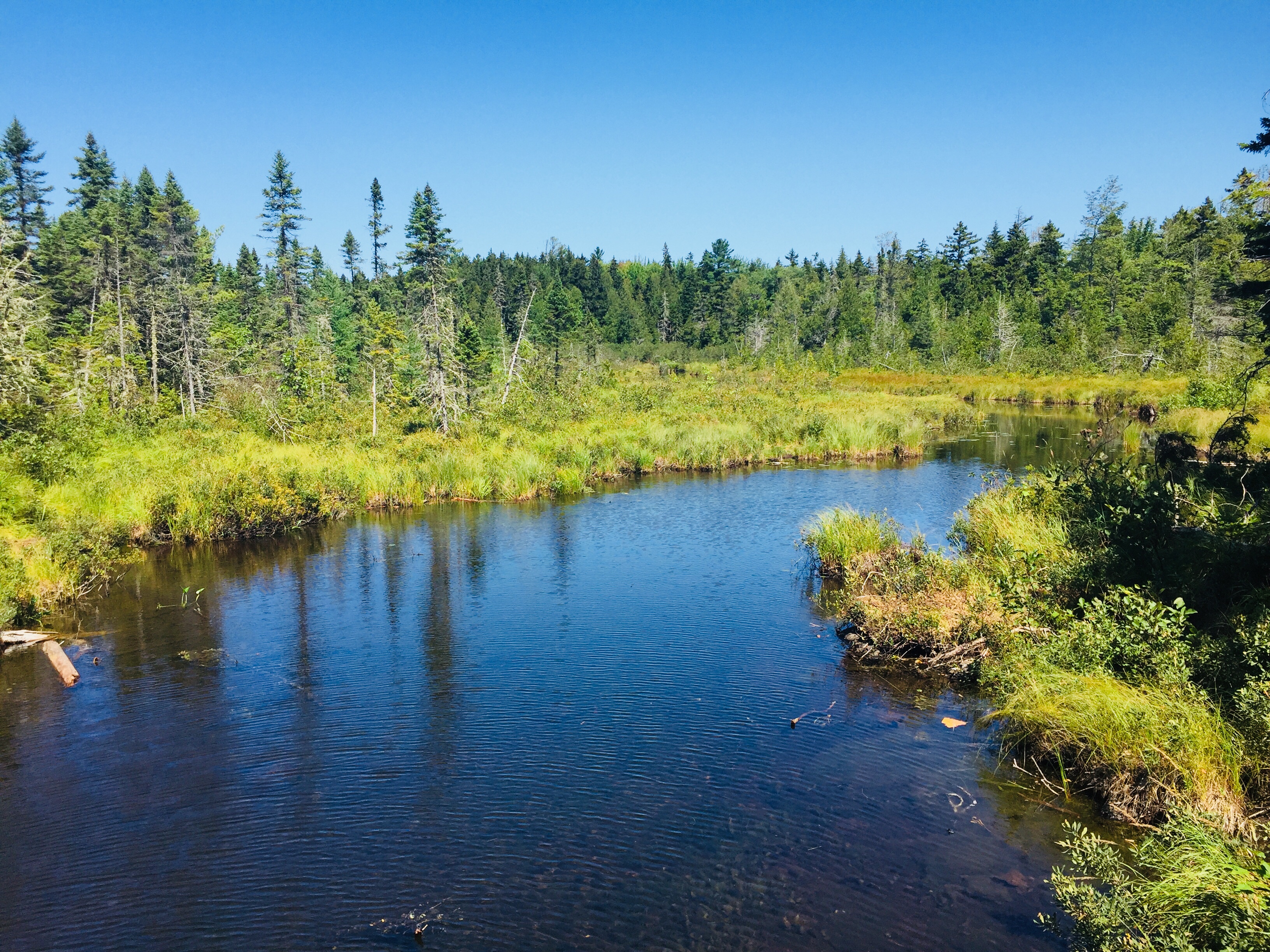
Upper Pond outlet, Little Lyford Ponds, from Kendall's Crossing
Upper Pond outlet, Little Lyford Ponds, from Kendall’s Crossing

From the viewpoint at Kendall’s Crossing, we saw loons, ducks, and a heron plying the waters of the upper pond for food.  After a brief walk through a blueberry-lined path through the pines, across log bridges, and a short climb back to Upper Valley Road, we were back at the parking area.

The Pond Loop is a great morning nature hike, a mostly shaded hour on relatively flat terrain, suitable for most ages and abilities.  Be quiet on the trail, listen, and slow down near the viewpoints on the Little Lyford Ponds to take a long look.  You never know what you might see.

Libby Hill Forest Trails (Gray, ME)

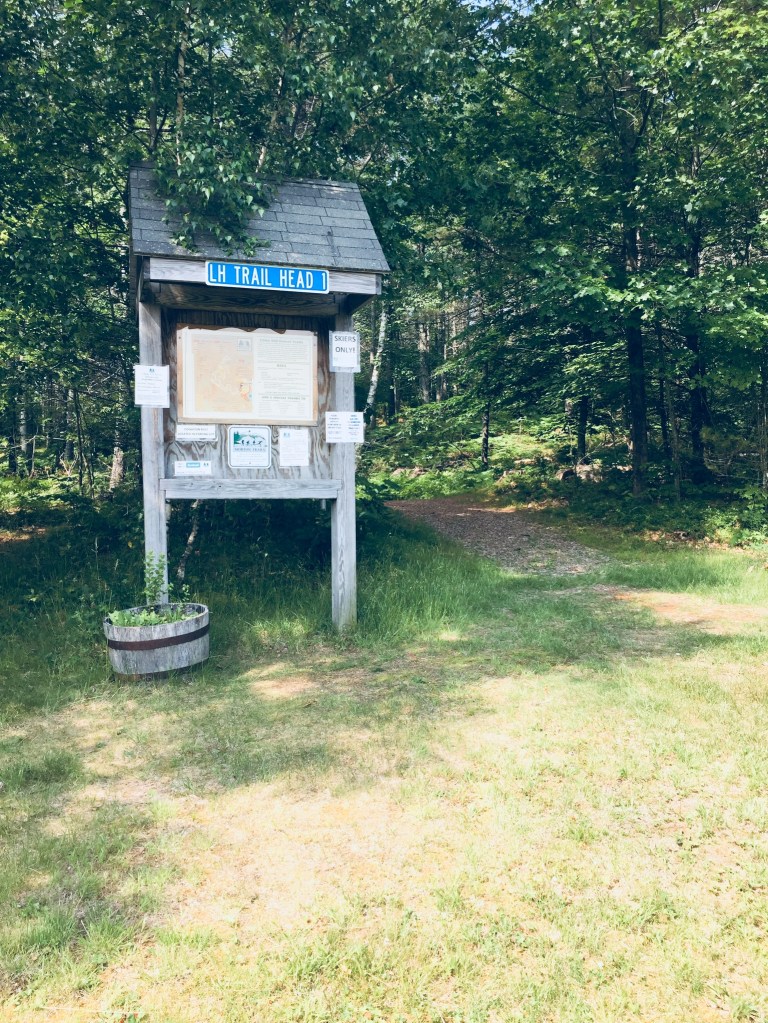
Libby Hill Trails Trailhead in Gray, ME
Libby Hill Trails Trailhead in Gray, Maine

The Libby Hill Forest in Gray, Maine, maintained by the Friends of Libby Hill, contains nine miles of multi-use trails, spanning properties owned by the Town of Gray, Mathew Morrill Trust, SAD 15, and the Gray Community Endowment (GCE).  The parking area is not far off the Maine Turnpike and Route 26, located at 50 Libby Hill Road in Gray, and the trailhead is behind Gray-New Gloucester Middle School (see trail maps here).  These trails are open year-round, and are designated differently based on width, terrain, and season for hikers, bikers, cross-country skiers, and snowshoe travel.

Moose Odyssey Trail, Libby Hill Forest, Gray, Maine

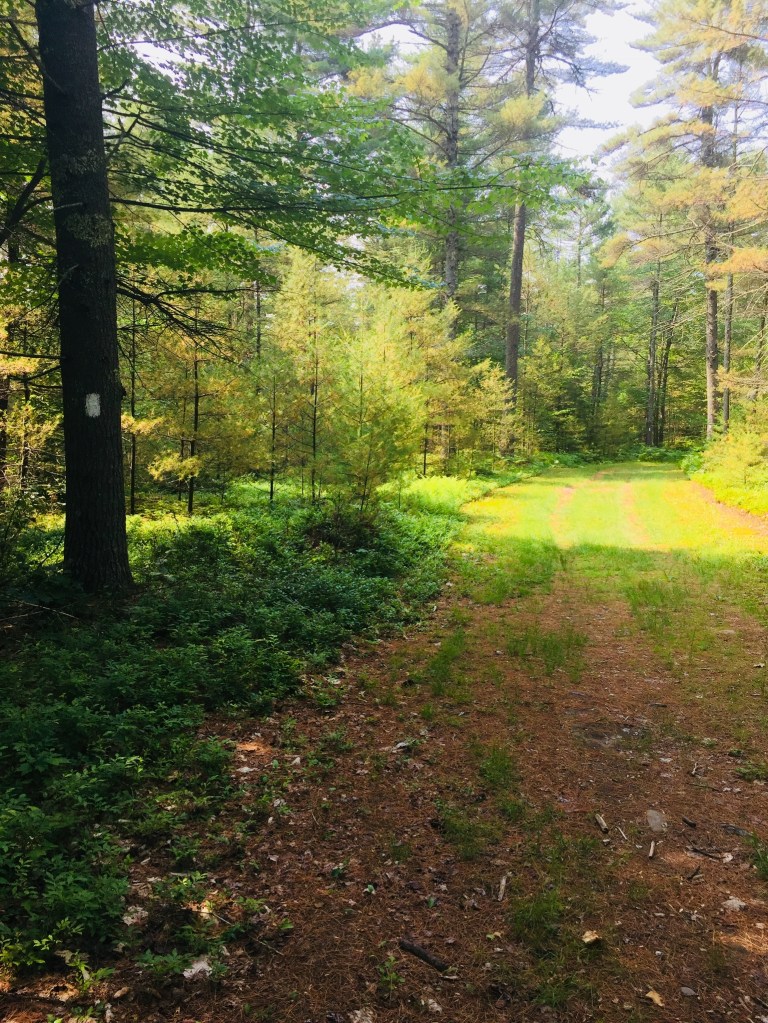
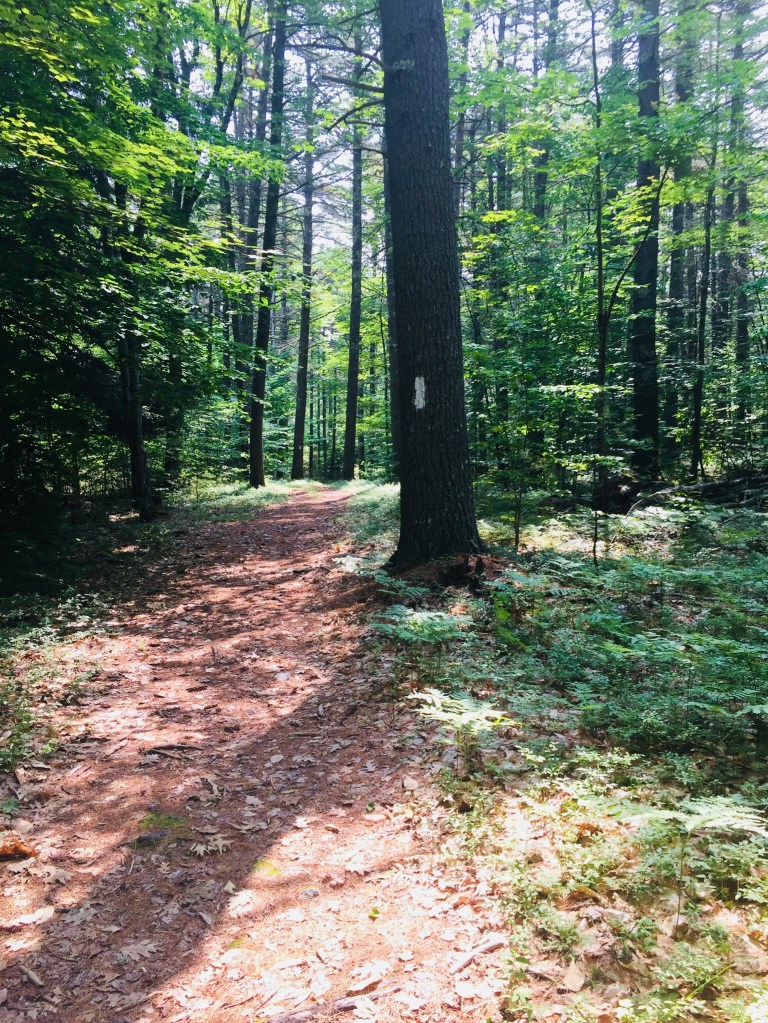
On the July day we visited, we took the 3.1 mile Moose Odyssey Trail (white blazes), which loops through the center of the trail complex.  This broad, winding path is carpeted by grass and pine needles, and wide enough in most places for two people to walk abreast, making it more of a social trail.  The margins of the gently rolling trail are covered with wild blueberry and sweet fern.

Moose Odyssey Trail, Libby Hill Forest, Gray, Maine

The Libby Hill website contains a variety of maps on its Trail Maps page, including a digital smart phone map, Longest Day 5K race course map, individual trail descriptions and history, orienteering tour, Libby Farmstead tour, and a Tree ID Sign map, perfect for a 17-point scavenger hunt from American Beech (#3, #7) to Yellow Birch (#8).  The forest abounds with birds, and we saw an Eastern Towhee close to the trail.

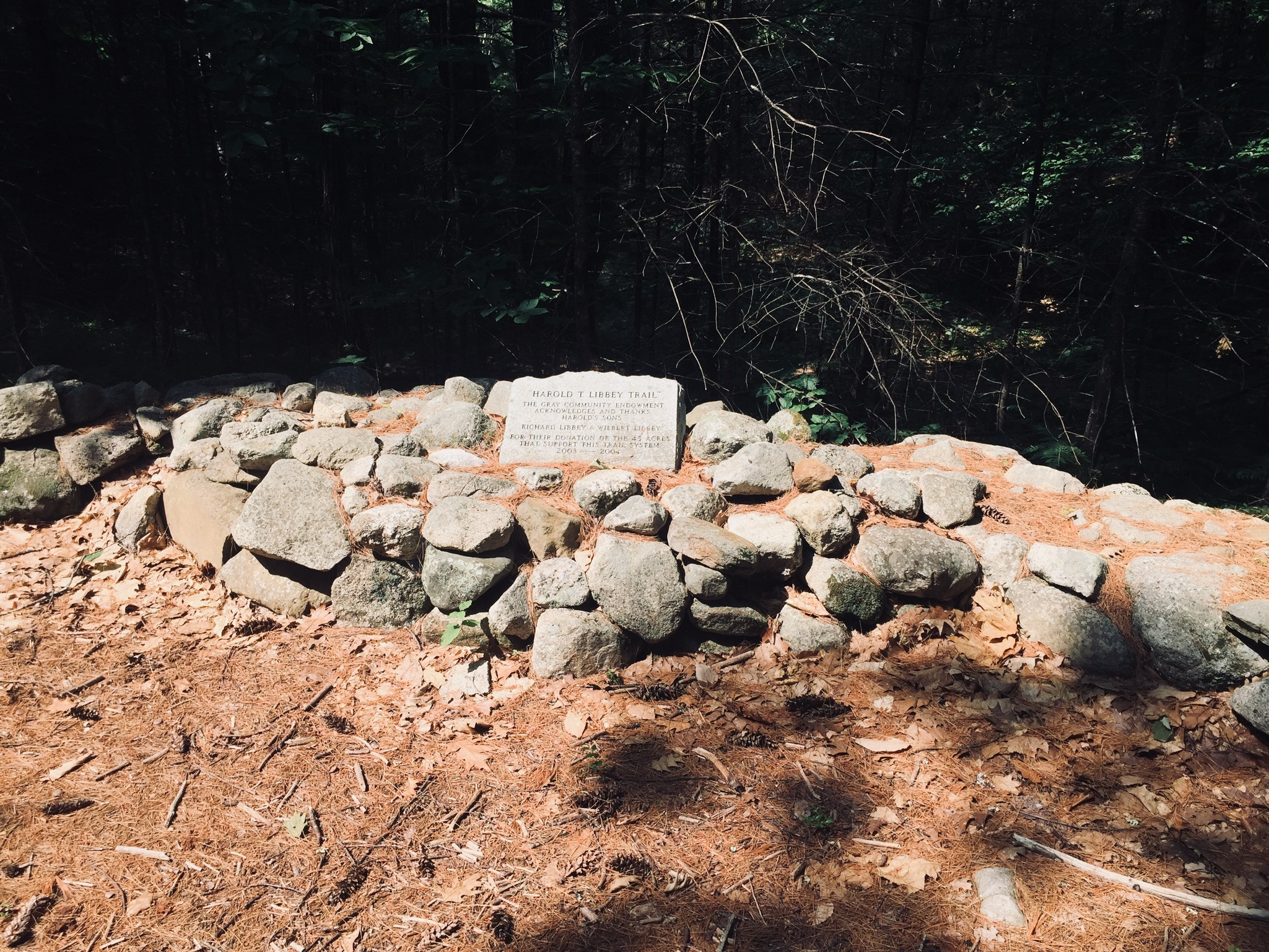
Harold Libbey Memorial, Libby Hill Forest, Gray, Maine

Once you are on the trail network, navigation is self-correcting, with laminated maps at each intersection.  To the south, the Harold Libbey and Outback trails, accessible from the Moose Odyssey Trail near the Harold Libbey Memorial, continue over wetlands, and contain areas to look for wildlife, including beaver activity (according to the Libby Hill website, Harold’s father changed the spelling from Libby to Libbey to avoid being confused with two others with the same initials and last name).  A note of caution – ticks can abound in the grassy areas, so be sure to take the appropriate precautions, and check yourself after the hike.

For pre- and post-hike snacks, there is a Hannaford at the end of Libby Hill Road, which according to the Libby Hill website, is the former site of William Libby’s Revolutionary War-era farm.  For more outdoor activities, Libby Hill Forest is also in close proximity to the Maine Wildlife Park and Gillespie Farm (Pick Your Own).

Round Top Mountain (Rome, ME)

0149c614d5f2d08bc0a5887b1bb7b1ffedf1723068
View from the Kennebec Highlands Trail, Round Top Mountain, Rome, Maine

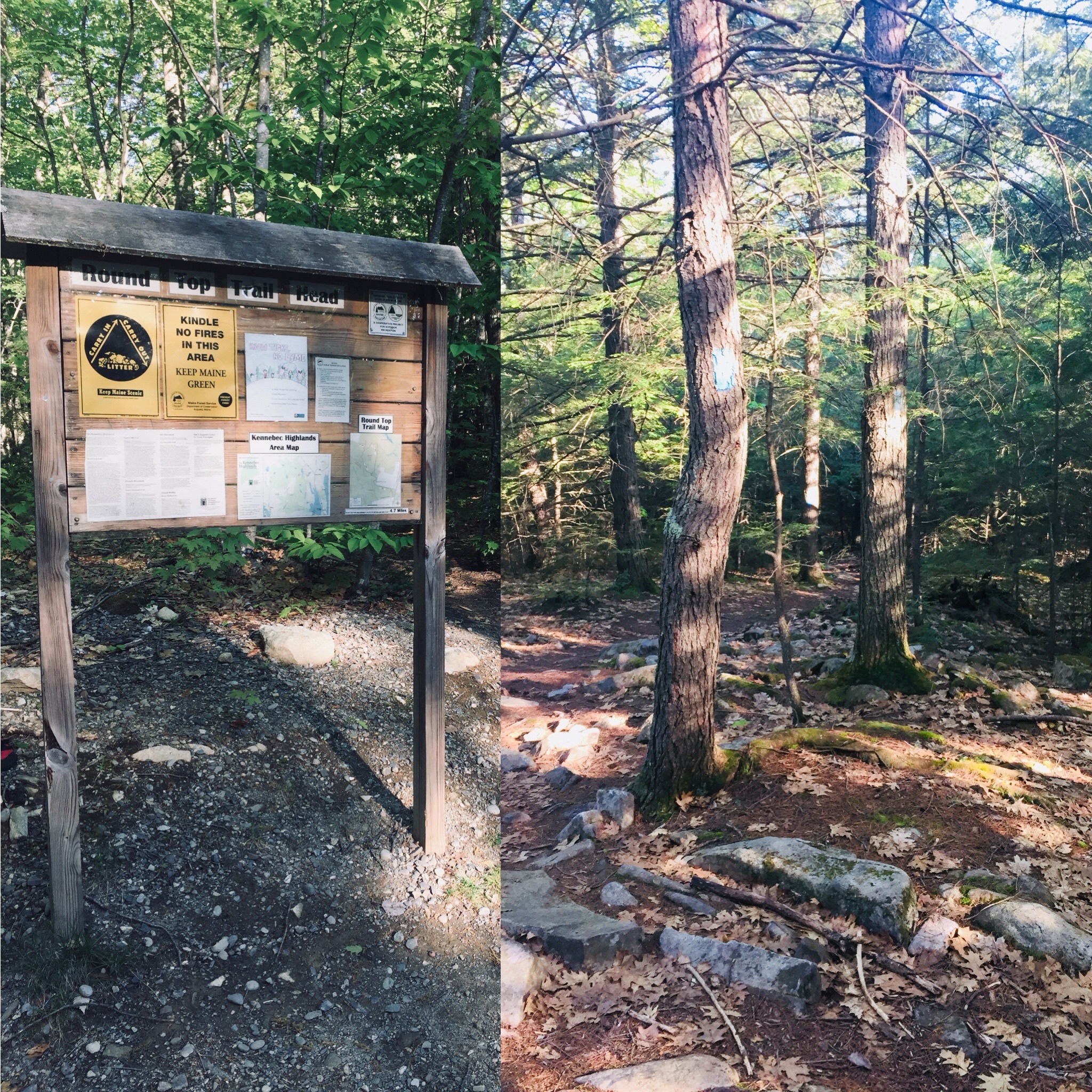
Round Top Mountain (1,133 ft) in Rome overlooks Belgrade Lakes and the Kennebec Highlands Public Reserved Lands. The route I chose on a sunny June day was an easy to moderate 4.7 mile counterclockwise loop using the Round Top Trail to the Kennebec Highlands Trail, the Round Top Spur, and then back down the Round Top Trail. I used the great guidebooks Maine Mountain Guide and Maine Hikes Off the Beaten Path for trail maps and hike descriptions. Visit the 7 Lakes Alliance website for a downloadable pdf map. This trailhead also allows access through the A Trail to McGaffey Mountain.

014eef3c5a05673b1822c74c628bc4ae82a45db41c
Trailhead and Round Top Trail in Rome, Maine

From the trailhead parking lot, this is a pleasant rolling path over a bristling cushion of oak and beech leaves and pine needles to the junction with the Kennebec Highlands Trail. On the early summer day I was there, the air was filled with aggressive mosquitoes, but a combination of Deet and constant movement neutralized their effect.

015c8ad862458ad510b6146f627b98a23d77963830
Morning light on the Round Top Trail, Rome, Maine

01026d319bcc85e3ca122be89080f5eaf7c639c395
Wildflowers on Round Top Mountain in Rome, Maine

Thanks to recent rains, the open areas to the margins of the Round Top Trail and of the wider woods road of the Kennebec Highlands were full of a variety of Maine wildflowers, with lady slippers dotting the sides of the more wooded areas.

0197cdfb5e329691896a4f02553c5a4dbbf3bde316
Rolling terrain on the Round Top Trail, Rome, Maine

From the left turn off the Kennebec Highlands Path, the ascent to the spur trail to the summit is a climb around switchbacks past blueberries and boulders, with views over the surrounding land.

010e26c909678ff72451211cec698195db7b8fd3f4
View from summit spur trail, Round Top Mountain, Rome, Maine

The (counterclockwise loop) descent down the Round Top Trail is more gradual than that of the Kennebec Highlands Trail, with fewer overlooks. The wooded path winds through the mixed forest, with large boulders lining the hillside like the spine of a dinosaur. The total loop took me about an hour and fifty minutes at a steady but leisurely pace.

This well-maintained trail network creates a unique family-friendly climb in an area of central Maine that is rich in lakes, but lacks the higher elevations of the highlands to the west. This does, however, create many options for a post-hike swim to cool off. For insight regarding things to do and places to stay in the Belgrade Lakes area, check out this great Downeast magazine article.

(Disclaimer: This post contains affiliate links, and as an Amazon Associate Hiking in Maine blog earns from qualifying purchases.)

Sawyer Mountain (Limerick, ME)

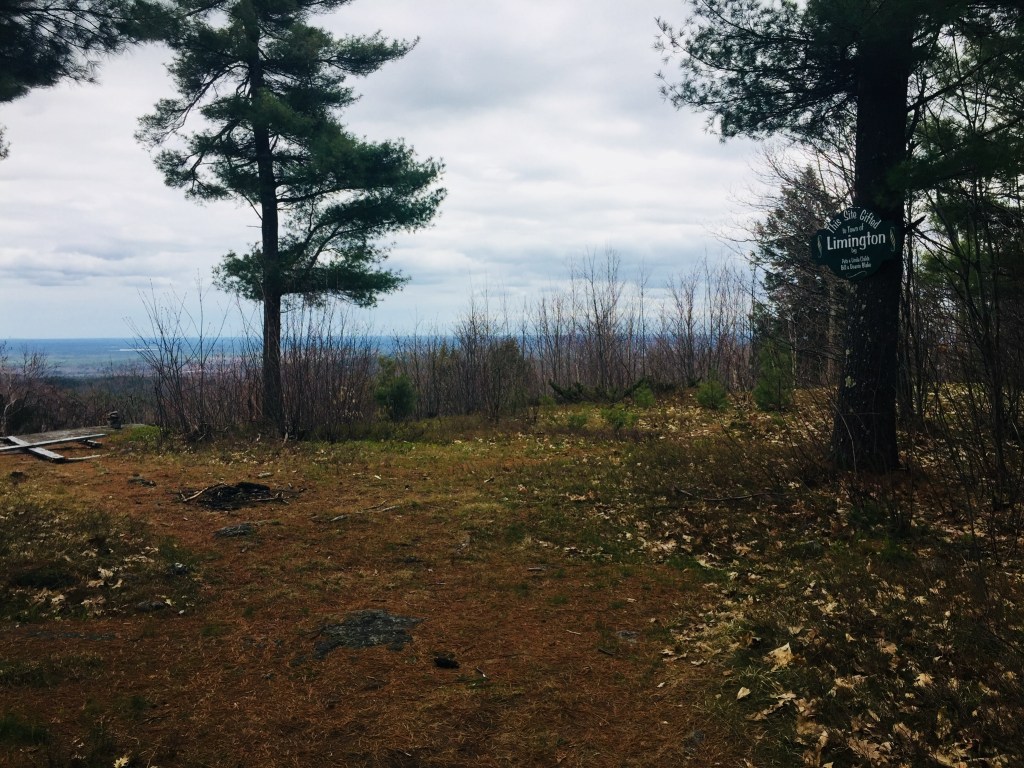
Town of Limington Scenic Overlook, Sawyer Mountain, Maine

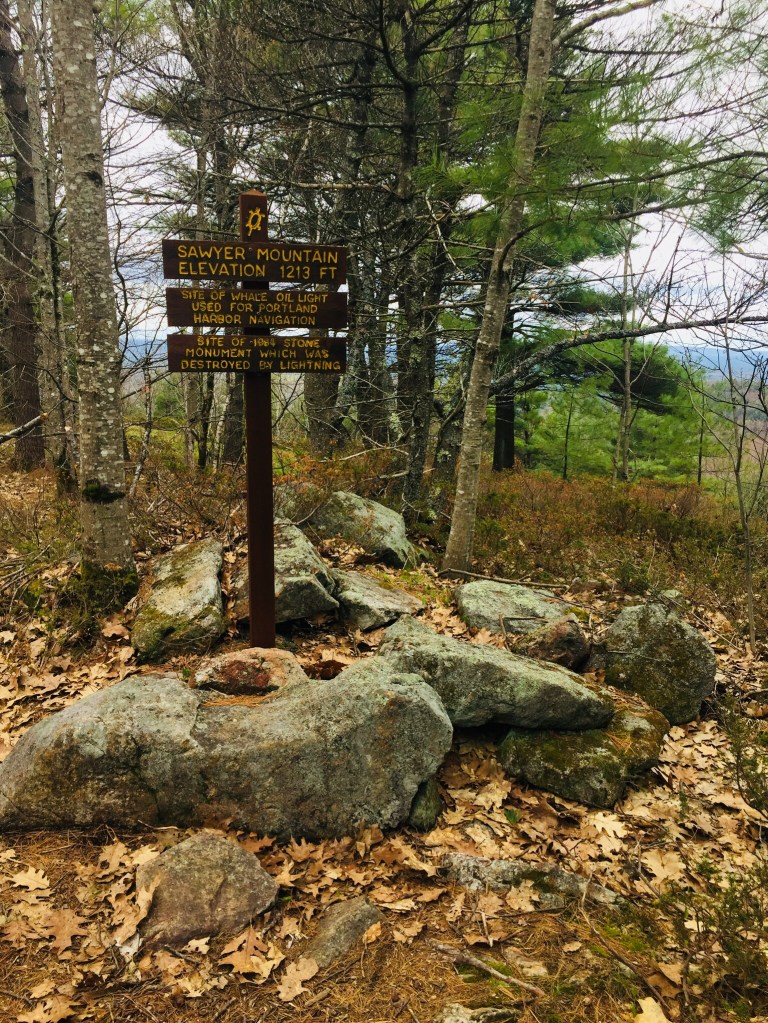
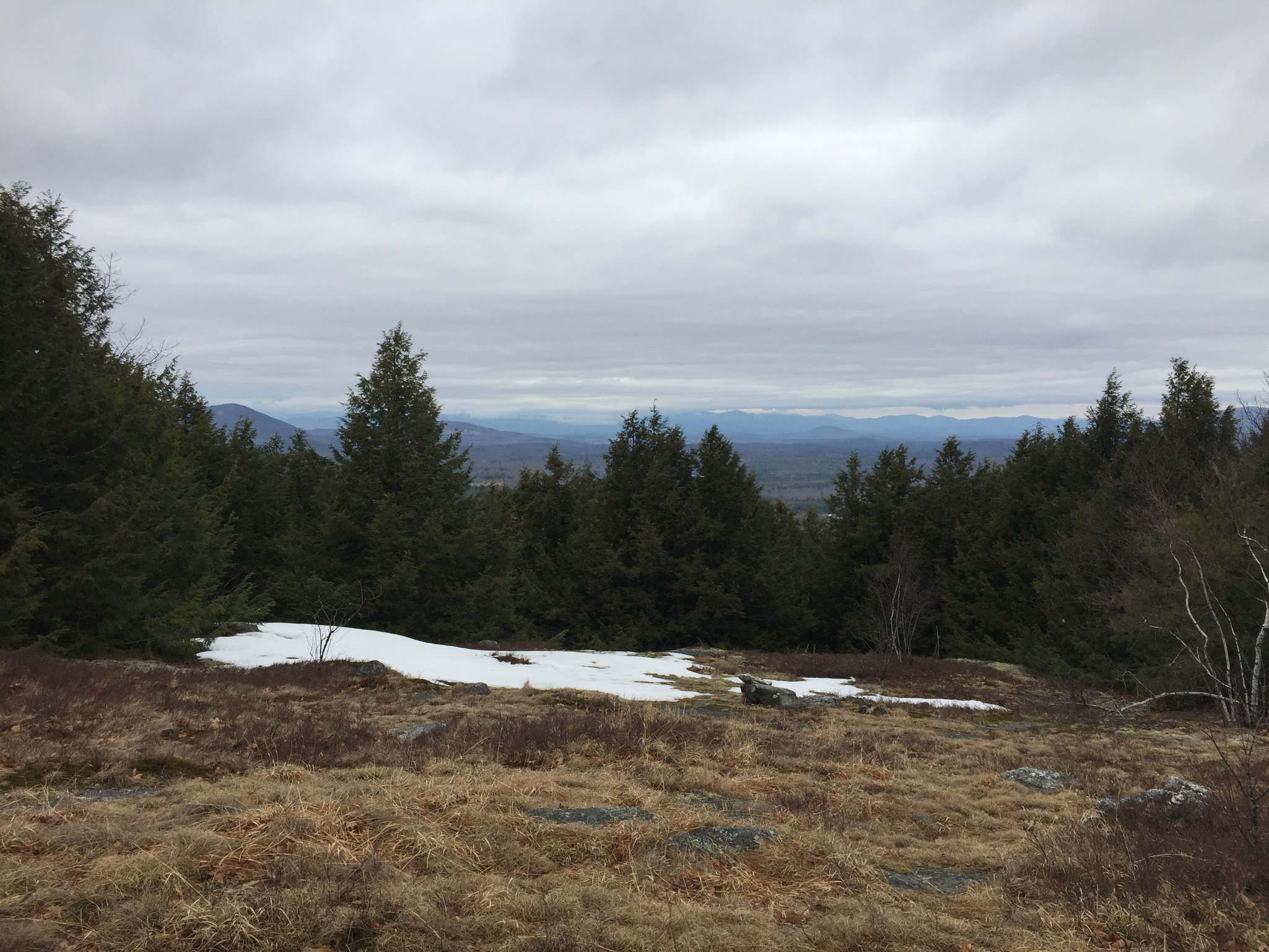
Sawyer Mountain (1,213 feet) is part of the Sawyer Mountain Highlands, 1400 acres of which is owned by the Francis Small Heritage Trust (see map here), which describes the Highlands as the single largest block of undeveloped land in York and Cumberland Counties.  This summit can be reached from trailheads in Limerick or Limington.  On the spring day we hiked it, we chose the Sawyer Mountain Trail from the Route 117 trailhead in Limington.  The trail is well-marked, with signs and red turtle blazes, and maps were available at a kiosk at the trailhead.

Sawyer Mountain Summit, Maine

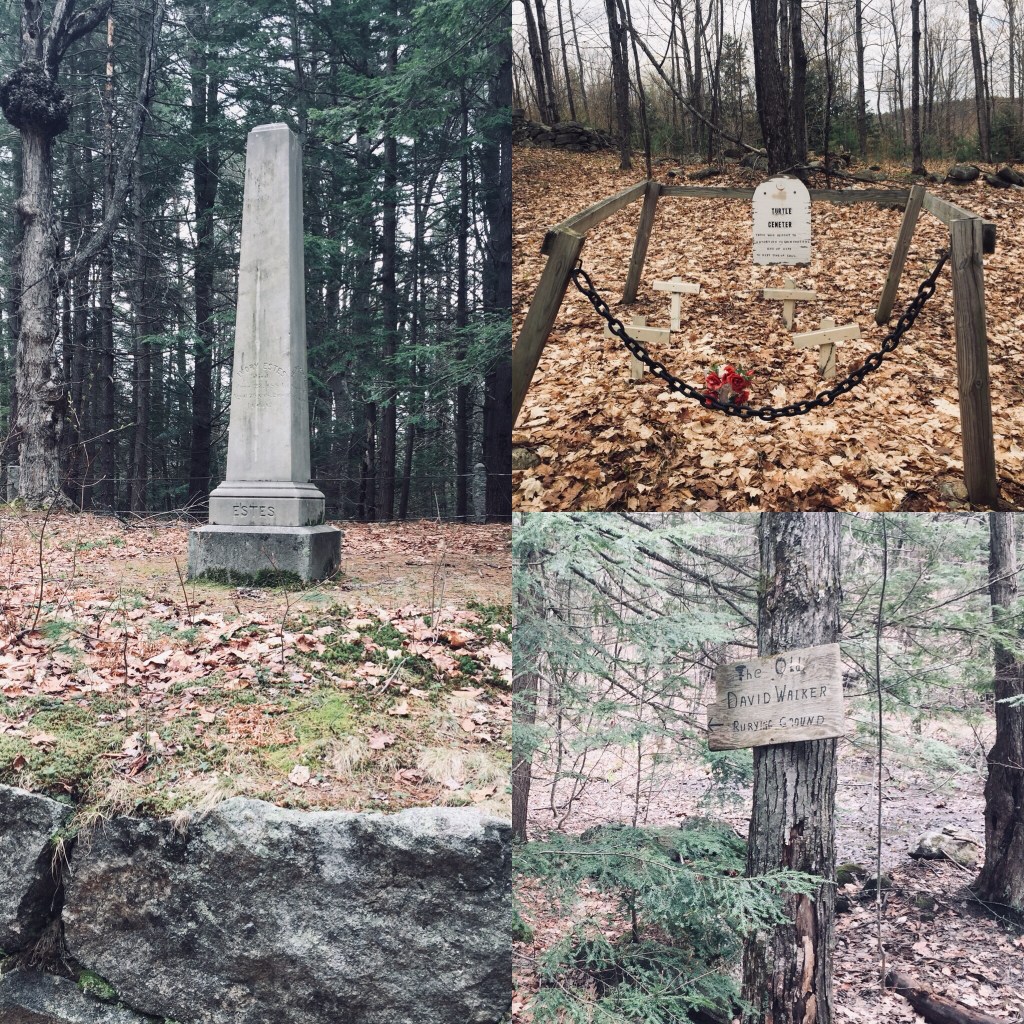
The Sawyer Mountain Road sections were rocky and covered in mud and running water, particular on the long uphill stretch preceding the last .3 mile push to the summit.  Black flies increased in number as we moved, but were never more than a minor nuisance.  Points of interest including the bright green spring vegetation surrounding streams and several cemeteries and burying grounds along the trail.

Cemeteries and burying grounds along the Sawyer Mountain Road Trail

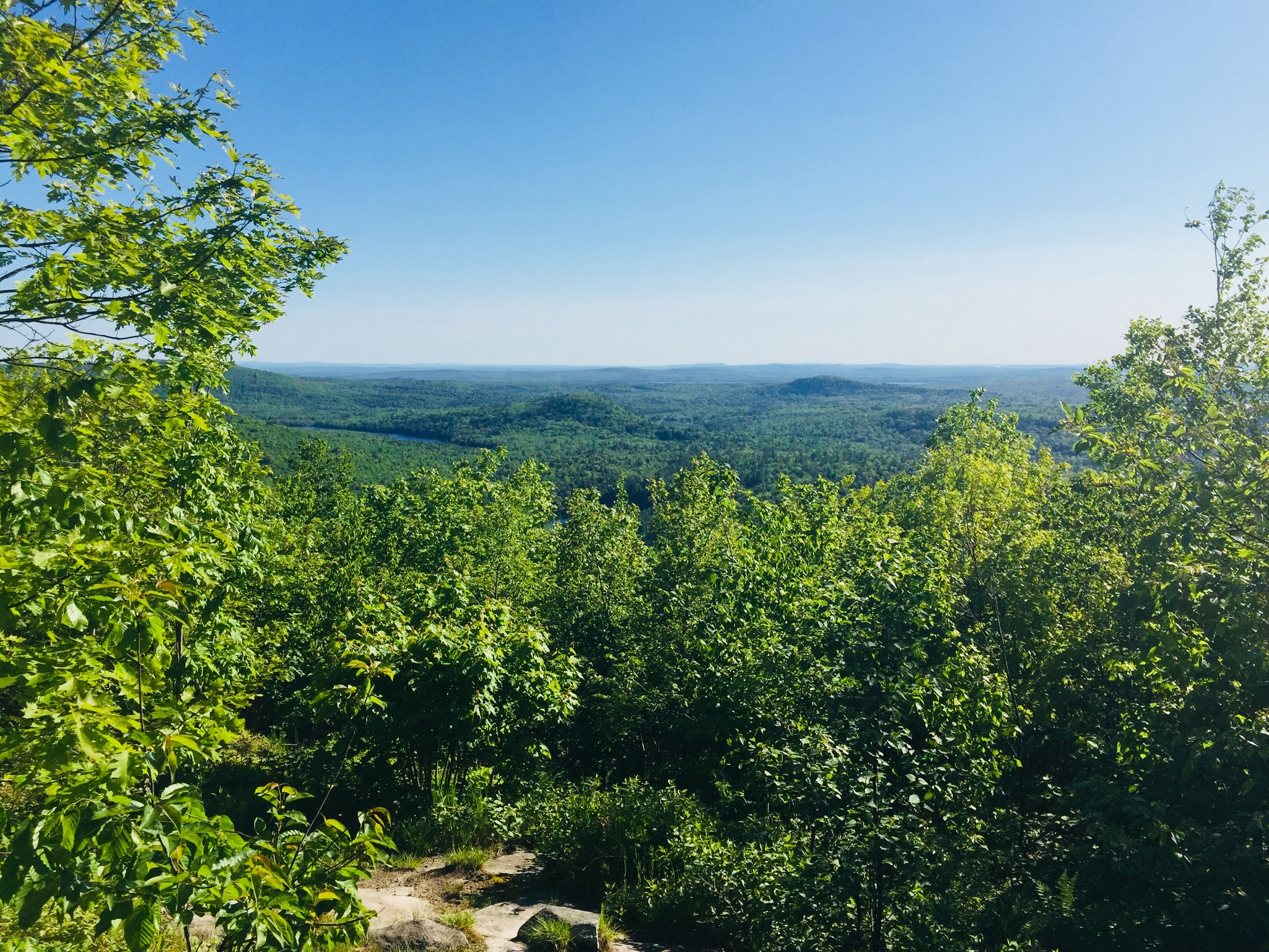
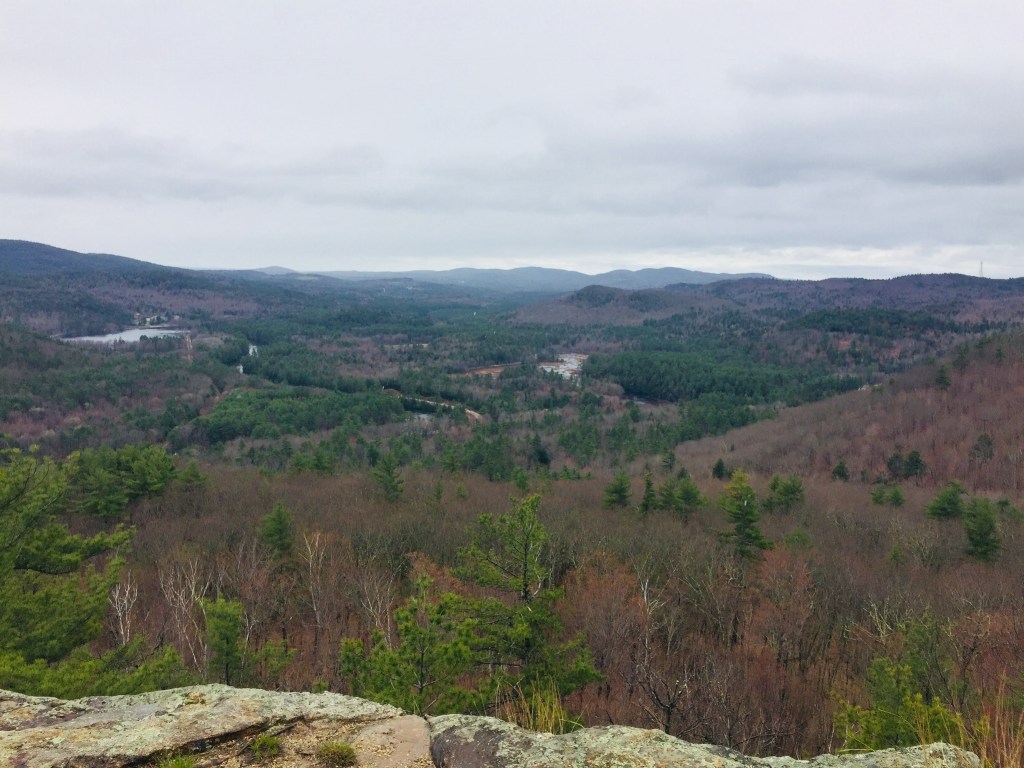
The summit offers views facing south, and another town of Limington scenic viewpoint is not far away along the trail, offering a more open view of southern York County.  The lollipop-shaped route (about 3.6 miles, an hour and forty-five minutes at an easy pace) we took was easier on the return, as the trail descending along the New Skidway Road was less muddy than Sawyer Mountain Road.  As previously mentioned, the summit can also be accessed from the west trailhead via a shorter route on the Smith Trail.

Mt. Cutler (Hiram, ME)

The Whites from Ridge Walk
The Whites from Ridge Walk.

Mt. Cutler (1,232 ft.), part of a newly established Mt. Cutler Park and Conservation Area, is a relatively short hike in Hiram, Maine, with impressive views along the way, and multiple options for shorter and longer walks along five miles of trails (here is a detailed  map and guide).  Additionally, in the new 11th edition of the Maine Mountain Guide, Mt. Cutler gets its own map.

View of Saco River Valley from Mt. Cutler, Hiram, Maine

The direct route is the Barnes Trail, marked with red blazes, which ascends from a parking area by the former railroad depot off Mountain View Road, up through overgrown Merrill Park, where a (shallow) abandoned gold mine can be accessed from a side trail to the left.   The trail quickly ascends up rocky ledges to points overlooking Hiram and the Saco River below.

Looking down towards Hiram from Mt. Cutler
Looking down towards Hiram from the front ledges of Mt. Cutler

The ridge walk contains great views and blueberries in the summer.  The Barnes Trail does not extend to the actual summit of Mt. Cutler, which is on private land (there is currently no marked trail to the summit, but respectful bushwhacking to it is apparently ok), and instead turns hard left at the notch below the summit, where it meets the Saco Ridge Trail, completing the loop down to the parking area.

In addition to the parking area by the Barnes Trail, a second parking area is planned to be constructed by July 2019, with capacity for twenty vehicles, at the trailhead for the North Trail (blue-paint blazes) on Hiram Hill Road.  This trail connects with the Moraine Trail, which climbs a glacial moraine, consisting of rock and other debris pushed into a ridge by a glacier (for those familiar with the Maine Ice Age Trail Downeast, check out this post on sites for western Maine’s Ice Age Trail).  North Trail also connects with the White Flag Trail, which joins the Barnes Trail near the front ledges.

(Disclaimer: This post contains affiliate links, and as an Amazon Associate Hiking in Maine blog earns from qualifying purchases.)

Mount Agamenticus – First, Second, and Third Hill Loop (York, ME)

Mount Agamenticus summit
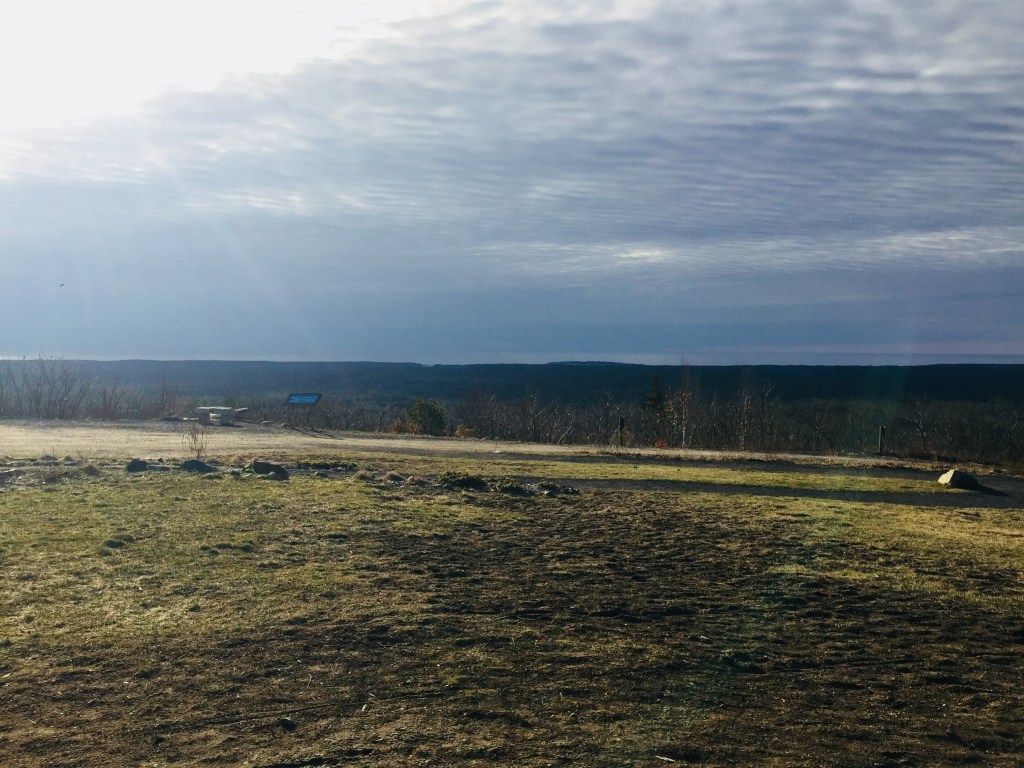
View of the Atlantic from the summit of First Hill, Mount Agamenticus

Mount Agamenticus, overlooking the southern Maine coast, apparently derives its name from an Algonquin coastal place name also used in Gloucester and Charlestown, Massachusetts.  It’s not a giant, only 691 feet tall, but is part of the Mount Agamenticus Conservation Region, which covers over 10,000 acres, including over 40 miles of trails, with a trail map here.  Its location in York makes it readily accessible from the Maine Turnpike and Route One.  I had never climbed Mount Agamenticus, and figured that a looping walk over rolling hills would be a perfect spring tune-up hike.

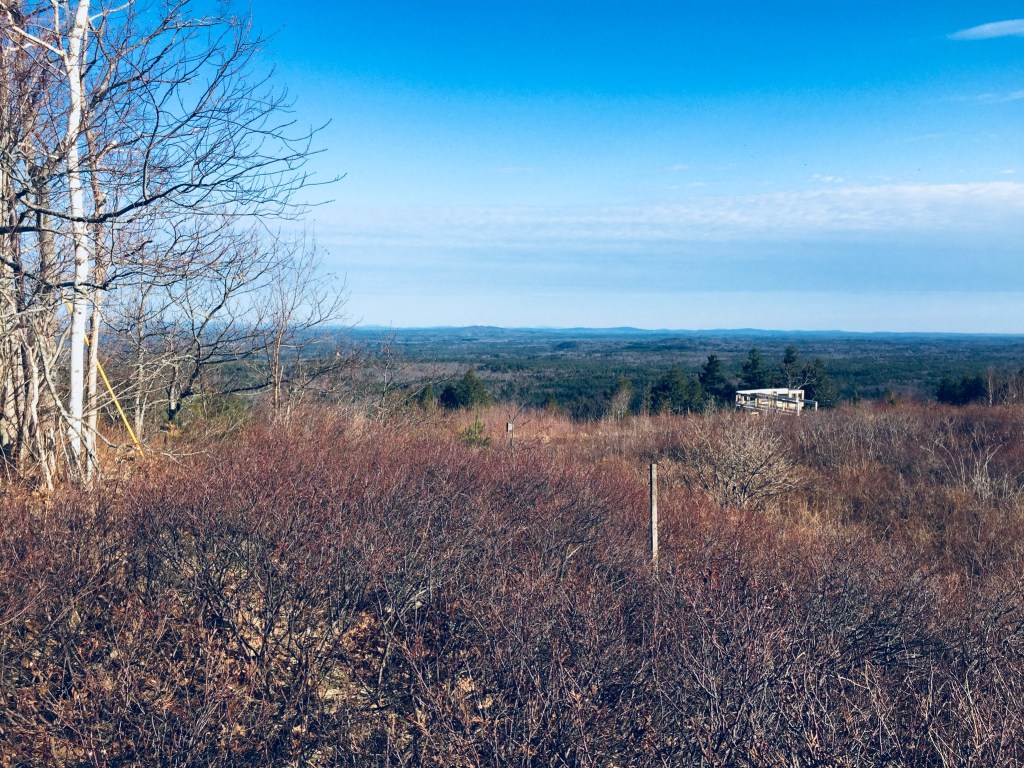
View towards Mount Washington from First Hill, Mount Agamenticus

These trails allow for a variety of hikes by length and ability.  On this spring day, I traversed the First, Second, and Third Hills, using the Ring, Fisher, Big A, Sweet Fern, Chestnut Oak, Ridge, Wheel, Third Hill, and Great Marsh Trails, along with Old Mountain Road, Porcupine, Rocky Road, and, again, Ring Trails to complete a loop of around 7 miles.  Much shorter loops are available (the complete Ring Trail loop is only 1.9 miles), and the Ring (west) and Witch Hazel Trails contain a “Story Walk” that might keep younger hikers moving from storyboard to storyboard, up the hill.

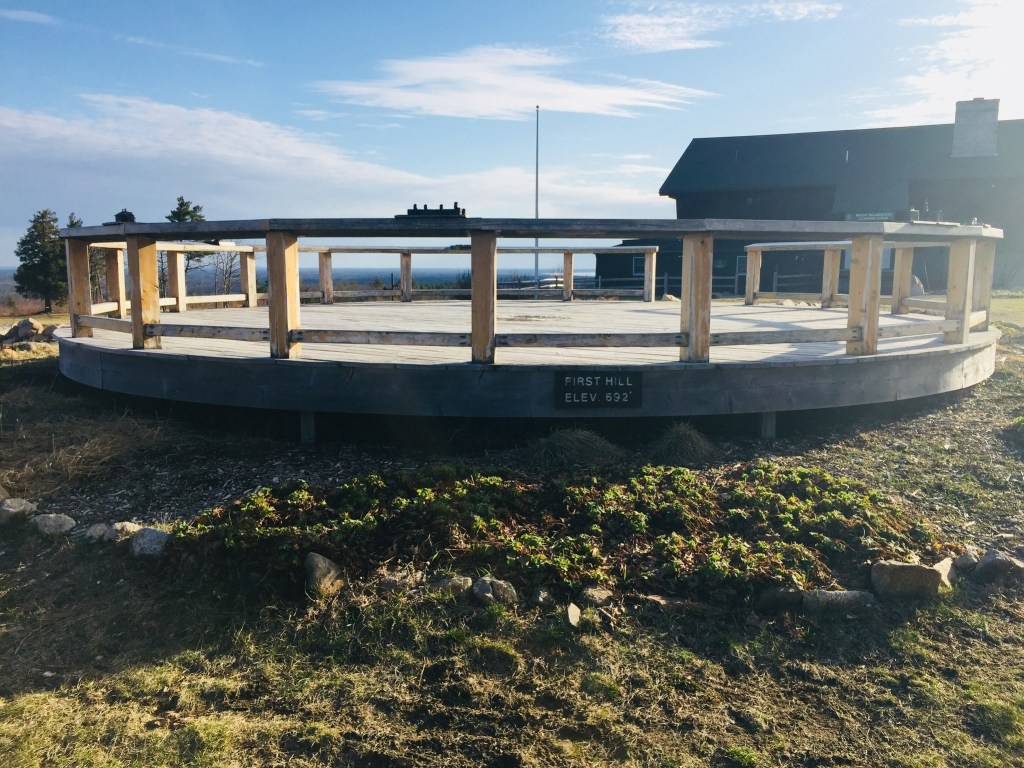
Observation Deck, First Hill, Mount Agamenticus

It’s not a long hike from the Mountain Road trailhead to the top of First Hill via the Ring (west) and Fisher Trails – I covered it in fifteen to twenty minutes at a moderate pace.  For those with mobility issues, there are also parking lots closer to the top.  The open summit has observation decks to orient you to the sights in all directions, from the Atlantic to Mount Washington, and a Learning Lodge is open weekends from 11 am to 3 pm from Memorial Day to Columbus Day.

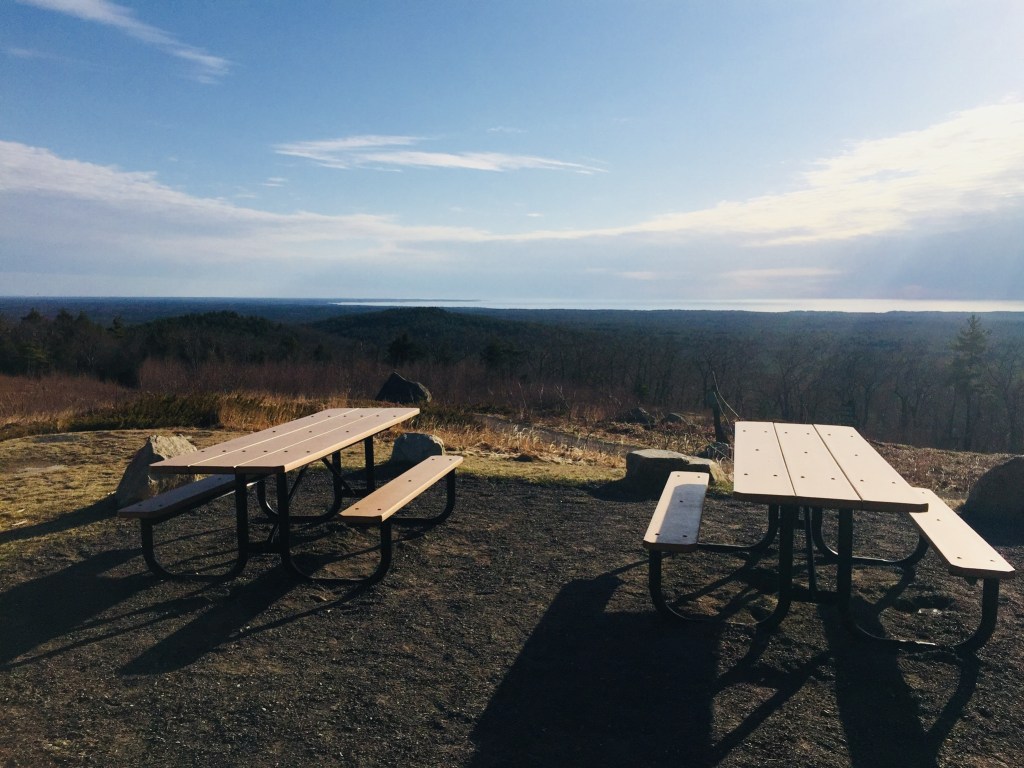
Picnic Tables, First Hill, Mount Agamenticus

There are picnic tables with views of the ocean, and restroom facilities.  Songbirds abound, and I spotted an American Goldfinch near the old ski lift structures.  Descending toward Second Hill, the trail still held some ice in shaded places, the only sign of winter’s clutches.  The low points around Second and Third Hills were dotted with vernal pools, which were already riotous with the sounds of peepers.

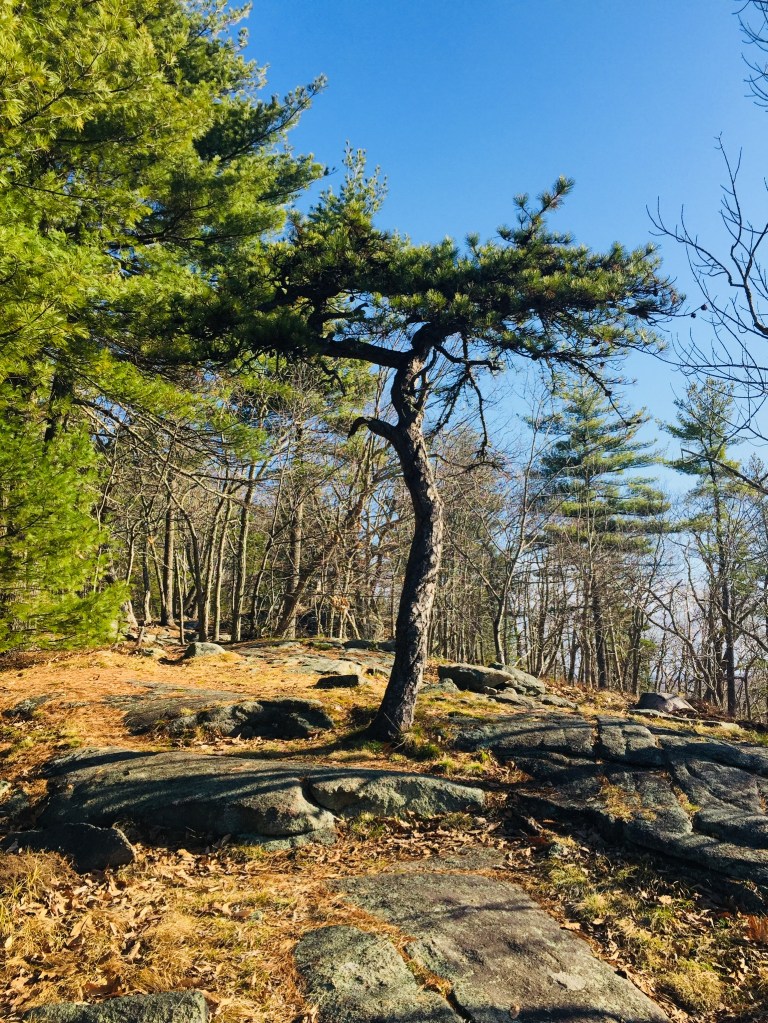
Tree on Second Hill, Mount Agamenticus

While First Hill is well-trafficked, with trail runners and dog walkers, the only other human being I saw on Second and Third Hills was a mountain biker.  The trails here are not as well-marked as those on First Hill, and I had to double back several times to find the trail, particularly on the Ridge Trail, and Third Hill Trail.  In addition, the summits are wooded, with less spectacular views than that of First Hill.  But the hiking is not strenuous, and the scenery contains peaceful brooks and ample wildlife viewing opportunities.  I saw turkeys, deer, and innumerable songbirds, as well as sizable ant mounds on the way down Third Hill.

Mount Agamenticus is an easily accessible, family-friendly trail network which allows the user to build his/her own itinerary based on activity, ability, and time, and provides boundless opportunities for observing fauna and flora.

Seal on observation deck, First Hill, Mount Agamenticus

Mowry Beach (Lubec, ME)

Mowry Beach Trail from the Pleasant Street trailhead
Mowry Beach Trail from the Pleasant Street trailhead.

A short distance from downtown Lubec, the easternmost town in the U.S., Mowry Beach is a quiet 48-acre conservation area overlooking Deep Cove, Lubec Channel and Canada’s Campobello Island.  This area, managed by the Downeast Coastal Conservancy (DCC), offers a .4 mile trail from Lubec’s Consolidated School on South Street to a parking area at the end of Pleasant Street, including a 1,700 foot boardwalk.  The DCC publishes a map and brochure, available on their website.

View of downtown Lubec and the international bridge to Campobello from Mowry Beach
View of Lubec village and the international bridge to Campobello from Mowry Beach.

We learned of this beach through a great Cobscook Trails Map and Guide published by Cobscook Trails, with hikes throughout the Cobscook Bay region, a free and widely available (at local businesses) pamphlet which I would recommend for anyone exploring the area.  At the Pleasant Street end of the trail, which we accessed via a short walk from downtown, is 1,800 feet of shorefront along a sand beach.  According to guides, ancient tree stumps can be seen along the lower portions of the beach at low tide, a forest that was present during an era with lower water levels.

On the October day we visited, seals were active, using the rapidly outgoing tide to move swiftly east at waterskiing speeds in the Lubec Channel in search of food.  For sea-glass collectors, this working waterfront has a variety of shiny objects along the shore.  During our walk, we also encountered two people helpfully picking up any garbage left on the beach.

Boardwalk on Mowry Beach Trail
Boardwalk on Mowry Beach Trail.

We turned into the trail, passing bright beach rose bushes. The trail and boardwalk are alive with birds, and we startled a large bird of prey that had been resting in a tree next to the boardwalk, which took off almost straight up, like a rocket (which, in turn, startled us).  DCC’s guide lists rough-legged hawks, northern harriers, and northern shrikes as frequent visitors to the conservation area.

Mowry Beach conservation area from the playground of Lubec Consolidated School
Mowry Beach conservation area from the playground of Lubec Consolidated School.

We continued through the coastal bog and an area lined with cattails and small trees, emerging behind the Lubec Consolidated School.  For those with mobility issues, intimidated by longer hikes, or entertaining smaller children, this relatively short walk on wide paths and boardwalk is a great side excursion from the village of Lubec.

Quoddy Head State Park (Lubec, ME)

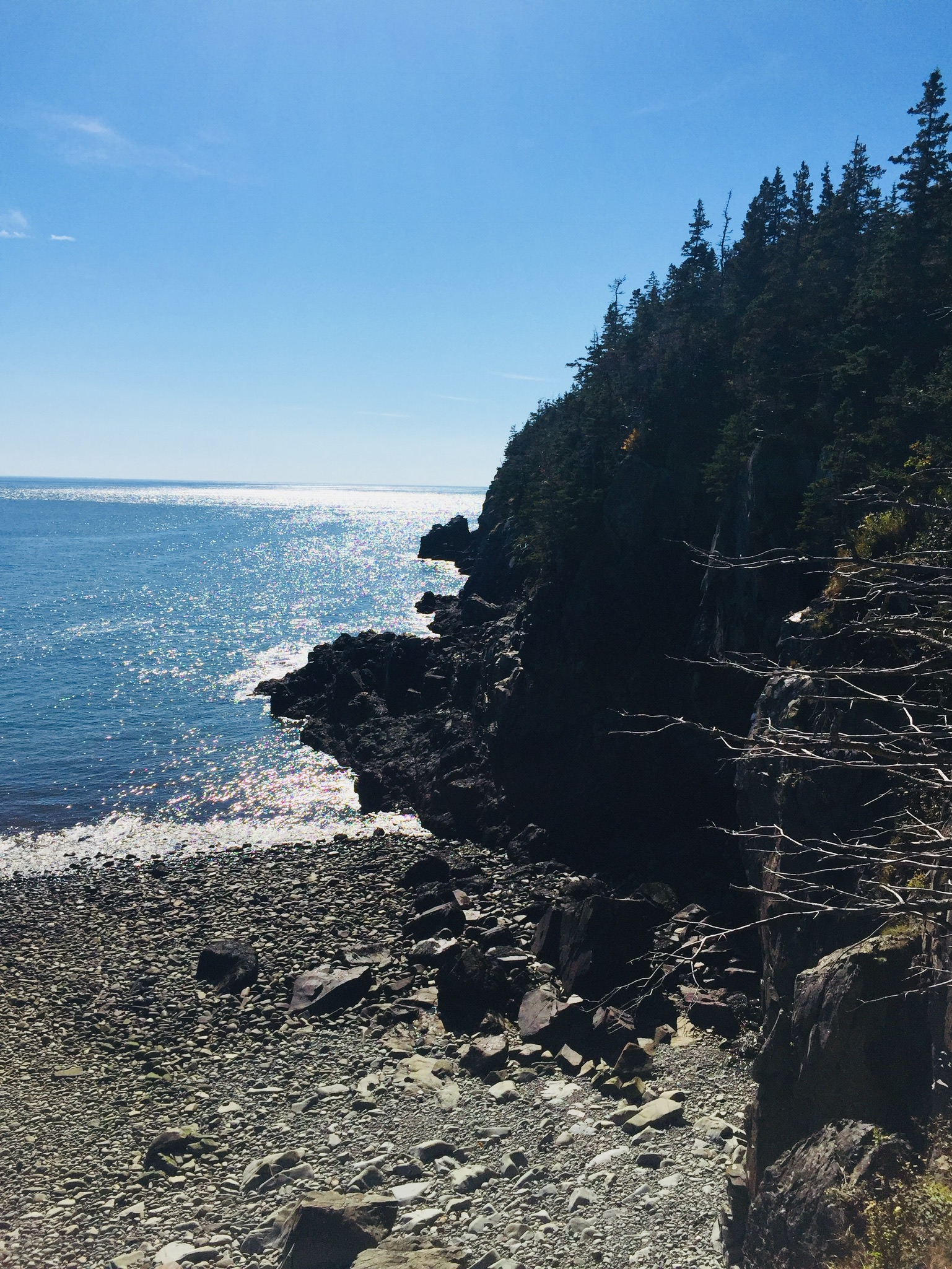
Rocky beach off the Coastal Trail, Quoddy Head State Park.

The word “Easternmost” is prominently advertised in many places across Lubec, including Quoddy Head State Park, which comprises 541 acres at the tip of the U.S.’s eastern reach.  By the time you reach Quoddy Head State Park, off South Lubec Road, you will likely have seen many advertisements for all things “easternmost” (campgrounds, gift shops, etc).  But beyond the quick tour stop and lighthouse “selfies,” this park offers an array of trails for all abilities with impressive ocean views and a variety of coastal vegetation.  The best guide to the park’s trails is the map provided by the state of Maine: Quoddy Head State Park Guide & Map.

We started with the Coast Guard Trail, a 1-mile trail north of the entrance, which includes an overlook of the Lubec Channel, as well as a view of the town of Lubec back to the west, after a short climb up a wooden staircase.  According to the Quoddy Head Guide, the first .5 miles of the western part of this trail is accessible by motorized wheelchair. After the lookout, the Coast Guard Trail then descends through the thick coastal woods to the lighthouse, passing several viewpoints along the volcanic rocks.  The path was full of birds and squirrels gathering food on this warm, sunny October day.

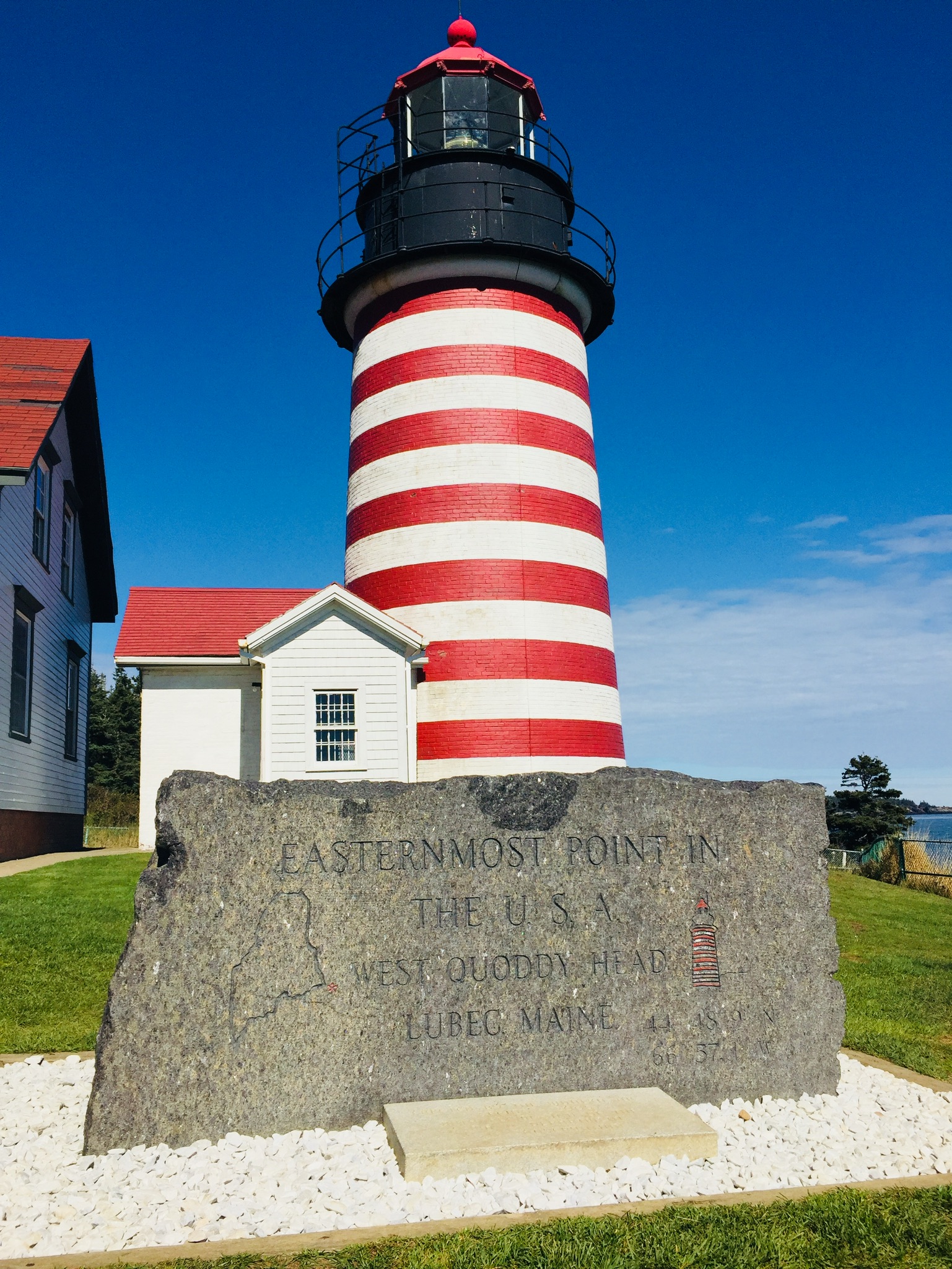
West Quoddy Head Lighthouse, Lubec, ME

The small lighthouse museum (free, but donations always help) includes displays featuring the history of the lighthouse, flora and fauna of the area, and a guide to whales, commonly sighted off the coast.  The area around the lighthouse contains a large number of picnic tables with excellent views, and the only restrooms in the park (easternmost privies in the U.S.?  Probably).  From the lighthouse area and most of the coastal trails, the cliffs of the Canadian island of Grand Manan are visible across the Quoddy Channel.

The terrain was impressive, and those with small children need to keep them close, as there are plenty of dizzying cliffs on the U.S. side, as well.  The beaches are rocky, but make a far more interesting sound than sand beaches, combining the tidal roar with a rattling, suction sound as the rocks move together when the waves recede.

Coastal Trail at Quoddy Head State Park, Lubec, ME
Coastal Trail at Quoddy Head State Park, Lubec, ME.

The Coastal Trail travels west along the shore past incredible views and scenic points like Gulliver’s Hole, High Ledge, and Green Point, with frequent stops in between to take in the powerful ocean.  We did not linger at Green Point, a ledge with paths down to a beach, as we may have interrupted two hikers in some sort of extracurricular activity there (The trails became more and more empty the farther we got from the lighthouse).

01d86651433eae65716d0e041ead3749e4e0c98292

At Carrying Place Cove, Thompson Trail heads back east, inland towards the parking area, with the short .2 mile spur of Bog Trail along the way.  This side of the trail, in particular the sand beach at Carrying Place Cove, is also accessible from South Lubec Road.  The Bog Trail includes a boardwalk and interpretive signs explaining the coastal plateau bog, also called a heath, according to the Quoddy Head Guide.

Thompson Trail is, for the most part, an easier walk than the coastal trail, with a few brief climbs.  The best feature of this trail was the scent of pine, which created a perfumed evergreen tunnel in the narrower sections, redolent with notes of citrus and vanilla.

016a4d2b896b7e773458c7efef1f50a941c64f476b.jpg

We completed most of the trails in the park, and stopped plenty of times to relax and take photos, making this about a three-hour visit.  The difficulty level is described in the park guide as moderate, which seems about right. There are no strenuous climbs, but consistent steps over rocks and roots could make this more difficult for some hikers. There weren’t any bugs during this Columbus Day weekend, but the boggy areas guarantee mosquitoes and black flies in late spring and summer, and repellent would be a must.  I would also suggest waterproof shoes, or at least wearing something on your feet that you don’t mind getting wet or muddy.  Depending on your roaming plan, you may want to put your phone in airplane mode, as it will likely be using Canadian towers along this shore.

01341e22f0c5ed11f9f93a014921757af70f9993e4
Lubec fishing fleet at dusk

Lubec, across a narrow channel from Canada’s Campobello Island, is the closest town nearby, but Machias is not that far away, and many smaller towns in Downeast Maine and the Cobscook Bay region are worth a visit.  After the hike, if you can catch them open during fall hours, try the craft beer and pizza at Lubec Brewing Company or upscale pub cuisine at Cohill’s Inn on Water Street in Lubec.  If you are headed south, go to Skywalker’s Bar and Grille in Machias (try the fish tacos) for a great menu and Machias River Brewing Company beers.

Quoddy Head, though remote, is hardly a secret anymore- we joked that AirBnB renters and vacationers from New York outnumbered locals in Lubec. But steps beyond the famous lighthouse is a surprisingly wild Maine coast to explore.

Katahdin Woods and Waters National Monument (Katahdin Loop Road)

01fb28221881b3f66f6417691e990ce16d393b995f

(Note: The Katahdin Loop Road opened for the 2020 season on Saturday, May 23. U.S. National Park Service advises to drive with caution and be alert for soft spots and rough road sections. Haskell and Big Spring Brook Huts are temporarily closed, and updates will be posted to the NPS website.)

During a visit to Baxter State Park, dad and daughter found ourselves with sore legs and a half-day to explore, and we decided to check out Katahdin Woods and Waters National Monument via the Katahdin Loop Road.  We got our direction from a Katahdin Chamber of Commerce visitor’s guide and a pamphlet from Natural Resources Council of Maine (NRCM), but we had followed the progress of the Monument since its creation in August 2016.

The standard route into the South Entrance is via Route 11 from E. Millinocket/Medway to the Swift Brook Road along the Katahdin Woods and Waters Scenic Byway, but we were feeling adventurous, and took the Stacyville Road north from Millinocket to where it meets the Swift Brook Road.  We savored the lonely ride along this quiet logging road, occasionally startling game birds (this is not the way to take a low-clearance or non 4×4 vehicle).

The 17-mile loop of Katahdin Loop Road is punctuated by meadows, bogs, and ridges, and the south and west parts of the loop boast excellent views of Katahdin and the surrounding area.  This is an opportunity to see the Monument and cover distance in a vehicle, while having the chance to get out and explore at a variety of hiking paths and overlooks.  The best map of the loop we found (which I wish we had when we were there, as it is also an excellent interpretive guide) was from the Friends of Katahdin Woods and Waters, and can be found here.

01956851ac4c035ab5352c3bdbf2b168afa977f722
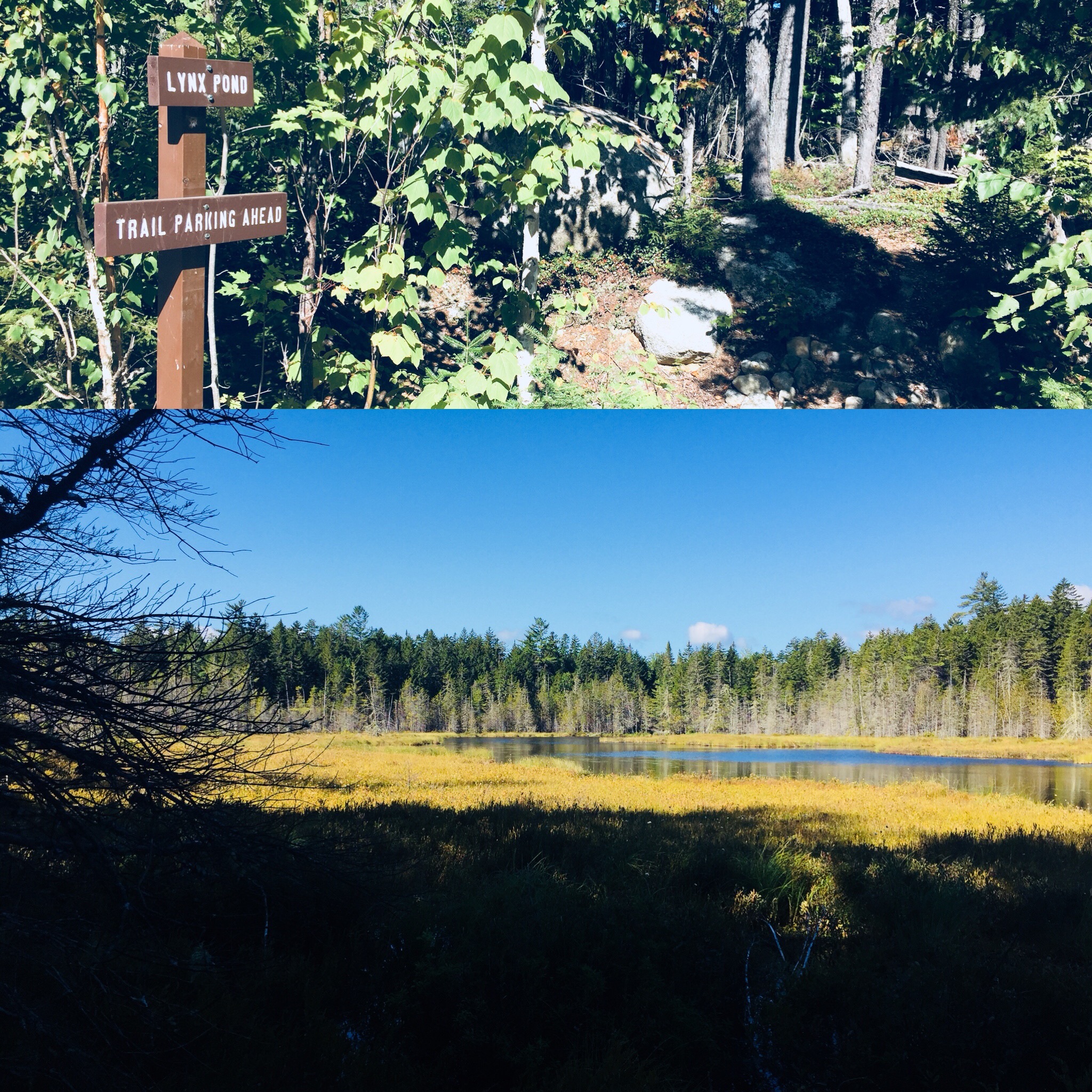
Lynx Pond

The Lynx Pond Walk is shortly past the Loop Road Gate, on the right just past the Mile 2 marker.  Shortly after the trailhead is a parking area on the left of the Loop Road.  This is a very short walk through the woods to a small boardwalk by the pond, and a spot for quiet reflection and wildlife viewing.

01d653ad792defeda6d7ee61dfda750f88aec17e0c
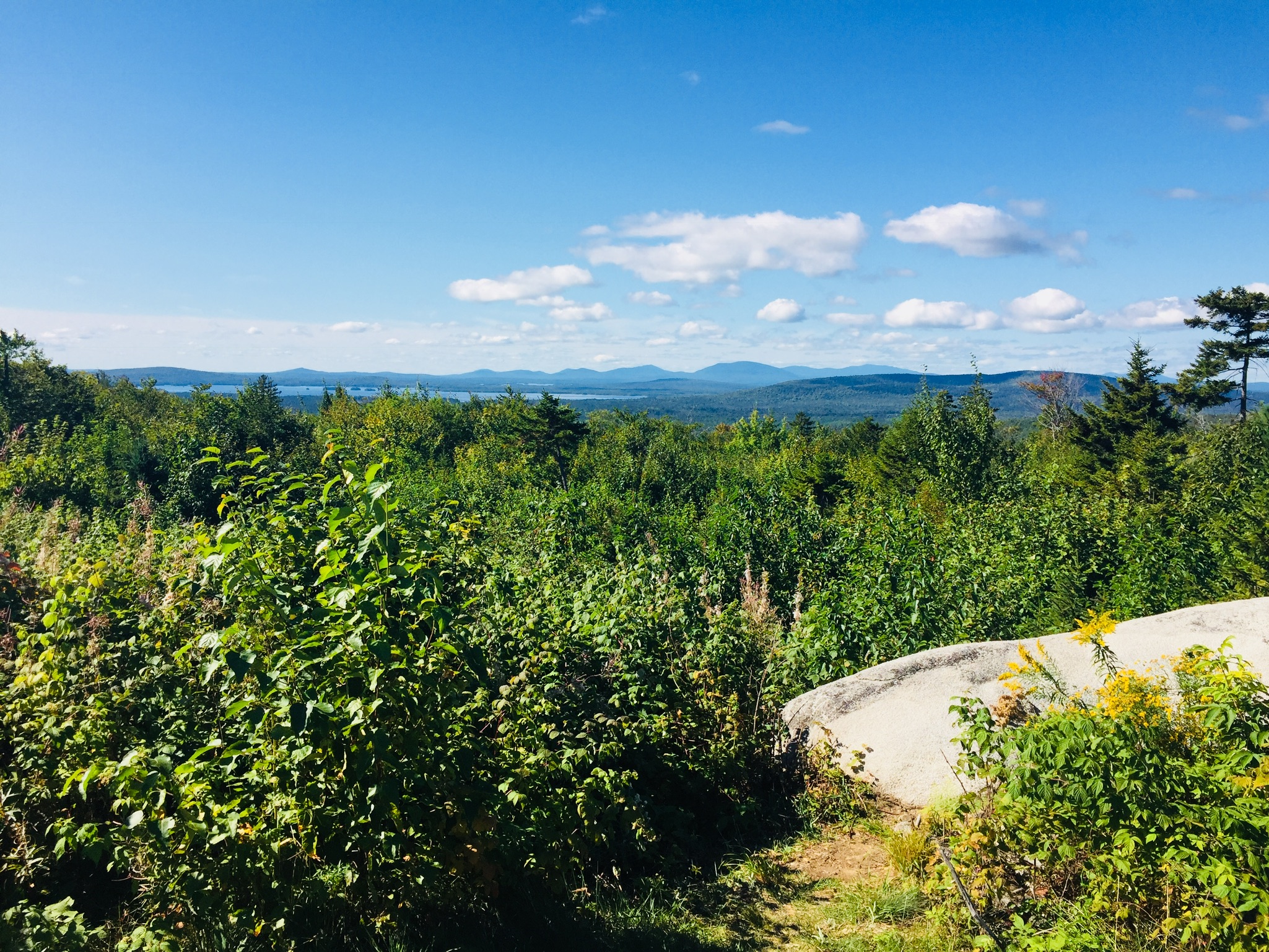
Looking south from The Overlook on Katahdin Loop Road.  The large lake is Millinocket Lake.

0128123aefc231d99d78e21014caffb04b28152f10
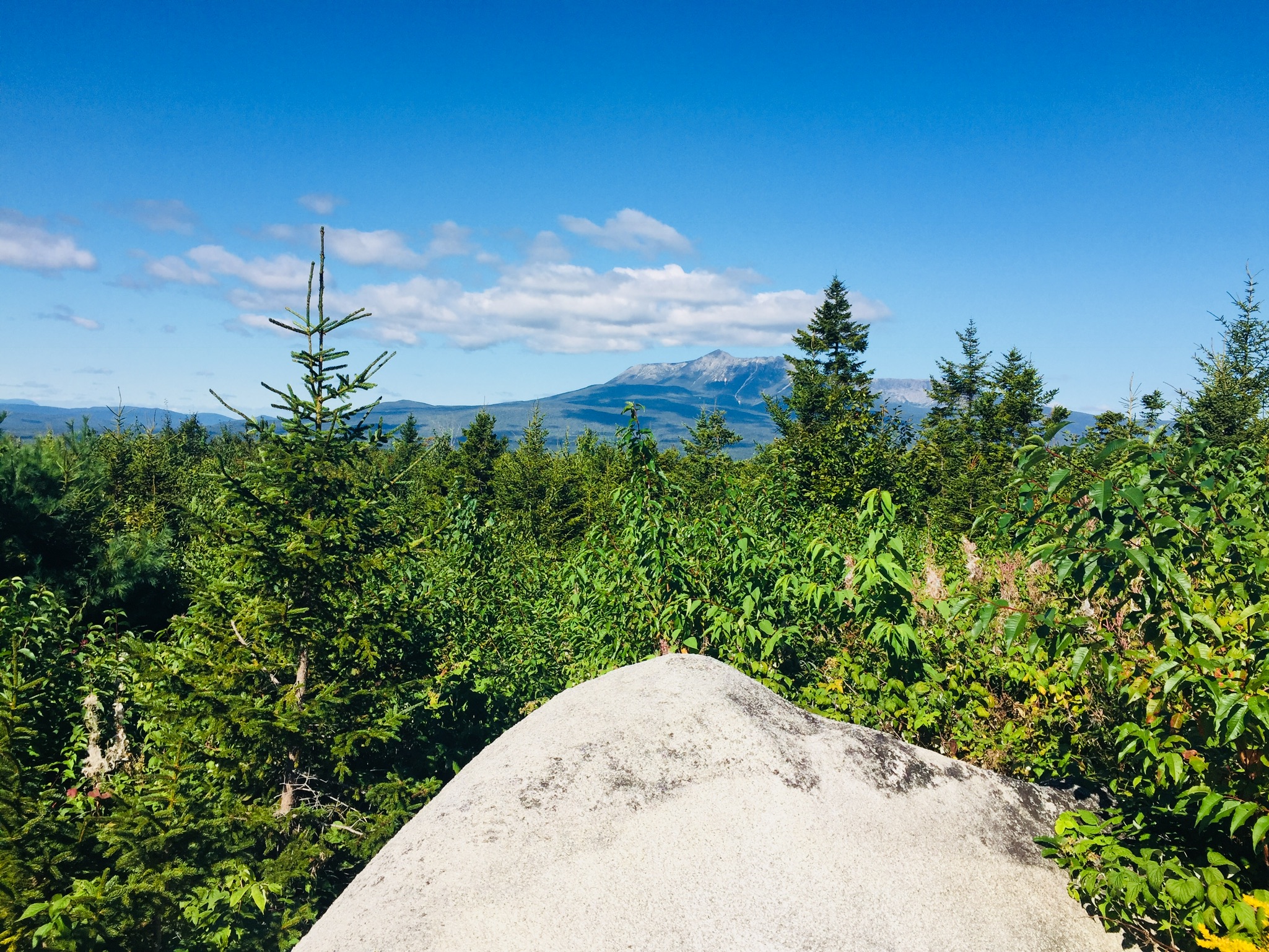
Views of Katahdin from The Overlook on Katahdin Loop Road

Katahdin towers over the loop, and there are multiple spots around the Loop Road with views of the lakes and mountains to the west and south, particularly The Overlook, between Miles 6 and 7, which conveniently has a picnic spot and a toilet.

We continued around the Loop Road, and got out to stretch our legs again at the International Appalachian Trail (IAT) and trail to Barnard Mountain, passing over Katahdin Brook and by the IAT lean-to.  This wide logging road made for a sunny trail, and though we did not make the turn towards the Barnard Mountain summit, we enjoyed the walk, and the familiar plants and animals that inhabit newly overgrown woodcuts, with blue jays diving across our path and into the trees.  The Barnard Mountain trail itself is a moderate 4-mile round trip with summit views of Katahdin and Katahdin Lake to the west.

0162945685aea994ce4c9bc0e69edac7f7ef89bdac
Late summer flowers and plants along the IAT

The IAT continues from the northern terminus of the Appalachian Trail at Baxter Peak across Maine, into Canada, across to Greenland, and Europe, to the Atlas Mountains of Morocco.  For a great exploration of the concept of the IAT, see On Trails by Robert Moor, reviewed on this blog.

01b5f4816d5a5e0f24f63f8ce23c3ebb07ec640256
Moose tracks and droppings on the IAT

There are seven mountains in the Monument to hike, including Barnard, as well as paddling opportunities and waterfalls.  The Loop Road was quiet, as were the trails, with natural sounds, and only a few others exploring the area.  A bumpy drive back down Stacyville Road took us to Millinocket, where we devoured a Hawaiian pizza without remorse at the Millinocket House of Pizza.

Katahdin Woods and Waters National Monument is a special place, and we will be back there for hiking, biking, and paddling.  The views during peak foliage season must be spectacular.  Ensure you plan ahead, bring maps, and a cooler with water and snacks, as there are no facilities at the Monument, and cell coverage ranges from little to non-existent.  But that’s probably what you’re looking for in the first place.